SUPERCOMPUTING NEWS SUPERCOMPUTING NEWS
    • MEDIA KIT
    • MOST READ
    • RSS FEED
    • ACADEMIA
    • AEROSPACE
    • APPLICATIONS
    • ASTRONOMY
    • AUTOMOTIVE
    • BIG DATA
    • BIOLOGY
    • CHEMISTRY
    • CLIENTS
    • CLOUD
    • DEFENSE
    • DEVELOPER TOOLS
    • EARTH SCIENCES
    • ECONOMICS
    • ENGINEERING
    • ENTERTAINMENT
    • GAMING
    • GOVERNMENT
    • HEALTH
    • OIL & GAS
    • INDUSTRY
    • INTERCONNECTS
    • MANUFACTURING
    • MIDDLEWARE
    • MOVIES
    • NETWORKS
    • PHYSICS
    • PROCESSORS
    • RETAIL
    • SCIENCE
    • STORAGE
    • SYSTEMS
    • VISUALIZATION
    • AcyMailing subscription form

    • ADD YOUR VIDEOS
    • MANAGE VIDEOS
    • CONVERSATION INBOX
    • SOCIAL ADVERTISER
    • SOCIAL NETWORK VIDEOS
    • SURVEYS
    • GROUPS
    • PAGES
    • MARKETPLACE LISTINGS
    • APPLICATIONS BROWSER
    • PRIVACY CONFIRM REQUEST
    • PRIVACY CREATE REQUEST
    • LEADERBOARD
    • POINTS LISTING
      • BADGES
    • TRADE SHOWS
Sign In
WSU study pinpoints molecular weak spot in virus entry; supercomputing helps reveal the hidden dance
Tyler O'Neal, Staff Editor LATEST December 15, 2025, 3:16 pm

WSU study pinpoints molecular weak spot in virus entry; supercomputing helps reveal the hidden dance

In a discovery that elegantly bridges biology and computation, researchers at Washington State University (WSU) have uncovered a microscopic "Achilles' heel" in how viruses invade human cells, with supercomputing-informed simulations playing a key role. While it appears to be a molecular biology breakthrough at first glance, a closer look reveals how computational science steered the experiment toward this target much faster than trial-and-error alone could have.
 
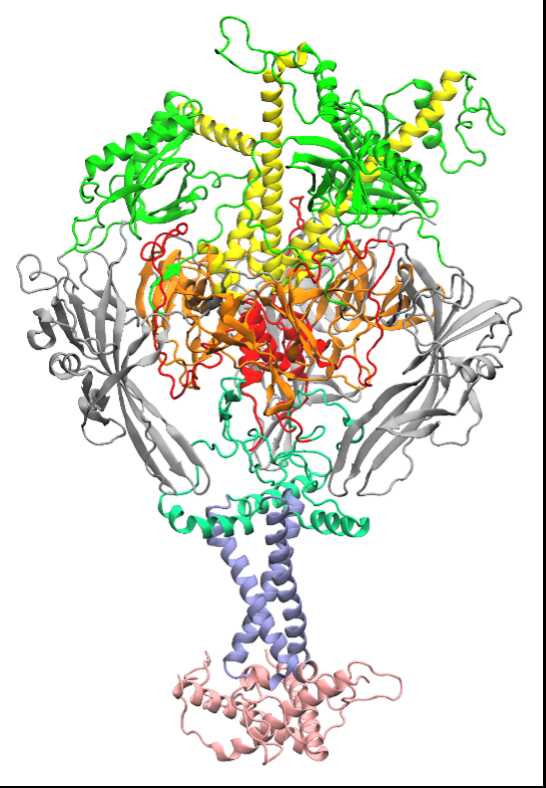
At the heart of the study is glycoprotein B, a complex protein that many viruses, including herpesviruses, use as a molecular grappling hook. This protein changes shape to fuse the viral membrane with a host cell’s membrane, allowing the virus to enter the host cell and begin its infectious cycle. Historically, researchers have known that fusion proteins like glycoprotein B are critical to infection, but pinpointing which interactions matter most among thousands of possible atomic-scale contacts is like searching for a needle in a haystack.

Simulations Sift the Signal from the Noise

WSU’s team, a collaboration between mechanical engineers and veterinary microbiologists, leveraged artificial intelligence and large-scale simulation to navigate this haystack. Instead of testing each possible interaction experimentally (a process that could take years), they used machine learning to screen thousands of potential amino-acid contacts inside the fusion protein. The algorithms flagged the interactions that most strongly influence the protein’s ability to change shape and initiate membrane fusion.
 
That's where the supercomputing mindset comes in. While the press release doesn't explicitly name a specific HPC center or piece of hardware, the workflow described, training machine learning models on massive combinatorial data from protein structures and simulating dynamic interactions at the atomic scale, is precisely the sort of work that depends on high-performance computing. Without it, biologically relevant simulations of proteins in motion would be prohibitively slow.
 
Leveraging computationally derived insights, the team introduced a targeted mutation in one of the key amino acids identified by their model. The outcome was striking: viruses with the modified glycoprotein were unable to fuse with cells and gain entry. The invasion was effectively halted.
 
"This demonstrates how computational filtering can accelerate the pace of discovery," stated Jin Liu, the paper's corresponding author and professor in the School of Mechanical and Materials Engineering. Without these tools, the team believes the critical interaction could have remained hidden for years amidst the molecular background noise.

Why Supercomputing Matters Beyond Speed

High-performance computing isn’t just about running simulations faster. In complex biological systems, it’s about making the impossible tractable. Here’s how:
  • Exploring vast interaction networks: The space of possible amino-acid interactions in a protein like glycoprotein B is enormous. Computational analysis helps narrow this down with statistical precision.
  • Coupling dynamics with structure: Proteins are not static ornaments; they breathe, flex, and contort. Supercomputing helps us simulate these fluctuations, data that would otherwise be invisible.
  • Guiding biological experiments: By pointing experiments toward the most promising hypotheses, computation accelerates the entire research cycle.
The elegance of the WSU approach lies in its integration of wet-lab biology with in silico discovery, where simulations enhance rather than replace experiments.

Beyond This Study, Toward Broad Antiviral Insight

Blocking viral entry is a key strategy in antiviral design. Whether targeting influenza, HIV, herpesviruses, or coronaviruses, the initial molecular interaction between a virus and a host cell often determines the outcome. If computational methods can systematically identify the weakest points in these interactions, the implications for future drug development are significant.
 
Supercomputing is increasingly central to this effort. Exascale simulations of viral proteins enable researchers to observe molecular motions occurring within microseconds, dynamics that would otherwise remain unseen.
 
The WSU discovery doesn’t yet translate into a new drug or therapy; far more work lies ahead to understand how the mutated interaction affects the virus's full structural behavior in real biological systems. But it does represent a proof of concept: guided by computation, we can unmask the subtlest viral strategies and pre-emptively strike at them.
 
In a world still deeply familiar with the consequences of viral outbreaks, this kind of synergy between supercomputing and biology isn’t just intellectually exciting, it’s potentially transformative.
New low-memory fluid & heat flow algo could turbocharge supercomputing simulations

New low-memory fluid & heat flow algo could turbocharge supercomputing simulations

Tyler O'Neal, Staff Editor LATEST December 13, 2025, 6:24 pm
If there's one thing supercomputing enthusiasts appreciate as much as raw processing power, it's achieving more with less memory. Researchers at Tokyo Metropolitan University have made a promising advancement by reimagining the Lattice-Boltzmann Method (LBM), a workhorse in computational fluid dynamics, which significantly reduces memory requirements while maintaining accuracy and stability.

Why This Matters to Supercomputing

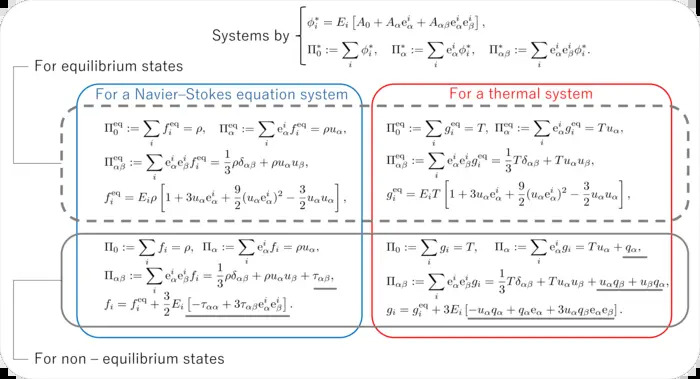
Fluid and heat flow simulations, from modeling airflow over aircraft wings to predicting climate patterns and even simulating blood flow in biomedical research, are classic examples of problems that push supercomputers hard. These simulations partition a physical domain into millions, or even billions, of grid points. At each point, the Lattice-Boltzmann Method (LBM) tracks the distributions of particle “parcels” as they move and collide across the grid to compute phenomena such as velocity and temperature.
 
However, there's a catch: storing additional information at each grid point significantly increases memory usage. In large-scale HPC environments, memory is a valuable resource. Memory costs, both financially and in terms of energy, can restrict the scale, resolution, and duration of simulations. This is where the new algorithm truly excels.

The Innovation: Low-Memory LBM

Associate Professor Toshio Tagawa and doctoral student Yoshitaka Mochizuki redesigned the LBM, incorporating a clever trick: they added small "optional moments" that implicitly encode gradient information, essentially, telling the algorithm how values change from point to point without needing to store all that data explicitly. Because gradients are built into the formulation, the simulation doesn’t have to keep huge sets of intermediate variables in memory.
 
In tests across multiple fluid and heat flow benchmarks, the new method slashed memory usage by roughly 50% in certain scenarios, which is enormous in HPC terms. If a simulation previously just barely fit into a supercomputer’s memory, this approach could make it comfortably fit or allow it to run at a much higher resolution.

Why Supercomputers Will Care

Supercomputers are extremely parallel machines, but they still contend with finite memory per node, per core, and per job. Reducing memory footprints can:
  • Enable larger, more detailed simulations without needing bigger machines.
  • Lower energy use (memory operations are a significant power draw).
  • Improve scalability by reducing communication overhead tied to data shuffling.
In practice, this algorithmic advance can influence how developers optimize code for systems and next-generation HPC architectures. Memory constraints are a major bottleneck in fluid and heat simulations, particularly in 3D, multiphysics, or long-duration runs. The new low-memory LBM addresses this challenge.

Wide Relevance Beyond Academia

The innovation isn’t just for textbook problems. LBM and similar lattice-based schemes are used in:
  • Aerospace and automotive design
  • Weather and climate modeling
  • Porous media flow (e.g., oil reservoir simulation)
  • Biomedical simulations (e.g., capillary networks)
Any domain where fluid or heat behavior matters at scale and where HPC resources are stretched thin could benefit.

Computational Insight, Not Just Raw Power

It’s always tempting in supercomputing to chase more cores, more flops, or bigger clusters. But advances like this remind us that algorithmic ingenuity often beats brute force. Memory efficiency isn’t just a nice-to-have; it’s a multiplier that lets existing systems do far more with what they already have.
 
As future systems come online, low-memory formulations like this will be an important part of the HPC playbook. They help supercomputers push into previously unreachable problem sizes, enabling science, engineering, and industry to ask bigger questions and get answers faster.
 
In the world of supercomputing, sometimes less memory used means more science done, and that’s worth celebrating. 
New Chinese study claims Earth’s deep water mystery solved, but the supercomputing link isn’t so clear

New Chinese study claims Earth’s deep water mystery solved, but the supercomputing link isn’t so clear

Tyler O'Neal, Staff Editor LATEST December 12, 2025, 7:58 pm
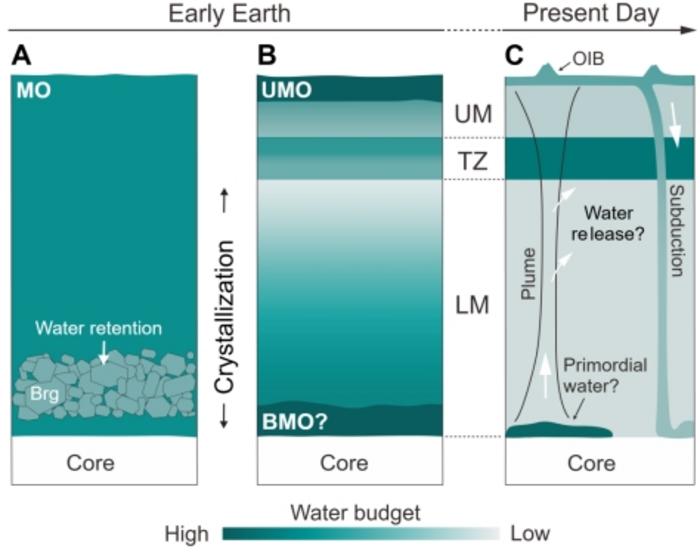
A high-profile Science paper and its accompanying press release from the Chinese Academy of Sciences make a bold claim: Earth may have locked away massive amounts of water deep in its mantle during the first tens of millions of years after formation, thanks to the mineral bridgmanite acting like a high-pressure “water container.” This challenges decades of textbook assumptions about a desiccated early mantle and a late veneer of water delivery.
 
Before we award supercomputing a gold star, it's important to consider whether the computational methods and modeling used are sufficiently transparent and if this impactful result truly relies on the world's fastest machines or primarily on traditional laboratory and theoretical calculations.
 
The press release highlights experimental setups, such as diamond anvil cells with laser heating and ultra-high-pressure imaging tools, used to replicate conditions at depths greater than 660 km below Earth’s surface. These are physical simulators of pressure and temperature, not digital ones.
 
However, nearly every Science paper on deep Earth processes, including this one, relies on numerical models to extrapolate limited lab data to planetary scales.
 
Here's the catch: The team doesn't clearly explain whether or how high-performance computing (HPC) or supercomputing simulations were used in their work. The Science article's abstract and press summary focus on experiments and analytical techniques for measuring microscopic water content, and Science's DOI listing confirms the publication details but makes no explicit mention of HPC resources.
 
That's somewhat unusual given the claim of planetary-scale simulations. Typically, understanding Earth's thermal and compositional evolution necessitates 3D models of mantle convection, phase transitions under extreme pressure, and coupled multiphysics, all tasks well-suited for supercomputers. However, the publicly available summary of this study doesn't detail such modeling or reference specific HPC centers or computational frameworks.
 
In Earth and planetary sciences, HPC integration is standard when scaling lab data to global processes. Papers in other fields explicitly link computational results to HPC resources and acknowledge the supercomputers used for simulations. However, this study's press release and the public Science abstract fail to cite any computing facility or discuss numerical simulation workflows, and Science's repository entry doesn't list HPC under methods. This creates a notable gap between the claim of "vast water storage deep in the mantle" and the evidence that supercomputing played a central role in the research.
 
This differs from genuinely computation-heavy studies in Science and similar journals, where authors provide details on the supercomputers used, parallel codes, numerical solvers, grid resolution, and performance scaling metrics, the essential elements of reproducible computational science. The lack of this technical information here raises questions about how significantly this result advanced beyond analytical theory and high-pressure experiments.
 
It's possible the researchers used computational models behind the scenes, perhaps calibrating thermodynamic or kinetic models with HPC simulations, but such details may be hidden in supplementary materials not yet public. However, based on the press materials and abstract, readers are left to guess whether this research is experimental geochemistry complemented by modest numerical modeling, or truly HPC-driven planetary challenge computing.
 
Why does this matter? The frontier of Earth science increasingly intersects with supercomputing. Massive datasets from seismic tomography, petrological phase diagrams, and global geodynamic simulations all depend on HPC to turn physics into planetary predictions. In an era when AI and HPC are reshaping scientific discovery, expanding what is novel and highly cited across fields (see broader analyses of HPC’s impact on research output and novelty), transparency about computational methods is not an optional extra; it is central to confidence in the claims.
 
The idea that Earth's deep interior may have sequestered oceans' worth of water is fascinating and potentially paradigm-shifting. However, until the computational underpinnings are clearly described, it is premature to celebrate this as a triumph of supercomputing. In an age when HPC is often the invisible engine of scientific breakthroughs, clarity about its role is not a luxury; it's a requirement for trust.
 
Supercomputing may yet prove essential for modeling Earth's earliest conditions at scale, but based on the available summaries of this work, we are not there yet.
  1. Siemens + GlobalFoundries forge an AI manufacturing alliance
  2. Uranus, Neptune. What lies beneath, a supercomputer unlocks the mystery
  3. Edge-AI meets spurs, saddles
  4. Scholars harness supercomputers to peer inside black holes, through code, not telescopes
  5. Seeing the unseeable: How AI, Supercomputers provide a clearer view of black holes
  6. Big numbers, big bets: Dell scales up HPC for the AI era
  7. SC25 pushes network frontiers as Pegatron unveils modular server ambitions

Page 38 of 62

  • 33
  • 34
  • 35
  • 36
  • 37
  • 38
  • 39
  • 40
  • 41
  • 42
POPULAR RIGHT NOW
  • Supercomputers replace ‘bathtub’ flood maps with physics-based digital twins of Britain’s coastline
    Supercomputers replace ‘bathtub’ flood maps with physics-based digital twins of Britain’s coastline
  • Supercomputers push neural quantum simulation beyond previous limits
    Supercomputers push neural quantum simulation beyond previous limits
  • Intel’s AI supercomputing revival: Q2 financial surge signals new era for CPU-powered HPC infrastructure
    Intel’s AI supercomputing revival: Q2 financial surge signals new era for CPU-powered HPC infrastructure
  • AI infrastructure financing fears shake semiconductor sector
    AI infrastructure financing fears shake semiconductor sector
  • AWS supercomputing investment reaches historic scale as Amazon’s AI strategy powers record financial results
    AWS supercomputing investment reaches historic scale as Amazon’s AI strategy powers record financial results
  • Catching the wave of the future: Supercomputers unlock the hidden dynamics of Venus
    Catching the wave of the future: Supercomputers unlock the hidden dynamics of Venus
  • NCAR supercomputers run planet scale climate experiments impossible in the real world
    NCAR supercomputers run planet scale climate experiments impossible in the real world
  • AI hunts the cosmos: Machine learning helps astronomers discover the first ‘Wandering’ supermassive black hole caught destroying a star
    AI hunts the cosmos: Machine learning helps astronomers discover the first ‘Wandering’ supermassive black hole caught destroying a star
  • Supercomputing for the masses: Meta's vision of a personal superintelligence for everyone
    Supercomputing for the masses: Meta's vision of a personal superintelligence for everyone
  • NVIDIA helps turn AI compute into a new asset class as Wall Street mobilizes $500 billion
    NVIDIA helps turn AI compute into a new asset class as Wall Street mobilizes $500 billion
THIS YEAR'S MOST READ
  • Beamforming the future: BeammWave's 6G push signals the rise of orbital-terrestrial wireless networks
    Joakim Axmon
    Joakim Axmon
  • Wall Street wants to trade supercomputing power like oil
    Wall Street wants to trade supercomputing power like oil
  • Cosmic ambition at scale: UK’s supercomputer unlocks a 2.5 petabytes universe
    Cosmic ambition at scale: UK’s supercomputer unlocks a 2.5 petabytes universe
  • Hidden order, revealed at scale: Supercomputing, electron ptychography uncover the inner workings of relaxor ferroelectrics
    Hidden order, revealed at scale: Supercomputing, electron ptychography uncover the inner workings of relaxor ferroelectrics
  • Intel's Q1 results signal supercomputing surge driving Xeon momentum
    Intel's Q1 results signal supercomputing surge driving Xeon momentum
  • Huawei’s Tau Scaling ambition tests the limits of post-Moore semiconductor reality
    He Tingbo from HUAWEI delivered a keynote speech titled "New Semiconductor Path in Practice"
    He Tingbo from HUAWEI delivered a keynote speech titled "New Semiconductor Path in Practice"
  • When stars fall apart: Supercomputing reveals the hidden physics of black holes
    When stars fall apart: Supercomputing reveals the hidden physics of black holes
  • MIT develops computational framework to probe dark matter via gravitational waves
    MIT develops computational framework to probe dark matter via gravitational waves
  • Memory has become the new compute: Why Micron, SK Hynix crossing $1 trillion matters to supercomputing
    Memory has become the new compute: Why Micron, SK Hynix crossing $1 trillion matters to supercomputing
  • AI breaks conservation barriers: Australia’s Wildlife Observatory leverages supercomputing to protect biodiversity
    AI breaks conservation barriers: Australia’s Wildlife Observatory leverages supercomputing to protect biodiversity
  • FRONTPAGE
  • LATEST
  • POPULAR
  • REGISTER
  • SOCIAL
  • VIDEO
  • SUBSCRIPTION
  • RSS
  • GUIDELINES
  • PRIVACY
  • TOS
  • ABOUT
  • +1 (816) 799-4488
  • editorial@supercomputingonline.com
© 2001 - 2026 SuperComputingOnline.com, LLC. All rights reserved. This material may not be published, broadcast, rewritten or redistributed without permission.
Sign In
  • FRONT PAGE
  • LATEST
    • MEDIA KIT
    • MOST READ
    • RSS FEED
    • ACADEMIA
    • AEROSPACE
    • APPLICATIONS
    • ASTRONOMY
    • AUTOMOTIVE
    • BIG DATA
    • BIOLOGY
    • CHEMISTRY
    • CLIENTS
    • CLOUD
    • DEFENSE
    • DEVELOPER TOOLS
    • EARTH SCIENCES
    • ECONOMICS
    • ENGINEERING
    • ENTERTAINMENT
    • HEALTH
    • INDUSTRY
    • INTERCONNECTS
    • GAMING
    • GOVERNMENT
    • MANUFACTURING
    • MIDDLEWARE
    • MOVIES
    • NETWORKS
    • OIL & GAS
    • PHYSICS
    • PROCESSORS
    • RETAIL
    • SCIENCE
    • STORAGE
    • SYSTEMS
    • VISUALIZATION
  • VIDEOS
    • ADD YOUR VIDEOS
    • MANAGE VIDEOS
  • COMMUNITY
    • TRADE SHOWS
    • SOCIAL NETWORK VIDEOS
    • SURVEYS
    • APPLICATIONS BROWSER
    • CONVERSATION INBOX
    • SOCIAL ADVERTISER
    • GROUPS
    • MARKETPLACE LISTINGS
    • PAGES
    • LEADERBOARD
    • POINTS LISTING
      • BADGES
    • PRIVACY CONFIRM REQUEST
    • PRIVACY CREATE REQUEST

Hey there! We noticed you’re using an ad blocker.