

SUPERCOMPUTING NEWS SUPERCOMPUTING NEWS
    • MEDIA KIT
    • MOST READ
    • RSS FEED
    • ACADEMIA
    • AEROSPACE
    • APPLICATIONS
    • ASTRONOMY
    • AUTOMOTIVE
    • BIG DATA
    • BIOLOGY
    • CHEMISTRY
    • CLIENTS
    • CLOUD
    • DEFENSE
    • DEVELOPER TOOLS
    • EARTH SCIENCES
    • ECONOMICS
    • ENGINEERING
    • ENTERTAINMENT
    • GAMING
    • GOVERNMENT
    • HEALTH
    • OIL & GAS
    • INDUSTRY
    • INTERCONNECTS
    • MANUFACTURING
    • MIDDLEWARE
    • MOVIES
    • NETWORKS
    • PHYSICS
    • PROCESSORS
    • RETAIL
    • SCIENCE
    • STORAGE
    • SYSTEMS
    • VISUALIZATION
    • AcyMailing subscription form

    • ADD YOUR VIDEOS
    • MANAGE VIDEOS
    • CONVERSATION INBOX
    • SOCIAL ADVERTISER
    • SOCIAL NETWORK VIDEOS
    • SURVEYS
    • GROUPS
    • PAGES
    • MARKETPLACE LISTINGS
    • APPLICATIONS BROWSER
    • PRIVACY CONFIRM REQUEST
    • PRIVACY CREATE REQUEST
    • LEADERBOARD
    • POINTS LISTING
      • BADGES
    • TRADE SHOWS
Sign In
Tyler O'Neal, Staff Editor ACADEMIA March 28, 2022, 1:00 pm

Mayo Clinic proposes a model for symptoms of Alzheimer's disease

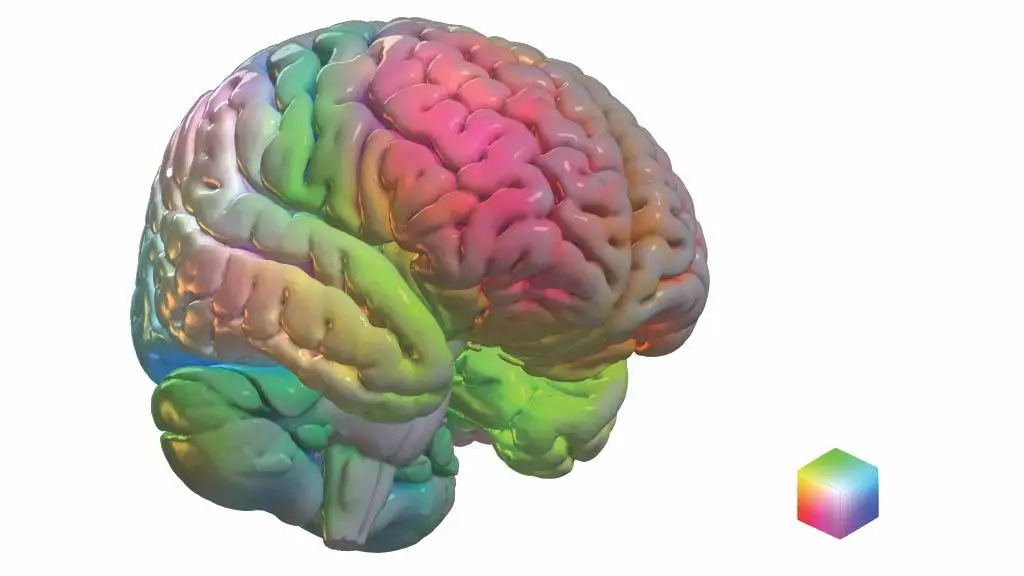
Mayo Clinic researchers have proposed a new model for mapping the symptoms of Alzheimer's disease to brain anatomy. This model was developed by applying machine learning to patient brain imaging data. It uses the entire function of the brain rather than specific brain regions or networks to explain the relationship between brain anatomy and mental processing. Colorful brain 16 x 9 108fc
"This new model can advance our understanding of how the brain works and breaks down during aging and Alzheimer's disease, providing new ways to monitor, prevent and treat disorders of the mind," says David T. Jones, M.D., a Mayo Clinic neurologist and lead author of the study.

Alzheimer's disease typically has been described as a protein-processing problem. The toxic proteins amyloid and tau deposit in areas of the brain, causing neuron failure that results in clinical symptoms such as memory loss, difficulty communicating, and confusion.

However, the relationship between clinical symptoms, patterns of brain damage, and brain anatomy are not clear. People also can have more than one neurodegenerative disease, making diagnosis difficult. Mapping brain behavior with this computational model may give a new perspective to clinicians.

The new model was developed using brain glucose measurements from fluorodeoxyglucose positron emission tomography (FDG-PET) performed on 423 study participants who are cognitively impaired and involved with the Mayo Clinic Study of Aging and the Mayo Clinic Alzheimer's Disease Research Center. FDG-PET is an imaging test that shows how glucose is fueling parts of the brain. Neurodegenerative diseases, such as Alzheimer's disease, Lewy body dementia, and frontotemporal dementia, for example, have different patterns of glucose use.

The model compresses complex brain anatomy relevant to dementia symptoms into a conceptual, color-coded framework that shows areas of the brain associated with neurodegenerative disorders and mental functions. Imaging patterns shown in the model relate to the symptoms patients experience.

The predictive ability of the model for changes associated with Alzheimer's physiology was validated in 410 people. Additional validation was obtained by projecting a large amount of data from normal aging and dementia syndromes targeting memory, executive functions, language, behavior, movement, perception, semantic knowledge, and visuospatial abilities.

The researchers found that 51% of the variances in glucose use patterns across the brains of patients with dementia could be explained by only 10 patterns. Each patient has a unique combination of these 10 brain glucose patterns that relate to the type of symptoms they experience. In follow-up work, Mayo Clinic's Department of Neurology Artificial Intelligence (AI) Program, which is directed by Dr. Jones, is using these 10 patterns to work on AI systems that help interpret brain scans from patients who are being evaluated for Alzheimer's disease and related syndromes.

"This new computational model, with more validation and support, has the potential to redirect scientific efforts to focus on dynamics in complex systems biology in the study of the mind and dementia rather than primarily focusing on misfolded proteins," Dr. Jones says.

"If the mental functions relevant for Alzheimer's disease are performed in a distributed manner across the entire brain, a new disease model like what we are proposing is needed. We think this model can potentially impact diagnostics, treatments, and the fundamental understanding of neurodegeneration and mental functions in general."

Russian scientists study atomic structure of aluminum alloys for manufacturing modern aircraft

Tyler O'Neal, Staff Editor ACADEMIA March 25, 2022, 12:30 pm

Researchers from the Belgorod State University (BSU) and the Skolkovo Institute of Science and Technology (Skoltech) in Russia have studied aluminum alloys at the atomic level and found patterns that will help improve their structure. The findings will be useful for developing new alloys for modern aircraft.

According to Marat Gazizov, senior researcher at the BSU Laboratory of Mechanical Properties of Nanostructured and Heat-Resistant Materials, the study focused on the Al-Cu-Mg-Ag system used for the wing and fuselage skin. The aluminum alloys used in aircraft structures have a wealth of advantages, such as small weight and resistance to wear and fracture at elevated temperatures, as well as cyclic and shock loads.

"Aluminum is combined with copper (Cu), magnesium (Mg), silver (Ag) and some other elements to achieve the desired properties. This process called alloying can significantly enhance the strength of the material treated by specific thermal or thermomechanical methods," Marat Gazizov explains.

Al-Cu-Mg-Ag alloying helps obtain high heat resistance alloys, but according to the project lead, the evolution of the alloy's structure and mechanical properties in various thermal or thermomechanical treatment modes and operating conditions is still not well understood, which explains the choice of topic for this study.

Marat Gazizov adds that the alloys are used as a structural material for parts and assemblies exposed to elevated temperatures, which calls for a unique combination of strength, fracture toughness, and high fatigue crack growth resistance.

"These days, computer simulation is no longer viewed as a 'magic wand' and is commonly used to study atomic-level effects. While experimenting with the heat-resistant aluminum alloy containing very small quantities of copper, magnesium and silver, we observed the formation of dispersed particles with a thickness of only a few nanometers which make the alloy much stronger despite their small size. In addition, the particles turned out to be coherent and fit well into the aluminum matrix, like pieces of a puzzle, although with slight distortions in their atomic structure. Also, we found that the particles' structure and, therefore, the heat-treated alloy's mechanical behavior change according to a certain pattern," Anton Boev, a research scientist at Skoltech, notes.

The study enhances the understanding of the unique mechanical properties and structure of aluminum alloys. The combination of mechanical properties obtained by the team will help extend the lifetime of aircraft structures made from these materials.

Chinese astronomers reveal a lighter Milky Way based on Gaia EDR3 data

Tyler O'Neal, Staff Editor ACADEMIA January 13, 2022, 5:00 am

The mass of the Milky Way is a fundamental quantity in modern astrophysics and cosmology that has a direct impact on many astrophysical problems.

With the combination of high-precision data from Gaia EDR3 and a new-generation dynamical modeling method, an international research team has found that the total mass of the Milky Way ranges from 500–800 billion solar mass, which indicates a lighter Milky Way when compared to previous measurements.

The study was led by Chinese astronomer WANG Jianling from the National Astronomical Observatories of the Chinese Academy of Sciences (NAOC), in collaboration with Francois Hammer and YANG Yanbin from the Paris Observatory under the framework of the Sino-French collaborative "Tianguan" project.

Previous studies of galactic dynamics were affected by two factors: Either they were based on a too small data set that introduced large uncertainties, or the tracers they used lacked information. The latter could be a serious matter since simple hypotheses on the equilibrium of some distant tracers have been used, thus introducing unknown systematic problems.

Now we are entering a golden era of galactic archeology with progress on large-scale spectroscopic surveys and high-precision proper motion measurements from the Gaia satellite, which provides a huge amount of high-quality data. These data overcome many difficulties mentioned above, especially by providing full, six-dimensional information for high-precision tracers acquired by Gaia.

Using these unprecedented data to study how our Milky Way and its halo are structured and how they assembled together is the central task facing astronomers, and dynamic modeling with supercomputers is the central tool for accomplishing this task.

The astronomers used a new-generation, analytical dynamic modeling technique, i.e., action-based, distribution function dynamical modeling. They derived the Milky Way baryon mass and dark matter mass distribution function, which in turn provided the accurate total mass of the Milky Way.

Thanks to the precise proper motions of Gaia, they derived the most precise kinematic information for around 150 galactic globular clusters. They combined this information with the accurate rotation curve information from the disk region also based on Gaia data. The flexible action-based distribution function overcomes many simplistic assumptions adopted by previous studies, thus leading to a more realistic distribution function for the tracers, and to a Milky Way mass distribution function.

N-body simulation and realistic cosmological hydrodynamic simulations have been used in this work to quantify any systematics introduced by the Large Magellanic Cloud passing by as well as by unrelaxed substructures.

This study has significant implications for cosmological problems and the origin of Milky Way satellites.

  1. SAIT demos the world's first MRAM based in-memory computing
  2. Georgetown biologists use AI to search for the next SARS-like virus

Page 75 of 123

  • 70
  • 71
  • 72
  • 73
  • 74
  • 75
  • 76
  • 77
  • 78
  • 79
POPULAR RIGHT NOW
  • Supercomputers uncover a new class of cosmic explosions hidden in plain sight
    Supercomputers uncover a new class of cosmic explosions hidden in plain sight
  • AI supercharges the hunt for stronger magnets: Iowa State researchers launch a new era of intelligent materials discovery
    AI supercharges the hunt for stronger magnets: Iowa State researchers launch a new era of intelligent materials discovery
  • IBM's Historic stock collapse raises questions for the future of enterprise supercomputing
    IBM's Historic stock collapse raises questions for the future of enterprise supercomputing
  • Could a novel dark matter theory simultaneously resolve multiple cosmic enigmas? Supercomputer simulations provide a compelling, albeit currently unverified, potential solution
    Could a novel dark matter theory simultaneously resolve multiple cosmic enigmas? Supercomputer simulations provide a compelling, albeit currently unverified, potential solution
  • Melting icebergs may be reshaping Earth’s greatest ocean current
    Melting icebergs may be reshaping Earth’s greatest ocean current
  • Supercomputers replace ‘bathtub’ flood maps with physics-based digital twins of Britain’s coastline
    Supercomputers replace ‘bathtub’ flood maps with physics-based digital twins of Britain’s coastline
  • Supercomputers push neural quantum simulation beyond previous limits
    Supercomputers push neural quantum simulation beyond previous limits
  • Intel’s AI supercomputing revival: Q2 financial surge signals new era for CPU-powered HPC infrastructure
    Intel’s AI supercomputing revival: Q2 financial surge signals new era for CPU-powered HPC infrastructure
  • AI infrastructure financing fears shake semiconductor sector
    AI infrastructure financing fears shake semiconductor sector
  • AWS supercomputing investment reaches historic scale as Amazon’s AI strategy powers record financial results
    AWS supercomputing investment reaches historic scale as Amazon’s AI strategy powers record financial results
THIS YEAR'S MOST READ
  • Wall Street wants to trade supercomputing power like oil
    Wall Street wants to trade supercomputing power like oil
  • Cosmic ambition at scale: UK’s supercomputer unlocks a 2.5 petabytes universe
    Cosmic ambition at scale: UK’s supercomputer unlocks a 2.5 petabytes universe
  • Hidden order, revealed at scale: Supercomputing, electron ptychography uncover the inner workings of relaxor ferroelectrics
    Hidden order, revealed at scale: Supercomputing, electron ptychography uncover the inner workings of relaxor ferroelectrics
  • Beamforming the future: BeammWave's 6G push signals the rise of orbital-terrestrial wireless networks
    Joakim Axmon
    Joakim Axmon
  • Intel's Q1 results signal supercomputing surge driving Xeon momentum
    Intel's Q1 results signal supercomputing surge driving Xeon momentum
  • When stars fall apart: Supercomputing reveals the hidden physics of black holes
    When stars fall apart: Supercomputing reveals the hidden physics of black holes
  • Multi-layer simulations reveal the hidden supply chain of solar prominences
    Multi-layer simulations reveal the hidden supply chain of solar prominences
  • Japanese scientists decode dolphin speed with supercomputing: Turbulence, vortices, and the hidden physics of propulsion
    Japanese scientists decode dolphin speed with supercomputing: Turbulence, vortices, and the hidden physics of propulsion
  • Cosmic feedback at scale: Supercomputing reveals how quasars regulate the early Universe
    Cosmic feedback at scale: Supercomputing reveals how quasars regulate the early Universe
  • Modeling life at the microscopic scale: A computational breakthrough in oxygen transport
    Modeling life at the microscopic scale: A computational breakthrough in oxygen transport
MOST READ OF ALL-TIME
  • Largest Computational Biology Simulation Mimics The Ribosome
    Details
    112108
    The amino acid (green) slithers into the chemical reaction center, moving through an evolutionarily ancient corridor of the ribosome (purple). The amino acid is delivered to the reaction core by the transfer RNA molecule (yellow).
    The amino acid (green) slithers into the chemical reaction center, moving through an evolutionarily ancient corridor of the ribosome (purple). The amino acid is delivered to the reaction core by the transfer RNA molecule (yellow).
  • Silicon 'neurons' may add a new dimension to chips
    Details
    80995
    Silicon 'neurons' may add a new dimension to chips
  • Linux Networx Accelerators Expected to Drive up to 4x Price/Performance
    Details
    75539
  • Complex Concepts That Really Add Up
    Details
    73640
    Complex Concepts That Really Add Up
  • Blue Sky Studios Donates Animation SuperComputer to Wesleyan
    Details
    68141
    Each rack holds 52 Angstrom Microsystem-brand “blades,” with a memory footprint of 12 or 24 gigabytes each. (Photos by Olivia Bartlett Drake)
    Each rack holds 52 Angstrom Microsystem-brand “blades,” with a memory footprint of 12 or 24 gigabytes each. (Photos by Olivia Bartlett Drake)
  • Humanities, HPC connect at NERSC
    Details
    57948
  • TeraGrid ’09 'Call for Participation'
    Details
    54952
  • Turbulence responsible for black holes' balancing act
    Details
    52313
  • Cray Wins $52 Million SuperComputer Contract
    Details
    50141
  • SDSC Researchers Accurately Predict Protein Docking
    Details
    46082
  • FRONTPAGE
  • LATEST
  • POPULAR
  • REGISTER
  • SOCIAL
  • VIDEO
  • SUBSCRIPTION
  • RSS
  • GUIDELINES
  • PRIVACY
  • TOS
  • ABOUT
  • +1 (816) 799-4488
  • editorial@supercomputingonline.com
© 2001 - 2026 SuperComputingOnline.com, LLC. All rights reserved. This material may not be published, broadcast, rewritten or redistributed without permission.
Sign In
  • FRONT PAGE
  • LATEST
    • MEDIA KIT
    • MOST READ
    • RSS FEED
    • ACADEMIA
    • AEROSPACE
    • APPLICATIONS
    • ASTRONOMY
    • AUTOMOTIVE
    • BIG DATA
    • BIOLOGY
    • CHEMISTRY
    • CLIENTS
    • CLOUD
    • DEFENSE
    • DEVELOPER TOOLS
    • EARTH SCIENCES
    • ECONOMICS
    • ENGINEERING
    • ENTERTAINMENT
    • HEALTH
    • INDUSTRY
    • INTERCONNECTS
    • GAMING
    • GOVERNMENT
    • MANUFACTURING
    • MIDDLEWARE
    • MOVIES
    • NETWORKS
    • OIL & GAS
    • PHYSICS
    • PROCESSORS
    • RETAIL
    • SCIENCE
    • STORAGE
    • SYSTEMS
    • VISUALIZATION
  • VIDEOS
    • ADD YOUR VIDEOS
    • MANAGE VIDEOS
  • COMMUNITY
    • TRADE SHOWS
    • SOCIAL NETWORK VIDEOS
    • SURVEYS
    • APPLICATIONS BROWSER
    • CONVERSATION INBOX
    • SOCIAL ADVERTISER
    • GROUPS
    • MARKETPLACE LISTINGS
    • PAGES
    • LEADERBOARD
    • POINTS LISTING
      • BADGES
    • PRIVACY CONFIRM REQUEST
    • PRIVACY CREATE REQUEST

Hey there! We noticed you’re using an ad blocker.