

SUPERCOMPUTING NEWS SUPERCOMPUTING NEWS
    • MEDIA KIT
    • MOST READ
    • RSS FEED
    • ACADEMIA
    • AEROSPACE
    • APPLICATIONS
    • ASTRONOMY
    • AUTOMOTIVE
    • BIG DATA
    • BIOLOGY
    • CHEMISTRY
    • CLIENTS
    • CLOUD
    • DEFENSE
    • DEVELOPER TOOLS
    • EARTH SCIENCES
    • ECONOMICS
    • ENGINEERING
    • ENTERTAINMENT
    • GAMING
    • GOVERNMENT
    • HEALTH
    • OIL & GAS
    • INDUSTRY
    • INTERCONNECTS
    • MANUFACTURING
    • MIDDLEWARE
    • MOVIES
    • NETWORKS
    • PHYSICS
    • PROCESSORS
    • RETAIL
    • SCIENCE
    • STORAGE
    • SYSTEMS
    • VISUALIZATION
    • AcyMailing subscription form

    • ADD YOUR VIDEOS
    • MANAGE VIDEOS
    • CONVERSATION INBOX
    • SOCIAL ADVERTISER
    • SOCIAL NETWORK VIDEOS
    • SURVEYS
    • GROUPS
    • PAGES
    • MARKETPLACE LISTINGS
    • APPLICATIONS BROWSER
    • PRIVACY CONFIRM REQUEST
    • PRIVACY CREATE REQUEST
    • LEADERBOARD
    • POINTS LISTING
      • BADGES
    • TRADE SHOWS
Sign In
Tyler O'Neal, Staff Editor ACADEMIA January 12, 2022, 5:00 pm

SAIT demos the world's first MRAM based in-memory computing

Samsung Electronics has announced its demonstration of the world's first in-memory computing based on MRAM (Magnetoresistive Random Access Memory). This research showcases Samsung’s leadership in-memory technology and its effort to merge memory and system semiconductors for next-generation artificial intelligence (AI) chips.

The research was led by Samsung Advanced Institute of Technology (SAIT) in close collaboration with Samsung Electronics Foundry Business and Semiconductor R&D Center. The researcher, Dr. Seungchul Jung, Staff Researcher at SAIT, and the co-corresponding scientists Dr. Donhee Ham, Fellow of SAIT and Professor of Harvard University, and Dr. Sang Joon Kim, Vice President of Technology at SAIT, spearheaded the research.

In the standard computer architecture, data is stored in memory chips and data computing is executed in separate processor chips. In contrast, in-memory computing is a new computing paradigm that seeks to perform both data storage and data computing in a memory network. Since this scheme can process a large amount of data stored within the memory network itself without having to move the data, and also because the data processing in the memory network is executed in a highly parallel manner, power consumption is substantially reduced. In-memory computing has thus emerged as one of the promising technologies to realize next-generation low-power AI semiconductor chips.

For this reason, research on in-memory computing has been intensely pursued worldwide. Non-volatile memories, in particular RRAM (Resistive Random Access Memory) and PRAM (Phase-change Random Access Memory), have been actively used for demonstrating in-memory computing. By contrast, it has so far been difficult to use MRAM ─ another type of non-volatile memory ─ for in-memory computing despite MRAM’s merits such as operation speed, endurance, and large-scale production. This difficulty stems from the low resistance of MRAM, due to which MRAM cannot enjoy the power reduction advantage when used in the standard in-memory computing architecture.

The Samsung Electronics researchers have provided a solution to this issue by an architectural innovation. Concretely, they succeeded in developing an MRAM array chip that demonstrates in-memory computing, by replacing the standard, current-sum in-memory computing architecture with a new, ‘resistance sum’ in-memory computing architecture, which addresses the problem of small resistances of individual MRAM devices.

Samsung’s research team subsequently tested the performance of this MRAM in-memory computing chip by running it to perform AI computing. The chip achieved an accuracy of 98% in the classification of hand-written digits and a 93% accuracy in detecting faces from scenes.

By ushering MRAM ─ the memory which has already reached commercial-scale production embedded in the system semiconductor fabrication ─ into the realm of in-memory computing, this work expands the frontier of the next-generation low-power AI chip technologies.

The researchers have also suggested that not only can this new MRAM chip be used for in-memory computing, but it also can serve as a platform to download biological neuronal networks. This is along the line of the neuromorphic electronics vision that Samsung’s researchers recently put forward in a perspective paper.

"In-memory computing draws similarity to the brain in the sense that in the brain, computing also occurs within the network of biological memories, or synapses, the points where neurons touch one another,” said Dr. Seungchul Jung, the first author of the paper. “While the computing performed by our MRAM network, for now, has a different purpose from the computing performed by the brain, such solid-state memory network may in the future be used as a platform to mimic the brain by modeling the brain’s synapse connectivity."

As highlighted in this work, by building on its leading memory technology and merging it with system semiconductor technology, Samsung plans to continue to expand its leadership in next-generation supercomputing and AI semiconductors.
Georgetown biologists use AI to search for the next SARS-like virus

Tyler O'Neal, Staff Editor ACADEMIA January 11, 2022, 5:00 am

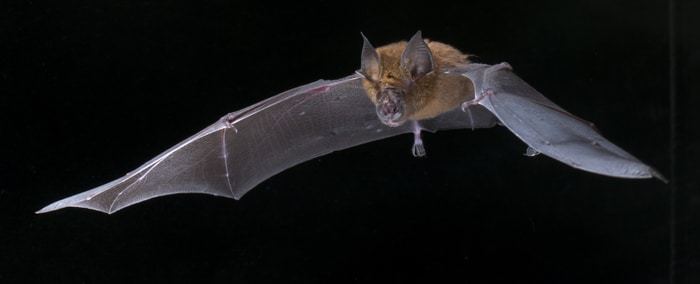
An international research team led by scientists at Georgetown University has demonstrated the power of artificial intelligence to predict which viruses could infect humans — like SARS-CoV-2, the virus that led to the COVID-19 pandemic — which animals host them, and where they could emerge. Rhinolophus rouxi, which inhabits parts of South Asia, was identified as a likely but undetected betacoronavirus host by the study authors.  CREDIT Brock and Sherri Fenton

Their ensemble of predictive models of likely reservoir hosts was validated in an 18-month project to identify specific bat species likely to carry beta coronaviruses, the group that includes SARS-like viruses.

“If you want to find these viruses, you have to start by profiling their hosts — their ecology, their evolution, even the shape of their wings,” explains the study’s senior author, Colin Carlson, Ph.D., an assistant research professor in the Department of Microbiology & Immunology and a member of Georgetown’s Center for Global Health Science and Security at Georgetown University Medical Center. “Artificial intelligence lets us take data on bats and turn it into concrete predictions: where should we be looking for the next SARS?”

Despite global investments in disease surveillance, it remains difficult to identify and monitor wildlife reservoirs of viruses that could someday infect humans. Statistical models are increasingly being used to prioritize which wildlife species to sample in the field, but the predictions being generated from any one model can be highly uncertain. Scientists also rarely track the success or failure of their predictions after they make them, making it hard to learn and make better models in the future. Together, these limitations mean that there is high uncertainty in which models may be best suited to the task.

This new study suggests that the search for closely-related viruses could be non-trivial, with over 400 bat species around the world predicted to host beta coronaviruses, a large group of viruses that includes those responsible for SARS-CoV (the virus that caused the 2002-2004 outbreak of SARS) and SARS-CoV-2 (the virus that causes COVID-19).  Although the origin of SARS-CoV-2 remains uncertain, the spillover of other viruses from bats is a growing problem due to factors like agricultural expansion and climate change.

Greg Albery, Ph.D., a postdoctoral fellow in Georgetown’s Biology Department, says COVID-19 provided the impetus to expedite their research. “This is a really rare opportunity,” explains Albery. “Outside of a pandemic, we’d never learn this much about these viruses in this small a timeframe. A decade of research has been collapsed into about a year of publications, and it means we can show that these tools work.”

In the first quarter of 2020, the researcher team trained eight different statistical models that predicted which kinds of animals could host beta coronaviruses. Over more than a year, the team then tracked the discovery of 40 new bat hosts of beta coronaviruses to validate initial predictions and dynamically update their models. The researchers found that models harnessing data on bat ecology and evolution performed extremely well at predicting new hosts. In contrast, cutting-edge models from network science that used high-level mathematics – but less biological data – performed roughly as well or worse than expected at random.

“One of the most important things our study gives us is a data-driven shortlist of which bat species should be studied further,” says Daniel Becker, Ph.D., assistant professor of biology at the University of Oklahoma. “After identifying these likely hosts, the next step is then to invest in monitoring to understand where and when beta coronaviruses are likely to spill over.”

Carlson says that the team is now working with other scientists around the world to test bat samples for coronaviruses based on their predictions.

“If we spend less money, resources, and time looking for these viruses, we can put all of those resources into the things that save lives down the road. We can invest in building universal vaccines to target those viruses or monitoring for spillover in people that live near bats,” says Carlson. “It’s a win-win for science and public health.”

USC Medicine Crump lab develops the Constellations algo for understanding head development

Tyler O'Neal, Staff Editor ACADEMIA January 10, 2022, 12:00 pm

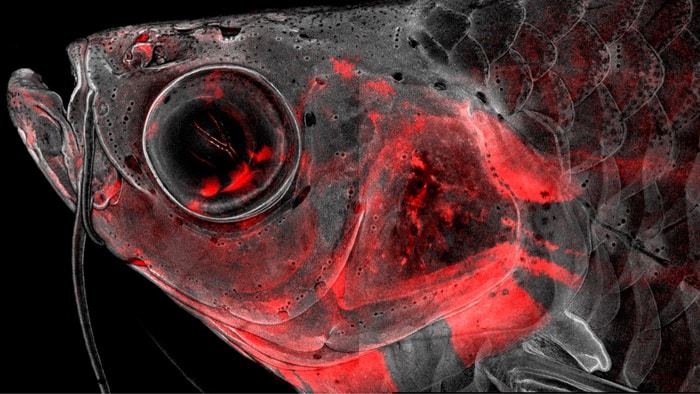
Cranial neural crest cells, or CNCCs, contribute to many more body parts than their humble name suggests. These remarkable stem cells not only form most of the skull and facial skeleton in all vertebrates ranging from fish to humans but also can generate everything from gills to the cornea. To understand this versatility, scientists from the lab of Gage Crump created a series of atlases over time to understand the molecular decisions by which CNCCs commit to forming specific tissues in developing zebrafish. Their findings may provide new insights into normal head development, as well as craniofacial birth defects. Confocal microscopy image of an adult zebrafish head with neural crest-derived cells in red. The Crump lab has used single-cell sequencing to understand how these cells build and repair the head skeleton, with implications for understanding human craniofacial birth defects and improving repair of skeletal tissues.  CREDIT Image courtesy of Peter Fabian

“CNCCs have long fascinated biologists by the incredible diversity of cell types they can generate. By studying this process in the genetically tractable zebrafish, we have identified many of the potential switches that allow CNCCs to form these very different cell types,” said Gage Crump, professor of stem cell biology and regenerative medicine at the Keck School of Medicine of USC.

Led by postdoc Peter Fabian and Ph.D. students Kuo-Chang Tseng, Mathi Thiruppathy, and Claire Arata, the team of scientists permanently labeled CNCCs with a red fluorescent protein to keep track of which cell types came from CNCCs throughout the lifetime of zebrafish. They then used a powerful type of approach, known as “single-cell genomics,” to identify the complete set of active genes and the organization of the DNA across hundreds of thousands of individual CNCCs. The massive quantity of data generated required the scientists to develop a new computational tool to make sense of it.

“We created a type of computational analysis that we called ‘Constellations,’ because the final visual output of the technique is reminiscent of constellations of stars in the sky,” said Fabian. “In contrast to astrology, our Constellations algorithm really can predict the future of cells and reveal the key genes that likely control their development.”

Through this new bioinformatic approach, the team discovered that CNCCs do not start with all the information required to make the huge diversity of cell types. Instead, only after they disperse throughout the embryo do CNCCs begin reorganizing their genetic material in preparation for becoming specific tissues. Constellations accurately identified genetic signs that point to these specific destinies for CNCCs. Real-life experiments confirmed that Constellations correctly pinpointed the role of a family of “FOX” genes in facial cartilage formation and a previously unappreciated function for “GATA” genes in the formation of gill respiratory cell types that allow fish to breathe.

“By conducting one of the most comprehensive single-cell studies of a vertebrate cell population to date, we not only gained significant insights into the development of the vertebrate head but also created a broadly useful computational tool for studying the development and regeneration of organ systems throughout the body,” said Crump.

  1. University of Tokyo researchers find public trust in AI varies greatly depending on the app
  2. Seeking a way of preventing audio models for AI machine learning from being fooled

Page 76 of 123

  • 71
  • 72
  • 73
  • 74
  • 75
  • 76
  • 77
  • 78
  • 79
  • 80
POPULAR RIGHT NOW
  • Supercomputers uncover a new class of cosmic explosions hidden in plain sight
    Supercomputers uncover a new class of cosmic explosions hidden in plain sight
  • AI supercharges the hunt for stronger magnets: Iowa State researchers launch a new era of intelligent materials discovery
    AI supercharges the hunt for stronger magnets: Iowa State researchers launch a new era of intelligent materials discovery
  • IBM's Historic stock collapse raises questions for the future of enterprise supercomputing
    IBM's Historic stock collapse raises questions for the future of enterprise supercomputing
  • Could a novel dark matter theory simultaneously resolve multiple cosmic enigmas? Supercomputer simulations provide a compelling, albeit currently unverified, potential solution
    Could a novel dark matter theory simultaneously resolve multiple cosmic enigmas? Supercomputer simulations provide a compelling, albeit currently unverified, potential solution
  • Melting icebergs may be reshaping Earth’s greatest ocean current
    Melting icebergs may be reshaping Earth’s greatest ocean current
  • Supercomputers replace ‘bathtub’ flood maps with physics-based digital twins of Britain’s coastline
    Supercomputers replace ‘bathtub’ flood maps with physics-based digital twins of Britain’s coastline
  • Supercomputers push neural quantum simulation beyond previous limits
    Supercomputers push neural quantum simulation beyond previous limits
  • Intel’s AI supercomputing revival: Q2 financial surge signals new era for CPU-powered HPC infrastructure
    Intel’s AI supercomputing revival: Q2 financial surge signals new era for CPU-powered HPC infrastructure
  • AI infrastructure financing fears shake semiconductor sector
    AI infrastructure financing fears shake semiconductor sector
  • AWS supercomputing investment reaches historic scale as Amazon’s AI strategy powers record financial results
    AWS supercomputing investment reaches historic scale as Amazon’s AI strategy powers record financial results
THIS YEAR'S MOST READ
  • Wall Street wants to trade supercomputing power like oil
    Wall Street wants to trade supercomputing power like oil
  • Cosmic ambition at scale: UK’s supercomputer unlocks a 2.5 petabytes universe
    Cosmic ambition at scale: UK’s supercomputer unlocks a 2.5 petabytes universe
  • Hidden order, revealed at scale: Supercomputing, electron ptychography uncover the inner workings of relaxor ferroelectrics
    Hidden order, revealed at scale: Supercomputing, electron ptychography uncover the inner workings of relaxor ferroelectrics
  • Beamforming the future: BeammWave's 6G push signals the rise of orbital-terrestrial wireless networks
    Joakim Axmon
    Joakim Axmon
  • Intel's Q1 results signal supercomputing surge driving Xeon momentum
    Intel's Q1 results signal supercomputing surge driving Xeon momentum
  • When stars fall apart: Supercomputing reveals the hidden physics of black holes
    When stars fall apart: Supercomputing reveals the hidden physics of black holes
  • Multi-layer simulations reveal the hidden supply chain of solar prominences
    Multi-layer simulations reveal the hidden supply chain of solar prominences
  • Japanese scientists decode dolphin speed with supercomputing: Turbulence, vortices, and the hidden physics of propulsion
    Japanese scientists decode dolphin speed with supercomputing: Turbulence, vortices, and the hidden physics of propulsion
  • Cosmic feedback at scale: Supercomputing reveals how quasars regulate the early Universe
    Cosmic feedback at scale: Supercomputing reveals how quasars regulate the early Universe
  • Modeling life at the microscopic scale: A computational breakthrough in oxygen transport
    Modeling life at the microscopic scale: A computational breakthrough in oxygen transport
MOST READ OF ALL-TIME
  • Largest Computational Biology Simulation Mimics The Ribosome
    Details
    112108
    The amino acid (green) slithers into the chemical reaction center, moving through an evolutionarily ancient corridor of the ribosome (purple). The amino acid is delivered to the reaction core by the transfer RNA molecule (yellow).
    The amino acid (green) slithers into the chemical reaction center, moving through an evolutionarily ancient corridor of the ribosome (purple). The amino acid is delivered to the reaction core by the transfer RNA molecule (yellow).
  • Silicon 'neurons' may add a new dimension to chips
    Details
    80995
    Silicon 'neurons' may add a new dimension to chips
  • Linux Networx Accelerators Expected to Drive up to 4x Price/Performance
    Details
    75538
  • Complex Concepts That Really Add Up
    Details
    73639
    Complex Concepts That Really Add Up
  • Blue Sky Studios Donates Animation SuperComputer to Wesleyan
    Details
    68141
    Each rack holds 52 Angstrom Microsystem-brand “blades,” with a memory footprint of 12 or 24 gigabytes each. (Photos by Olivia Bartlett Drake)
    Each rack holds 52 Angstrom Microsystem-brand “blades,” with a memory footprint of 12 or 24 gigabytes each. (Photos by Olivia Bartlett Drake)
  • Humanities, HPC connect at NERSC
    Details
    57948
  • TeraGrid ’09 'Call for Participation'
    Details
    54952
  • Turbulence responsible for black holes' balancing act
    Details
    52313
  • Cray Wins $52 Million SuperComputer Contract
    Details
    50140
  • SDSC Researchers Accurately Predict Protein Docking
    Details
    46082
  • FRONTPAGE
  • LATEST
  • POPULAR
  • REGISTER
  • SOCIAL
  • VIDEO
  • SUBSCRIPTION
  • RSS
  • GUIDELINES
  • PRIVACY
  • TOS
  • ABOUT
  • +1 (816) 799-4488
  • editorial@supercomputingonline.com
© 2001 - 2026 SuperComputingOnline.com, LLC. All rights reserved. This material may not be published, broadcast, rewritten or redistributed without permission.
Sign In
  • FRONT PAGE
  • LATEST
    • MEDIA KIT
    • MOST READ
    • RSS FEED
    • ACADEMIA
    • AEROSPACE
    • APPLICATIONS
    • ASTRONOMY
    • AUTOMOTIVE
    • BIG DATA
    • BIOLOGY
    • CHEMISTRY
    • CLIENTS
    • CLOUD
    • DEFENSE
    • DEVELOPER TOOLS
    • EARTH SCIENCES
    • ECONOMICS
    • ENGINEERING
    • ENTERTAINMENT
    • HEALTH
    • INDUSTRY
    • INTERCONNECTS
    • GAMING
    • GOVERNMENT
    • MANUFACTURING
    • MIDDLEWARE
    • MOVIES
    • NETWORKS
    • OIL & GAS
    • PHYSICS
    • PROCESSORS
    • RETAIL
    • SCIENCE
    • STORAGE
    • SYSTEMS
    • VISUALIZATION
  • VIDEOS
    • ADD YOUR VIDEOS
    • MANAGE VIDEOS
  • COMMUNITY
    • TRADE SHOWS
    • SOCIAL NETWORK VIDEOS
    • SURVEYS
    • APPLICATIONS BROWSER
    • CONVERSATION INBOX
    • SOCIAL ADVERTISER
    • GROUPS
    • MARKETPLACE LISTINGS
    • PAGES
    • LEADERBOARD
    • POINTS LISTING
      • BADGES
    • PRIVACY CONFIRM REQUEST
    • PRIVACY CREATE REQUEST

Hey there! We noticed you’re using an ad blocker.