

SUPERCOMPUTING NEWS SUPERCOMPUTING NEWS
    • MEDIA KIT
    • MOST READ
    • RSS FEED
    • ACADEMIA
    • AEROSPACE
    • APPLICATIONS
    • ASTRONOMY
    • AUTOMOTIVE
    • BIG DATA
    • BIOLOGY
    • CHEMISTRY
    • CLIENTS
    • CLOUD
    • DEFENSE
    • DEVELOPER TOOLS
    • EARTH SCIENCES
    • ECONOMICS
    • ENGINEERING
    • ENTERTAINMENT
    • GAMING
    • GOVERNMENT
    • HEALTH
    • OIL & GAS
    • INDUSTRY
    • INTERCONNECTS
    • MANUFACTURING
    • MIDDLEWARE
    • MOVIES
    • NETWORKS
    • PHYSICS
    • PROCESSORS
    • RETAIL
    • SCIENCE
    • STORAGE
    • SYSTEMS
    • VISUALIZATION
    • AcyMailing subscription form

    • ADD YOUR VIDEOS
    • MANAGE VIDEOS
    • CONVERSATION INBOX
    • SOCIAL ADVERTISER
    • SOCIAL NETWORK VIDEOS
    • SURVEYS
    • GROUPS
    • PAGES
    • MARKETPLACE LISTINGS
    • APPLICATIONS BROWSER
    • PRIVACY CONFIRM REQUEST
    • PRIVACY CREATE REQUEST
    • LEADERBOARD
    • POINTS LISTING
      • BADGES
    • TRADE SHOWS
Sign In
Tyler O'Neal, Staff Editor ACADEMIA December 17, 2021, 12:00 pm

New Humboldt prof creates nature-inspired AI at Bielefeld University

How can artificial intelligence (AI) draw on principles from nature to solve complex problems? When it comes to recognizing patterns in large amounts of data, AI is faster and more capable than humans. However, it has difficulties when it has to make connections or deal with uncertainties and fuzziness. Through evolution, development, and learning, nature has developed much more practical problem-solving solutions. Professor Dr.-Ing. Yaochu Jin, the Alexander von Humboldt Professor of Artificial Intelligence at Bielefeld University since the autumn, is looking at how such principles can be transferred to AI. Humboldt Professor Dr.-Ing. Yaochu Jin is doing research on nature-inspired intelligent technological systems that organize themselves in a changing environment.  CREDIT Photo: Bielefeld University/S. Jonek
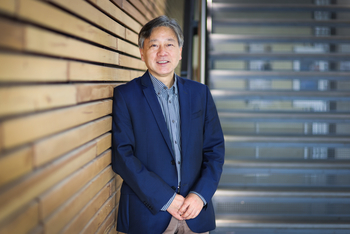
The Humboldt Professor will be continuing his previous research on nature-inspired artificial intelligence at Bielefeld University and looking for applications of nature-inspired and self-organized AI. ‘My goal is to understand and borrow successful mechanisms from nature and transfer them into artificial intelligence for problem-solving,’ says Jin. The Alexander von Humboldt Foundation is supporting Yaochu Jin's research with prize funds amounting to 3.5 million euros over five years.

The scientist, who comes from China, is currently setting up his research laboratory at the Faculty of Technology and building up his research team. Having a team with an interdisciplinary orientation is particularly important to him because it enables him to bring together approaches from different disciplines such as computer science, biology, and medicine. He also emphasizes the need for international cooperation in his research. For example, he is looking forward to researching visits from international scientists such as former students from China and researchers from the University of Surrey, the UK where he worked before moving to Bielefeld. He is driven by his thirst for knowledge and his curiosity: ‘I want to do something that is currently not the main approach to AI,’ he says. ‘And I want to find out more about possible applications that have yet to be explored sufficiently.’

Enabling technical systems to organize themselves
There are quite a few areas in which AI is reaching its limits. ‘AI is designed to work very precisely,’ says Jin. ‘But when uncertainty comes into play or things are not completely clear, it gets into difficulties.’ In addition, AI usually focuses concretely on a specific question or task. Using it becomes a challenge when it has to organize itself to, for example, make connections or find a solution to a task that is not well defined.

Nature, on the other hand, is perfectly capable of dealing with various degrees of uncertainty. ‘When we are born, our basic equipment can draw on millions of years of evolution,’ says Jin. For example, the structure of the brain has long been tried and tested in nature. ‘But, at the same time, we change and adapt to the demands of our environment,’ the professor says. Our brain is neuroplastic and capable of constantly rewiring itself, so it can adapt. When you learn a foreign language or play a new sport, for example, your brain changes accordingly. ‘You can also see this if you let twin cats grow up in different environments. You’ll find differences in their neural systems, even though their genetic makeup is practically identical.’

Artificial intelligence that works according to the principles of nature
Hence, nature is capable of reacting and adapting flexibly to the greatest variety of problems and requirements, whereas AI is usually rigidly oriented towards concrete issues. Jin, who was previously involved in a research collaboration within the Bielefeld University’s CoR-Lab when he was at the Honda Research Institute Europe, and most recently worked as a Distinguished Chair Professor at the University of Surrey, UK and as a Finland Distinguished Professor at the University of Jyväskylä, Finland, is therefore looking at how to orient AI in a way that mimics these basic principles of nature, thereby making it significantly more flexible. He has done pioneering work in the field of nature-inspired optimization and self-organization and will continue to work on evolutionary and developmental systems in Bielefeld.

At Bielefeld University, Jin will devote himself to understanding and simulating intelligence in nature—in particular, the co-evolution and development of neural systems and body plans.

Using secure and privacy-preserving evolutionary learning for healthcare
Jin’s future research will also focus particularly on the application of privacy-preserving AI to healthcare. ‘My main concern at the moment is how to make use of data while effectively protecting its privacy and security,’ he says. ‘Especially in healthcare, data are very sensitive and need to be as secure as possible.’ That’s why this requires not only adaptive but also particularly robust systems that can withstand attacks from outside.

Jin also has one big dream for his research: he would like to use AI to research understanding the genetic mechanisms underlying heart failure. ‘I would like to be able to determine which genes are involved and which interactions between genes increase the risk of heart problems,’ he says. ‘It's a very complex topic, of course, but I’d like to find out more about it.’

The Humboldt Professor is expected to give his inaugural lecture in March 2022. The event will be organized by the Faculty of Technology at Bielefeld University and the Joint Artificial Intelligence Institute that belongs to both Bielefeld and Paderborn universities. The lecture will be held in a hybrid format. When it will take place depends on how the coronavirus pandemic continues to develop.

Research award helps to attract top international researchers
The Alexander von Humboldt Professorship has been offered since 2008. It is the most highly endowed research award in Germany—it grants 5 million euros for academics doing experimental and 3.5 million euros for those doing theoretical research. The award is granted by the Alexander von Humboldt Foundation and funded by the Federal Ministry of Education and Research. With the Humboldt Professorship, the Foundation wants to enable German universities to raise their profile in the global competition. It allows universities to offer top researchers internationally competitive conditions. At the same time, the award includes an obligation to offer the new Humboldt Professors a long-term perspective for their research in Germany.

The first Humboldt Professorship at Bielefeld University was awarded to the mathematician Professor Dr. William Crawley-Boevey in 2016. He is considered a luminary in his field—the representation theory of algebras. He moved to Bielefeld from the University of Leeds (UK).
Flawed diamonds may provide perfect interface for quantum supercomputers

Tyler O'Neal, Staff Editor ACADEMIA December 16, 2021, 9:00 am

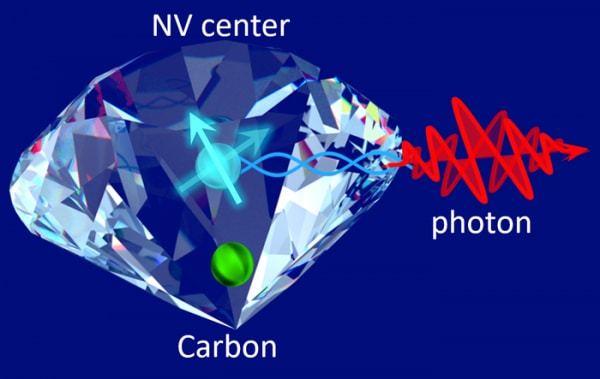
Flaws in diamonds, atomic defects where carbon is replaced by nitrogen or another element, may offer a close-to-perfect interface for quantum supercomputing, a proposed communications exchange that promises to be faster and more secure than current methods. There’s one major problem, though: these flaws, known as diamond nitrogen-vacancy centers, are controlled via a magnetic field, which is incompatible with existing quantum devices. Imagine trying to connect an Altair, an early personal computer developed in 1974, to the internet via WiFi. It’s a difficult, but not impossible task. The two technologies speak different languages, so the first step is to help translate. By combining the entangled emission demonstrated in this study with the previously demonstrated quantum teleportation transfer from a photon to a nuclear spin in diamond, researchers will generate quantum entanglement between remote locations based on quantum teleportation.

Researchers at Yokohama National University have developed an interface approach to control the diamond nitrogen-vacancy centers in a way that allows direct translation to quantum devices. 

“To realize the quantum internet, a quantum interface is required to generate remote quantum entanglement by photons, which are a quantum communication medium,” said corresponding author Hideo Kosaka, professor in the Quantum Information Research Center, Institute of Advanced Sciences and in the Department of Physics, Graduate School of Engineering, both at Yokohama National University. “

The promised quantum internet is rooted in more than a century’s worth of work in which researchers determined that photons are both particles and waves of light simultaneously — and that their wave state can reveal information about their particle state and vice versa. More than that, the two states could influence each other: pinching the wave could bruise the particle, so to speak. Their very nature is entangled, even across vast distances. The aim is to control the entanglement to communicate discrete data instantaneously and securely.

Previous research has demonstrated this controlled entanglement can be achieved by applying a magnetic field to the nitrogen-vacancy centers, Kosaka said, but a non-magnetic field approach is needed to move closer to realizing the quantum internet.

His team successfully used microwave and light polarized waves to entangle an emitted photon and left spin qubits, the quantum equivalent of information bits in classical systems. These polarizations are waves that move perpendicular to the originating source, like seismic waves radiating out horizontally from a vertical fault shift. In quantum mechanics, the spin property — either right- or left-handed — of the photon determines how the polarization moves, meaning it is predictable and controllable. Critically, according to Kosaka, when inducing entanglement via this property under a non-magnetic field, the connection appears steadfast against other variables.

“The geometric nature of polarization allows us to generate remote quantum entanglement that is resilient to noise and timing errors,” Kosaka said. 

According to Kosaka, his team will combine this approach with a previously demonstrated quantum information transfer via teleportation to generate quantum entanglement, and the resulting exchange of information, between remote locations. The eventual goal, Kosaka said, is to facilitate a connected network of quantum computers to establish a quantum internet.

“The realization of a quantum internet will enable quantum cryptography, distributed quantum computation, and quantum sensing over long distances of more than 1,000 kilometers,” Kosaka said.

Rochester scientists reveal the limits of machine learning for hydrogen models

Tyler O'Neal, Staff Editor ACADEMIA December 16, 2021, 8:00 am

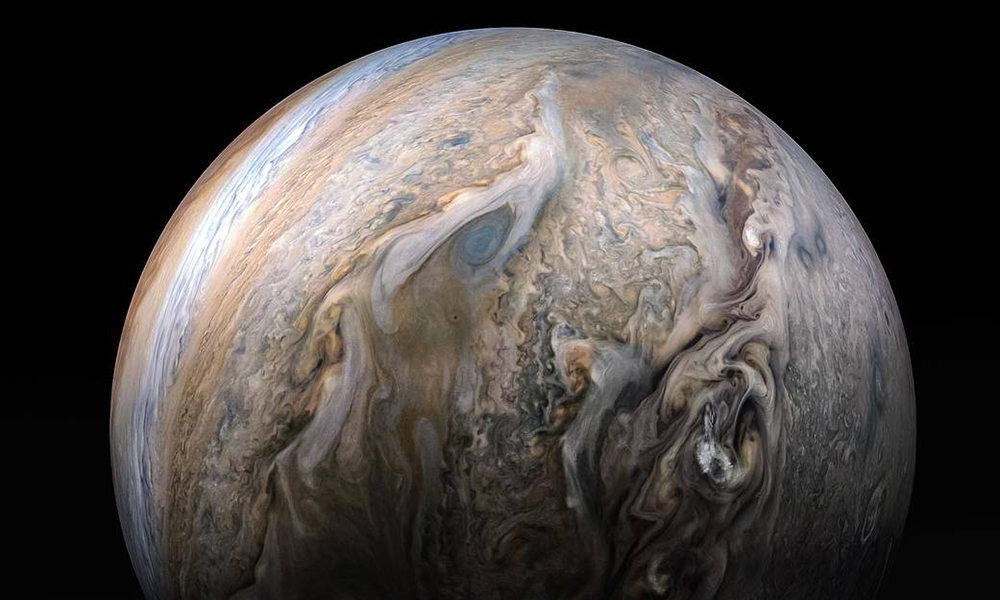
Research from the Laboratory for Laser Energetics paves the way for more accurate supercomputer models, which are needed to understand the interior of planets and the physical properties of nuclear fusion. Metallic hydrogen is rare on earth, but it is found in large quantities in the interiors of planets such as Jupiter. New research at the Laboratory for Laser Energetics provides more accurate data on hydrogen's phase transition to metallic hydrogen, which will help in building more accurate computer models. (NASA/JPL-Caltech/SwRI/MSSS/Kevin M. Gill)

Hydrogen is one of the most abundant elements in the universe.

On Earth, hydrogen is normally a gas. But when it is under high temperatures and pressures—the conditions that exist within many planets, such as Jupiter—hydrogen goes through a series of phase transitions and takes on the properties of a liquid metal. One of the metallic properties it takes on is becoming an electrical conductor.

In a new paper in Nature’s “Matters Arising,” researchers at the University of Rochester Laboratory for Laser Energetics (LLE), including lead author Valentin Karasiev, an LLE staff scientist; graduate student Josh Hinz; and Suxing Hu, an associate professor of mechanical engineering and a distinguished scientist at the LLE, respond to a 2020 Nature paper that used machine learning techniques to study the liquid-liquid phase transitions of dense hydrogen from an insulating liquid to a liquid metal.

In their response, Karasiev and his colleagues outline how these machine learning techniques produced incorrect results in describing hydrogen’s phase transitions. Their research has important implications in building more accurate computer models to study hydrogen, which can lead to a better understanding of the interiors of planets and stars and the physical properties of processes like nuclear fusion.

When building the equation-of-state of hydrogen—the equation that describes the state of hydrogen under various physical conditions—it is important to characterize the transition into the metallic hydrogen phase: Is it an abrupt (sharp) transition or a smooth transition?

“This physics character of first-order phase transition can have profound implications in understanding what giant planets’ interior structures look like, such as de-mixing of hydrogen and helium in Jupiter,” Hu says.

In the 2020 Nature paper, researchers used machine learning and concluded the transition of hydrogen to the metallic hydrogen phase was smooth. Karasiev and his colleagues, however, performed large-scale quantum simulations using other fundamental density-functional theories and found that hydrogen’s transition is not smooth, but is instead more abrupt. This is consistent with other previous data collected without machine learning.

“Our work demonstrated that machine learning can fool scientists if they are not careful when using machine learning to study phase-transition boundaries,” Karasiev says. “This is an important step in building better models to outline how hydrogen can become metallic hydrogen.”

  1. Scientists unravel a new insight into how Pluto has formed ice-shapes
  2. Exotic quantum particles research paves the way for future quantum apps with less magnetic field required

Page 80 of 123

  • 75
  • 76
  • 77
  • 78
  • 79
  • 80
  • 81
  • 82
  • 83
  • 84
POPULAR RIGHT NOW
  • Supercomputers uncover a new class of cosmic explosions hidden in plain sight
    Supercomputers uncover a new class of cosmic explosions hidden in plain sight
  • AI supercharges the hunt for stronger magnets: Iowa State researchers launch a new era of intelligent materials discovery
    AI supercharges the hunt for stronger magnets: Iowa State researchers launch a new era of intelligent materials discovery
  • IBM's Historic stock collapse raises questions for the future of enterprise supercomputing
    IBM's Historic stock collapse raises questions for the future of enterprise supercomputing
  • Could a novel dark matter theory simultaneously resolve multiple cosmic enigmas? Supercomputer simulations provide a compelling, albeit currently unverified, potential solution
    Could a novel dark matter theory simultaneously resolve multiple cosmic enigmas? Supercomputer simulations provide a compelling, albeit currently unverified, potential solution
  • Melting icebergs may be reshaping Earth’s greatest ocean current
    Melting icebergs may be reshaping Earth’s greatest ocean current
  • Supercomputers replace ‘bathtub’ flood maps with physics-based digital twins of Britain’s coastline
    Supercomputers replace ‘bathtub’ flood maps with physics-based digital twins of Britain’s coastline
  • Supercomputers push neural quantum simulation beyond previous limits
    Supercomputers push neural quantum simulation beyond previous limits
  • Intel’s AI supercomputing revival: Q2 financial surge signals new era for CPU-powered HPC infrastructure
    Intel’s AI supercomputing revival: Q2 financial surge signals new era for CPU-powered HPC infrastructure
  • AI infrastructure financing fears shake semiconductor sector
    AI infrastructure financing fears shake semiconductor sector
  • AWS supercomputing investment reaches historic scale as Amazon’s AI strategy powers record financial results
    AWS supercomputing investment reaches historic scale as Amazon’s AI strategy powers record financial results
THIS YEAR'S MOST READ
  • Wall Street wants to trade supercomputing power like oil
    Wall Street wants to trade supercomputing power like oil
  • Cosmic ambition at scale: UK’s supercomputer unlocks a 2.5 petabytes universe
    Cosmic ambition at scale: UK’s supercomputer unlocks a 2.5 petabytes universe
  • Hidden order, revealed at scale: Supercomputing, electron ptychography uncover the inner workings of relaxor ferroelectrics
    Hidden order, revealed at scale: Supercomputing, electron ptychography uncover the inner workings of relaxor ferroelectrics
  • Beamforming the future: BeammWave's 6G push signals the rise of orbital-terrestrial wireless networks
    Joakim Axmon
    Joakim Axmon
  • Intel's Q1 results signal supercomputing surge driving Xeon momentum
    Intel's Q1 results signal supercomputing surge driving Xeon momentum
  • When stars fall apart: Supercomputing reveals the hidden physics of black holes
    When stars fall apart: Supercomputing reveals the hidden physics of black holes
  • Multi-layer simulations reveal the hidden supply chain of solar prominences
    Multi-layer simulations reveal the hidden supply chain of solar prominences
  • Japanese scientists decode dolphin speed with supercomputing: Turbulence, vortices, and the hidden physics of propulsion
    Japanese scientists decode dolphin speed with supercomputing: Turbulence, vortices, and the hidden physics of propulsion
  • Cosmic feedback at scale: Supercomputing reveals how quasars regulate the early Universe
    Cosmic feedback at scale: Supercomputing reveals how quasars regulate the early Universe
  • Modeling life at the microscopic scale: A computational breakthrough in oxygen transport
    Modeling life at the microscopic scale: A computational breakthrough in oxygen transport
MOST READ OF ALL-TIME
  • Largest Computational Biology Simulation Mimics The Ribosome
    Details
    112108
    The amino acid (green) slithers into the chemical reaction center, moving through an evolutionarily ancient corridor of the ribosome (purple). The amino acid is delivered to the reaction core by the transfer RNA molecule (yellow).
    The amino acid (green) slithers into the chemical reaction center, moving through an evolutionarily ancient corridor of the ribosome (purple). The amino acid is delivered to the reaction core by the transfer RNA molecule (yellow).
  • Silicon 'neurons' may add a new dimension to chips
    Details
    80995
    Silicon 'neurons' may add a new dimension to chips
  • Linux Networx Accelerators Expected to Drive up to 4x Price/Performance
    Details
    75538
  • Complex Concepts That Really Add Up
    Details
    73639
    Complex Concepts That Really Add Up
  • Blue Sky Studios Donates Animation SuperComputer to Wesleyan
    Details
    68141
    Each rack holds 52 Angstrom Microsystem-brand “blades,” with a memory footprint of 12 or 24 gigabytes each. (Photos by Olivia Bartlett Drake)
    Each rack holds 52 Angstrom Microsystem-brand “blades,” with a memory footprint of 12 or 24 gigabytes each. (Photos by Olivia Bartlett Drake)
  • Humanities, HPC connect at NERSC
    Details
    57948
  • TeraGrid ’09 'Call for Participation'
    Details
    54952
  • Turbulence responsible for black holes' balancing act
    Details
    52313
  • Cray Wins $52 Million SuperComputer Contract
    Details
    50140
  • SDSC Researchers Accurately Predict Protein Docking
    Details
    46082
  • FRONTPAGE
  • LATEST
  • POPULAR
  • REGISTER
  • SOCIAL
  • VIDEO
  • SUBSCRIPTION
  • RSS
  • GUIDELINES
  • PRIVACY
  • TOS
  • ABOUT
  • +1 (816) 799-4488
  • editorial@supercomputingonline.com
© 2001 - 2026 SuperComputingOnline.com, LLC. All rights reserved. This material may not be published, broadcast, rewritten or redistributed without permission.
Sign In
  • FRONT PAGE
  • LATEST
    • MEDIA KIT
    • MOST READ
    • RSS FEED
    • ACADEMIA
    • AEROSPACE
    • APPLICATIONS
    • ASTRONOMY
    • AUTOMOTIVE
    • BIG DATA
    • BIOLOGY
    • CHEMISTRY
    • CLIENTS
    • CLOUD
    • DEFENSE
    • DEVELOPER TOOLS
    • EARTH SCIENCES
    • ECONOMICS
    • ENGINEERING
    • ENTERTAINMENT
    • HEALTH
    • INDUSTRY
    • INTERCONNECTS
    • GAMING
    • GOVERNMENT
    • MANUFACTURING
    • MIDDLEWARE
    • MOVIES
    • NETWORKS
    • OIL & GAS
    • PHYSICS
    • PROCESSORS
    • RETAIL
    • SCIENCE
    • STORAGE
    • SYSTEMS
    • VISUALIZATION
  • VIDEOS
    • ADD YOUR VIDEOS
    • MANAGE VIDEOS
  • COMMUNITY
    • TRADE SHOWS
    • SOCIAL NETWORK VIDEOS
    • SURVEYS
    • APPLICATIONS BROWSER
    • CONVERSATION INBOX
    • SOCIAL ADVERTISER
    • GROUPS
    • MARKETPLACE LISTINGS
    • PAGES
    • LEADERBOARD
    • POINTS LISTING
      • BADGES
    • PRIVACY CONFIRM REQUEST
    • PRIVACY CREATE REQUEST

Hey there! We noticed you’re using an ad blocker.