

SUPERCOMPUTING NEWS SUPERCOMPUTING NEWS
    • MEDIA KIT
    • MOST READ
    • RSS FEED
    • ACADEMIA
    • AEROSPACE
    • APPLICATIONS
    • ASTRONOMY
    • AUTOMOTIVE
    • BIG DATA
    • BIOLOGY
    • CHEMISTRY
    • CLIENTS
    • CLOUD
    • DEFENSE
    • DEVELOPER TOOLS
    • EARTH SCIENCES
    • ECONOMICS
    • ENGINEERING
    • ENTERTAINMENT
    • GAMING
    • GOVERNMENT
    • HEALTH
    • OIL & GAS
    • INDUSTRY
    • INTERCONNECTS
    • MANUFACTURING
    • MIDDLEWARE
    • MOVIES
    • NETWORKS
    • PHYSICS
    • PROCESSORS
    • RETAIL
    • SCIENCE
    • STORAGE
    • SYSTEMS
    • VISUALIZATION
    • AcyMailing subscription form

    • ADD YOUR VIDEOS
    • MANAGE VIDEOS
    • CONVERSATION INBOX
    • SOCIAL ADVERTISER
    • SOCIAL NETWORK VIDEOS
    • SURVEYS
    • GROUPS
    • PAGES
    • MARKETPLACE LISTINGS
    • APPLICATIONS BROWSER
    • PRIVACY CONFIRM REQUEST
    • PRIVACY CREATE REQUEST
    • LEADERBOARD
    • POINTS LISTING
      • BADGES
    • TRADE SHOWS
Sign In
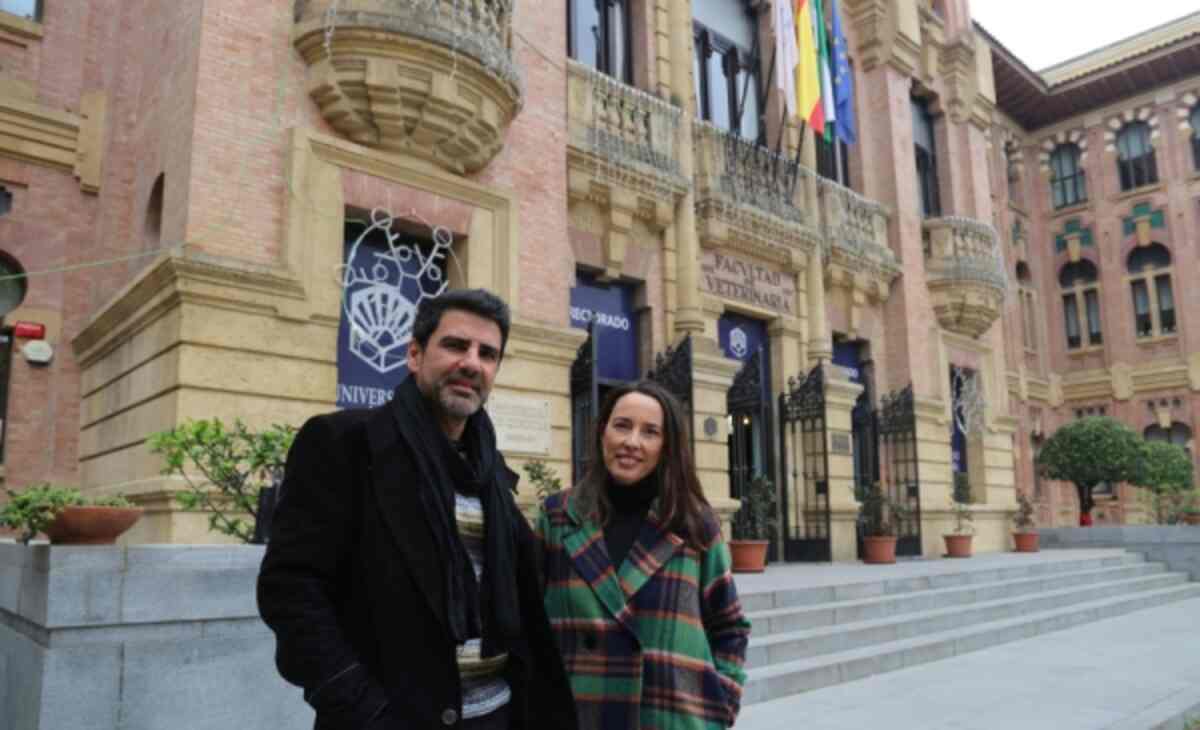
Researchers Javier Estevez and Amanda P. García
Tyler O'Neal, Staff Editor ACADEMIA December 11, 2023, 6:30 am

Predictive models predict increased water needs for fields by the end of the century

Researchers are increasingly focused on the impact of climate change on agriculture as the climate crisis deepens. A team from the University of Cordoba in Spain has projected that one significant area of impact will be the amount of water needed to maintain productivity in fields. Using machine learning models, the team calculated the reference evapotranspiration in Andalusia until 2100 based on air temperature.

Reference evapotranspiration is a crucial hydrological parameter that measures water loss through evaporation and transpiration and determines water requirements based on the atmosphere's evaporating power using a reference crop. The team generated maps that illustrate reference evapotranspiration projections in Andalusia until 2100 based on multiple predictive models. The projections indicate that reference evapotranspiration levels will rise from 1,300-1,600mm to 1,900mm by 2100, meaning farmers will require more water to compensate for evaporation and transpiration losses in cultivated areas.

Javier Estévez, one of the researchers of a study, states that despite the uncertainties surrounding the generated models, a steady increase in a particular variable is robustly shown. The team used machine learning models to predict reference evapotranspiration by using only one variable, which is air temperature. Normally, measuring reference evapotranspiration accurately requires complete stations to measure solar radiation, relative humidity, air temperature, and wind speed at a single point, making it a costly and high-maintenance process. However, relying on air temperature as the only variable is a cheaper and more reliable method.

To generate these predictions, the team trained their machine learning models with data from 122 weather stations scattered throughout Andalusia from 1999-2022. They then applied the models to create maps from 2023-2100, based on the predicted air temperature data according to the RCP scenarios of greenhouse gas emissions and concentrations adopted by the Intergovernmental Panel on Climate Change. The results show that reference evapotranspiration will continue to increase throughout the southern region of Spain.

This research openly shares the data and models so that they can be utilized by both the research and agricultural communities. By providing tools to forecast the changes caused by the climate crisis, this work helps farmers prepare for future adaptation and mitigation.
Researchers at Sanford Burnham Prebys use modeling to investigate the shape-shifting mechanism of the Zika virus, identify possible vulnerabilities

Researchers at Sanford Burnham Prebys use modeling to investigate the shape-shifting mechanism of the Zika virus, identify possible vulnerabilities

Tyler O'Neal, Staff Editor ACADEMIA December 9, 2023, 5:00 am

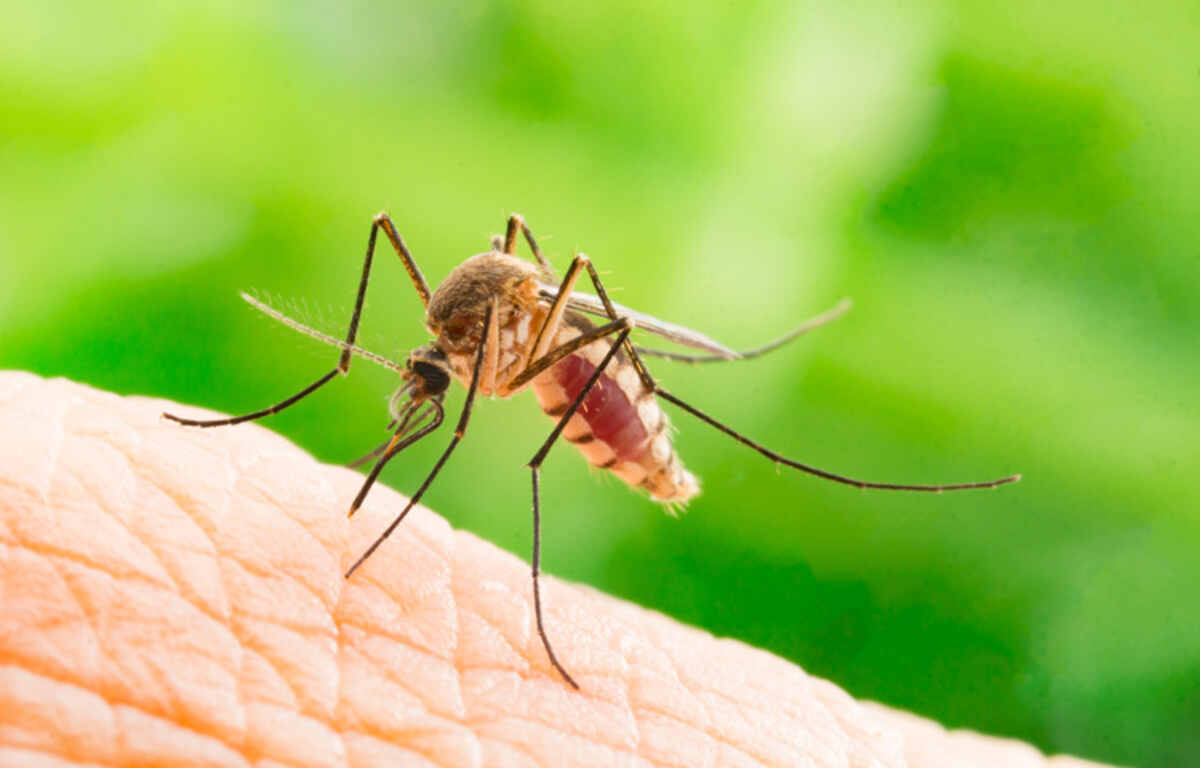
Sanford Burnham Prebys Research Institute has unveiled new research on the Zika virus and its ability to reshape itself to a possible therapeutic vulnerability. The study highlights how the virus has the unique ability to produce 10 different proteins with limited genetic material, making it a striking example of efficient machinery. The study has discovered that Zika’s crucial enzyme, NS2B-NS3, performs multiple tasks, including breaking up proteins and dividing its own double-stranded RNA into single strands.

The team of researchers led by Alexey Terskikh, Associate Professor at Sanford Burnham Prebys, showed how the virus changes functions based on how it is shaped, cycling between open and super-open conformations, allowing it to grab and release a single strand of RNA. These functions are essential for viral replication. The study also discovered that NS2B-NS3's capacity for reshaping itself could create a possible therapeutic vulnerability.

The virus is transmitted by mosquitoes and infects uterine and placental cells, making it particularly dangerous for pregnant women, who face the risk of giving birth to a baby with severe birth defects. If the virus is deprived of its ability to reshape itself, it would become impossible for it to perform its critical functions, and no new Zika particles would be produced.

Understanding Zika on the molecular level is essential to developing a therapeutic target. While it may be difficult to create safe drugs that aim at the domains of the enzyme required for protease or helicase functions, as human cells have many similar molecules, a drug that blocks Zika's conformational changes could be effective.

The researchers used protein biochemistry fluorescence polarization, supercomputer modelling techniques, and recent crystal structures from the study, combined with earlier research, to dissect NS2B-NS3pro's life cycle. NS3pro and NS3hel are both parts of the essential enzyme, with NS2B-NS3pro carrying out protease activities that cut long polypeptides into Zika proteins. NS3hel, on the other hand, separates Zika's double-stranded RNA while also giving a strand to NS3pro.

Sanford Burnham Prebys research alongside other emerging studies will continue to advance our knowledge of the Zika virus and its unique shape-shifting machinery. With a new understanding of how the virus operates, we may unravel possible targets to tackle its spread and associated health risks.

The climate change threat beneath the waves: How methane release is accelerating

The climate change threat beneath the waves: How methane release is accelerating

Tyler O'Neal, Staff Editor ACADEMIA December 6, 2023, 12:00 pm

Climate change could trigger the release of vast amounts of methane into the Earth's atmosphere, according to a new study. An international team of researchers led by Newcastle University found that frozen methane, also known as "fire-ice" and trapped as a solid substance under the world's oceans, could be vulnerable to melting due to climate change.

As frozen methane and ice melts, the potent greenhouse gas, methane, is released and moves from the deepest parts of the continental slope to the edge of the underwater shelf. Methane hydrate, also known as fire-ice, is found buried on the ocean floor and thaws when the oceans warm, releasing methane into oceans and the atmosphere - known as dissociated methane - contributing to global warming.

The scientists used advanced three-dimensional seismic imaging techniques to examine the portion of the hydrate that dissociated during climatic warming off the coast of Mauritania in Northwest Africa. They identified a specific case where the migrated methane was released through a field of underwater depressions, known as pockmarks, during past warm periods, suggesting that much more methane could potentially be vulnerable and released into the atmosphere as a result of climate warming. 


Lead author, Professor Richard Davies, Pro-Vice-Chancellor, Global, and Sustainability, Newcastle University, said they stumbled over 23 pockmarks during the Covid lockdown discovery. Their work shows they formed because methane released from hydrate, from the deepest parts of the continental slope vented into the ocean. Scientists had previously thought this hydrate was not vulnerable to climatic warming, but they have shown that some of it is.

Researchers have previously studied how changes in bottom water temperature near continental margins can affect the release of methane from hydrates. However, these studies mainly focused on areas where only a small portion of global methane hydrates are located. This is one of only a small number that investigate the release of methane from the base of the hydrate stability zone, which is deeper underwater. The results show that methane released from the hydrate stability zone traveled a significant distance towards land.

Methane is the second most abundant anthropogenic greenhouse gas after carbon dioxide (CO2), and methane accounts for about 16% of global greenhouse gas emissions. The study results can play a key role in helping to predict and address the impact of methane on our changing climate.

The team plans to continue searching for evidence of methane vents along the margin and try to predict where massive methane seeps are likely to occur as our planet continues to warm. The researchers are now planning a scientific cruise to drill into the pockmarks and see if they can more closely tie them to past climatic warming events.

This new research highlights the urgent need for greater focus on our planet's ocean health and the pressing need to reduce greenhouse gas emissions to slow down climate change.

  1. University of Iowa shows how wildfires that have originated in the western United States, Canada have caused air quality to deteriorate
  2. Caltech prof Bellan's simulations reveal the surprising discovery of X-rays in cold plasma

Page 19 of 123

  • 14
  • 15
  • 16
  • 17
  • 18
  • 19
  • 20
  • 21
  • 22
  • 23
POPULAR RIGHT NOW
  • Supercomputers uncover a new class of cosmic explosions hidden in plain sight
    Supercomputers uncover a new class of cosmic explosions hidden in plain sight
  • AI supercharges the hunt for stronger magnets: Iowa State researchers launch a new era of intelligent materials discovery
    AI supercharges the hunt for stronger magnets: Iowa State researchers launch a new era of intelligent materials discovery
  • IBM's Historic stock collapse raises questions for the future of enterprise supercomputing
    IBM's Historic stock collapse raises questions for the future of enterprise supercomputing
  • Could a novel dark matter theory simultaneously resolve multiple cosmic enigmas? Supercomputer simulations provide a compelling, albeit currently unverified, potential solution
    Could a novel dark matter theory simultaneously resolve multiple cosmic enigmas? Supercomputer simulations provide a compelling, albeit currently unverified, potential solution
  • Melting icebergs may be reshaping Earth’s greatest ocean current
    Melting icebergs may be reshaping Earth’s greatest ocean current
  • Supercomputers replace ‘bathtub’ flood maps with physics-based digital twins of Britain’s coastline
    Supercomputers replace ‘bathtub’ flood maps with physics-based digital twins of Britain’s coastline
  • Supercomputers push neural quantum simulation beyond previous limits
    Supercomputers push neural quantum simulation beyond previous limits
  • Intel’s AI supercomputing revival: Q2 financial surge signals new era for CPU-powered HPC infrastructure
    Intel’s AI supercomputing revival: Q2 financial surge signals new era for CPU-powered HPC infrastructure
  • AI infrastructure financing fears shake semiconductor sector
    AI infrastructure financing fears shake semiconductor sector
  • AWS supercomputing investment reaches historic scale as Amazon’s AI strategy powers record financial results
    AWS supercomputing investment reaches historic scale as Amazon’s AI strategy powers record financial results
THIS YEAR'S MOST READ
  • Wall Street wants to trade supercomputing power like oil
    Wall Street wants to trade supercomputing power like oil
  • Cosmic ambition at scale: UK’s supercomputer unlocks a 2.5 petabytes universe
    Cosmic ambition at scale: UK’s supercomputer unlocks a 2.5 petabytes universe
  • Hidden order, revealed at scale: Supercomputing, electron ptychography uncover the inner workings of relaxor ferroelectrics
    Hidden order, revealed at scale: Supercomputing, electron ptychography uncover the inner workings of relaxor ferroelectrics
  • Beamforming the future: BeammWave's 6G push signals the rise of orbital-terrestrial wireless networks
    Joakim Axmon
    Joakim Axmon
  • Intel's Q1 results signal supercomputing surge driving Xeon momentum
    Intel's Q1 results signal supercomputing surge driving Xeon momentum
  • When stars fall apart: Supercomputing reveals the hidden physics of black holes
    When stars fall apart: Supercomputing reveals the hidden physics of black holes
  • Multi-layer simulations reveal the hidden supply chain of solar prominences
    Multi-layer simulations reveal the hidden supply chain of solar prominences
  • Japanese scientists decode dolphin speed with supercomputing: Turbulence, vortices, and the hidden physics of propulsion
    Japanese scientists decode dolphin speed with supercomputing: Turbulence, vortices, and the hidden physics of propulsion
  • Cosmic feedback at scale: Supercomputing reveals how quasars regulate the early Universe
    Cosmic feedback at scale: Supercomputing reveals how quasars regulate the early Universe
  • Modeling life at the microscopic scale: A computational breakthrough in oxygen transport
    Modeling life at the microscopic scale: A computational breakthrough in oxygen transport
MOST READ OF ALL-TIME
  • Largest Computational Biology Simulation Mimics The Ribosome
    Details
    112108
    The amino acid (green) slithers into the chemical reaction center, moving through an evolutionarily ancient corridor of the ribosome (purple). The amino acid is delivered to the reaction core by the transfer RNA molecule (yellow).
    The amino acid (green) slithers into the chemical reaction center, moving through an evolutionarily ancient corridor of the ribosome (purple). The amino acid is delivered to the reaction core by the transfer RNA molecule (yellow).
  • Silicon 'neurons' may add a new dimension to chips
    Details
    80993
    Silicon 'neurons' may add a new dimension to chips
  • Linux Networx Accelerators Expected to Drive up to 4x Price/Performance
    Details
    75538
  • Complex Concepts That Really Add Up
    Details
    73637
    Complex Concepts That Really Add Up
  • Blue Sky Studios Donates Animation SuperComputer to Wesleyan
    Details
    68141
    Each rack holds 52 Angstrom Microsystem-brand “blades,” with a memory footprint of 12 or 24 gigabytes each. (Photos by Olivia Bartlett Drake)
    Each rack holds 52 Angstrom Microsystem-brand “blades,” with a memory footprint of 12 or 24 gigabytes each. (Photos by Olivia Bartlett Drake)
  • Humanities, HPC connect at NERSC
    Details
    57947
  • TeraGrid ’09 'Call for Participation'
    Details
    54952
  • Turbulence responsible for black holes' balancing act
    Details
    52311
  • Cray Wins $52 Million SuperComputer Contract
    Details
    50140
  • SDSC Researchers Accurately Predict Protein Docking
    Details
    46079
  • FRONTPAGE
  • LATEST
  • POPULAR
  • REGISTER
  • SOCIAL
  • VIDEO
  • SUBSCRIPTION
  • RSS
  • GUIDELINES
  • PRIVACY
  • TOS
  • ABOUT
  • +1 (816) 799-4488
  • editorial@supercomputingonline.com
© 2001 - 2026 SuperComputingOnline.com, LLC. All rights reserved. This material may not be published, broadcast, rewritten or redistributed without permission.
Sign In
  • FRONT PAGE
  • LATEST
    • MEDIA KIT
    • MOST READ
    • RSS FEED
    • ACADEMIA
    • AEROSPACE
    • APPLICATIONS
    • ASTRONOMY
    • AUTOMOTIVE
    • BIG DATA
    • BIOLOGY
    • CHEMISTRY
    • CLIENTS
    • CLOUD
    • DEFENSE
    • DEVELOPER TOOLS
    • EARTH SCIENCES
    • ECONOMICS
    • ENGINEERING
    • ENTERTAINMENT
    • HEALTH
    • INDUSTRY
    • INTERCONNECTS
    • GAMING
    • GOVERNMENT
    • MANUFACTURING
    • MIDDLEWARE
    • MOVIES
    • NETWORKS
    • OIL & GAS
    • PHYSICS
    • PROCESSORS
    • RETAIL
    • SCIENCE
    • STORAGE
    • SYSTEMS
    • VISUALIZATION
  • VIDEOS
    • ADD YOUR VIDEOS
    • MANAGE VIDEOS
  • COMMUNITY
    • TRADE SHOWS
    • SOCIAL NETWORK VIDEOS
    • SURVEYS
    • APPLICATIONS BROWSER
    • CONVERSATION INBOX
    • SOCIAL ADVERTISER
    • GROUPS
    • MARKETPLACE LISTINGS
    • PAGES
    • LEADERBOARD
    • POINTS LISTING
      • BADGES
    • PRIVACY CONFIRM REQUEST
    • PRIVACY CREATE REQUEST

Hey there! We noticed you’re using an ad blocker.