

SUPERCOMPUTING NEWS SUPERCOMPUTING NEWS
    • MEDIA KIT
    • MOST READ
    • RSS FEED
    • ACADEMIA
    • AEROSPACE
    • APPLICATIONS
    • ASTRONOMY
    • AUTOMOTIVE
    • BIG DATA
    • BIOLOGY
    • CHEMISTRY
    • CLIENTS
    • CLOUD
    • DEFENSE
    • DEVELOPER TOOLS
    • EARTH SCIENCES
    • ECONOMICS
    • ENGINEERING
    • ENTERTAINMENT
    • GAMING
    • GOVERNMENT
    • HEALTH
    • OIL & GAS
    • INDUSTRY
    • INTERCONNECTS
    • MANUFACTURING
    • MIDDLEWARE
    • MOVIES
    • NETWORKS
    • PHYSICS
    • PROCESSORS
    • RETAIL
    • SCIENCE
    • STORAGE
    • SYSTEMS
    • VISUALIZATION
    • AcyMailing subscription form

    • ADD YOUR VIDEOS
    • MANAGE VIDEOS
    • CONVERSATION INBOX
    • SOCIAL ADVERTISER
    • SOCIAL NETWORK VIDEOS
    • SURVEYS
    • GROUPS
    • PAGES
    • MARKETPLACE LISTINGS
    • APPLICATIONS BROWSER
    • PRIVACY CONFIRM REQUEST
    • PRIVACY CREATE REQUEST
    • LEADERBOARD
    • POINTS LISTING
      • BADGES
    • TRADE SHOWS
Sign In
Mika Gustafsson, professor. Credit goes to Thor Balkhed
Tyler O'Neal, Staff Editor ACADEMIA January 9, 2024, 5:00 am

Severe MS predicted using machine learning: A breakthrough in personalized treatment

In a groundbreaking study, researchers from Linköping University, the Karolinska Institute, and the University of Skövde in Sweden have made significant progress in predicting the long-term disability outcomes in patients with multiple sclerosis (MS) using machine learning. By analyzing a combination of just 11 proteins, the team has developed a tool that can tailor treatments based on the expected severity of the disease for individual patients.

Multiple sclerosis, a chronic autoimmune disease, affects millions of people worldwide. The immune system of MS patients attacks the body's own nerves, leading to damage in the brain and spinal cord. The primary target of this attack is myelin, a fatty compound that surrounds and insulates nerve axons. When the myelin is damaged, the transmission of electrical signals becomes less efficient, resulting in various neurological symptoms.

One of the major challenges in treating MS is the considerable variation in disease progression from person to person. Early detection of those who are likely to experience a more severe disease course is crucial for providing timely and effective treatments. To address this challenge, the research team sought to identify early markers that could predict disease severity using cutting-edge machine learning techniques.

The study involved analyzing nearly 1,500 proteins in samples from 92 patients suspected or recently diagnosed with MS. By combining this data with information from their medical records and advanced machine learning algorithms, the researchers successfully identified a panel of 11 proteins that accurately predicted disease progression. This streamlined approach not only enhances convenience but also reduces the cost of analysis, making it more accessible for further research and potential clinical applications.

Dr. Mika Gustafsson, the lead researcher and professor of bioinformatics at the Department of Physics, Chemistry, and Biology at Linköping University, believes that their work brings us one step closer to a tool that can guide clinicians in selecting more effective treatments for patients in the early stages of the disease. However, he also highlights the need to strike a balance, as some patients may not require aggressive treatment and could be spared the potential side effects and costs.

The research team also discovered a specific protein called neurofilament light chain (NfL), which has proven to be a reliable biomarker for short-term disease activity. The presence of this protein indicates nerve damage and correlates with the disease's level of activity. This finding not only confirms earlier research but also provides valuable insight into monitoring disease progression and response to treatment.

An essential strength of this study lies in the extensive validation conducted. The combination of proteins identified in the patient group at Linköping University Hospital was confirmed in a separate group of MS patients at the Karolinska University Hospital in Stockholm. This cross-validation enhances the reliability of the findings and underscores their significance.

The implications of this research are immense, offering better insights into individualized treatment plans and improving the quality of life for MS patients. By utilizing machine learning and state-of-the-art protein analysis technologies, physicians can now make more informed decisions regarding the most suitable treatment strategies. Tremendous progress has been made toward early intervention and personalized care for those living with MS.

This study was funded by various organizations, including the Swedish Foundation for Strategic Research, the Swedish Brain Foundation, the Knut and Alice Wallenberg Foundation, and the Swedish Research Council.

As this groundbreaking research continues to evolve, scientists and medical professionals are hopeful that it will pave the way for a future where early detection and personalized treatment will significantly improve the lives of individuals battling multiple sclerosis.
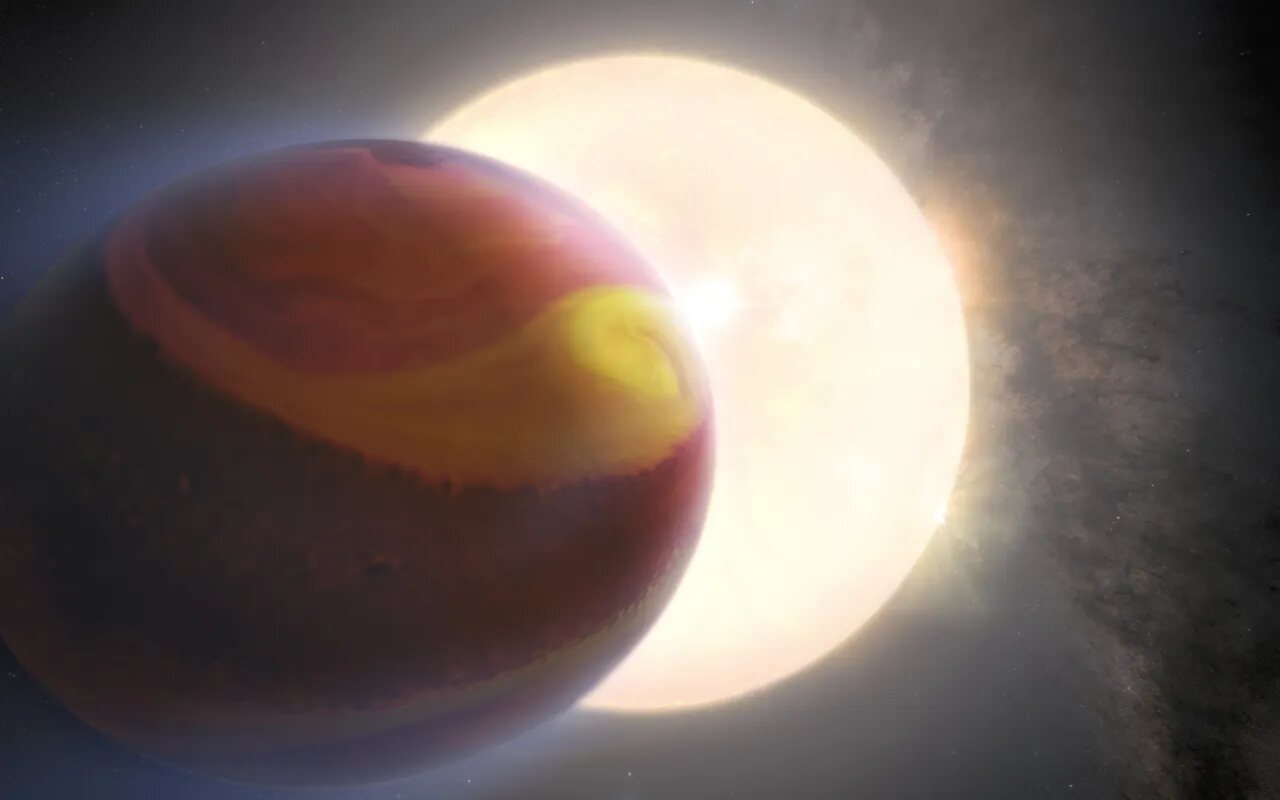
This is an artist's concept of an exoplanet called WASP-121 b, also known as Tylos. The Hubble telescope has provided data that helped scientists detect heavy metals such as magnesium and iron escaping from the exoplanet's upper atmosphere, making it the first such detection. WASP-121 b is an ultra-hot Jupiter exoplanet that orbits dangerously close to its host star, approximately 2.6% of the distance between Earth and the Sun, which puts it at risk of being torn apart by the star's tidal forces. The planet's shape has been altered by the powerful gravitational forces. An international team of astronomers analyzed and reprocessed Hubble observations from 2016, 2018, and 2019, providing them with a unique dataset to compare the state of the exoplanet's atmosphere over several years. They discovered that the observations of WASP-121 b were varying in time and concluded that these temporal variations were caused by weather patterns in the exoplanet's atmosphere. NASA, ESA, Quentin Changeat (ESA/STScI), Mahdi Zamani (ESA/Hubble)

Unlocking the mysteries of exoplanets: Hubble's journey through time

Tyler O'Neal, Staff Editor ACADEMIA January 4, 2024, 11:00 am

In the vast universe, there are realms beyond our imagination, and NASA's Hubble Space Telescope has once again brought us one step closer to understanding these cosmic wonders. Recent observations from Hubble have revealed the awe-inspiring transformation of an exoplanet's atmosphere over the course of three years. This groundbreaking discovery not only sheds light on the dynamic nature of distant worlds but also brings us closer to identifying potentially habitable exoplanets with stable climates. Let us embark on a journey through the lens of Hubble to unravel the mysteries of the cosmos.

Witnessing the Dance of Nature:

Located a staggering 880 light-years away, WASP-121 b is a massive Jupiter-sized planet that has captivated the attention of scientists. By combining several years of Hubble observations with sophisticated supercomputer modeling, astronomers have generated stunning evidence for the presence of massive cyclones and other dynamic weather activities on this fiery exoplanet.

Just like our own solar system, neighboring planets exhibit ever-changing atmospheric conditions. However, unraveling the complexities of exoplanet weather patterns requires an immense amount of detailed observations and cutting-edge computational techniques. Through their meticulous analysis, the international team of astronomers discovered that WASP-121 b's atmosphere is far from static - it is a living, breathing entity, constantly evolving over time.

A Window into Ever-Changing Skies:

The team's journey began by reprocessing and analyzing Hubble observations of WASP-121 b taken in 2016, 2018, and 2019. The results were astonishing. Notable differences in the exoplanet's atmospheric composition, accompanied by massive weather fronts, storms, and cyclones, were observed. These weather phenomena were generated and destroyed due to the stark temperature difference between the illuminated side of the planet and the dark side facing away from its star.

The team's findings were not mere observations but a revelation of the intricate dance of nature. By employing sophisticated modeling techniques, they pieced together the puzzle of temporal variations in the exoplanet's atmosphere. Through their simulations, they were able to accurately map the ever-changing weather patterns on ultra-hot planets like WASP-121 b.

Multiple Perspectives in the Quest for Knowledge:

In the pursuit of unraveling the secrets of the universe, collaboration across borders and diverse perspectives is crucial. This extraordinary discovery was made possible by a team of international astronomers, each bringing their unique expertise to the table. From the European Space Agency to the California Institute of Technology, Brandeis University to the University College London, this diverse group united to venture into unknown territories and push the boundaries of our understanding.

Inspiring Future Explorers:

This remarkable achievement is more than just a scientific breakthrough; it ignites the flame of exploration within us all. The tantalizing glimpse into the ever-changing atmosphere of distant exoplanets encourages us to continue pushing the boundaries of discovery. It sparks a fascination for the unknown and fuels our passion for unraveling the mysteries of the cosmos.

Looking Ahead:

With this groundbreaking research as a guiding light, the possibilities for future investigations and exploration are boundless. As Hubble embarks on its latest cycle of observations, we can only imagine the wonders it will uncover and the previously unseen worlds it will reveal.

Conclusion:

NASA's Hubble Space Telescope continues to amaze us, offering a window into the infiniteness of the universe. Its recent observations of WASP-121 b's evolving exoplanet atmosphere over a period of three years have elevated our understanding of the dynamic nature of distant worlds. It reminds us that the secrets of the universe are waiting to be discovered, and by collaborating across diverse perspectives, we can unlock the mysteries of our cosmic existence. Let us be inspired to explore, to question, and to keep reaching for the stars.

Unveiling the hype: New code for analyzing plasma rotation, transport properties in tokamak plasma

Unveiling the hype: New code for analyzing plasma rotation, transport properties in tokamak plasma

Tyler O'Neal, Staff Editor ACADEMIA January 2, 2024, 7:00 am

In the world of plasma physics, there is often a buzz surrounding new codes and computational tools that promise to revolutionize our understanding of various plasma properties. Recently, a team of researchers from the Hefei Institutes of Physical Science, Chinese Academy of Sciences, announced the development of a new code known as TransROTA. This code claims to analyze the multi-fluid plasma rotation and transport properties in tokamak plasmas, including the Experimental Advanced Superconducting Tokamak (EAST). However, it is important to examine such claims with a skeptical eye and delve into the details to understand the true significance of this development.

Questioning the Claims

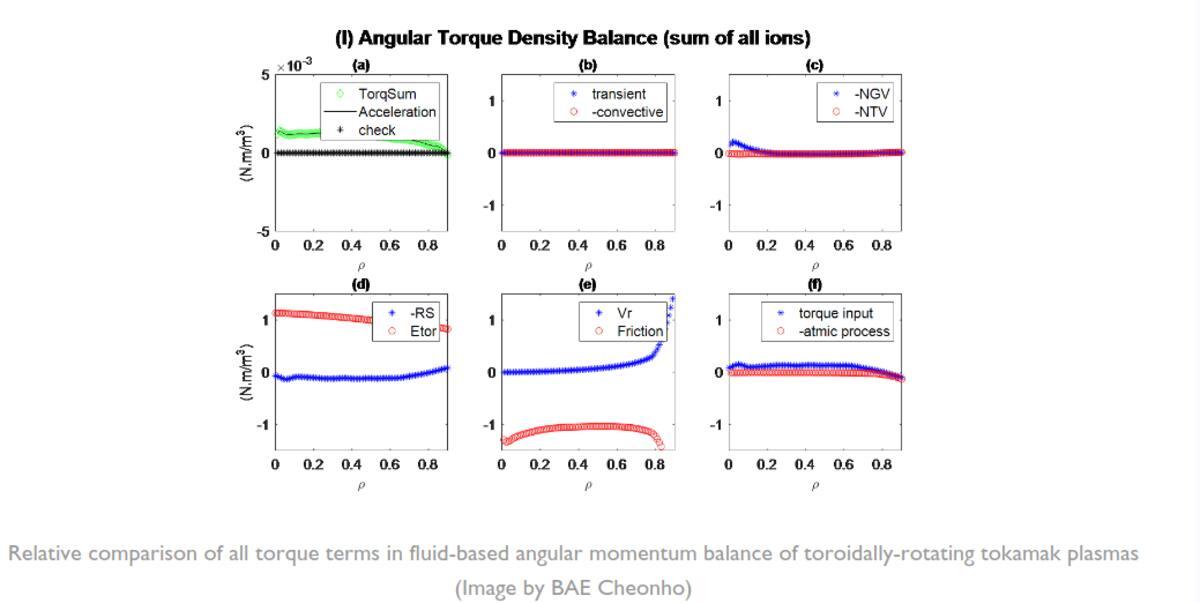
The code, TransROTA, is presented as a computational tool that provides calculations of all torque terms in the angular momentum balance in toroidally-rotating tokamak plasmas. According to Dr. Bae, a member of the research team, this code increases the prediction accuracy of unmeasurable ion velocities and allows investigations of many interesting plasma physics phenomena. While this sounds promising, it is essential to critically evaluate the evidence supporting these assertions.

The Research and its Findings

The researchers modified Stacey-Sigmar's plasma rotation model and applied upgraded numerical schemes to improve the resilience of new couplings among all solved equations against numerical blow-up. They claim to have tested the code with various EAST discharges and verified its effectiveness in predicting rotation velocities and individual torques in the angular momentum balance. However, the specifics of these tests and the magnitude of improvements achieved remain somewhat elusive.

The Limitations of TransROTA

It is crucial to note that TransROTA is just one among numerous codes developed to analyze plasma rotation and transport properties in tokamak plasmas. While the researchers highlight its user-friendliness, availability of calculations, and its potential for investigating detailed physics, it is important to consider the broader context of the existing codes and their capabilities. Comparative studies and independent validations are necessary to determine whether TransROTA offers any substantial advantages over other established codes in the field.

Considering Diverse Perspectives

A key element in assessing the significance of any scientific development is examining diverse perspectives. It is worth mentioning that the article published by the Hefei Institutes of Physical Science does not include any external expert opinions or critical evaluations from the community. The absence of an objective assessment raises questions about the true impact and novelty of TransROTA.

Conclusion

The unveiling of TransROTA as a new code for analyzing plasma rotation and transport properties in tokamak plasma sparks interest within the plasma physics community. However, it is essential to approach such claims with skepticism and thoroughly evaluate the evidence and comparative advantages over existing codes. It is hoped that further research, independent validations, and critical discussions will shed more light on TransROTA's true potential in advancing our understanding of plasma physics.

  1. A recent discovery by astronomers reveals that seismic ripples have been detected in an ancient galactic disk
  2. Unlocking the potential of novel materials for biologically-inspired information processing

Page 14 of 123

  • 9
  • 10
  • 11
  • 12
  • 13
  • 14
  • 15
  • 16
  • 17
  • 18
POPULAR RIGHT NOW
  • Supercomputers uncover a new class of cosmic explosions hidden in plain sight
    Supercomputers uncover a new class of cosmic explosions hidden in plain sight
  • AI supercharges the hunt for stronger magnets: Iowa State researchers launch a new era of intelligent materials discovery
    AI supercharges the hunt for stronger magnets: Iowa State researchers launch a new era of intelligent materials discovery
  • IBM's Historic stock collapse raises questions for the future of enterprise supercomputing
    IBM's Historic stock collapse raises questions for the future of enterprise supercomputing
  • Could a novel dark matter theory simultaneously resolve multiple cosmic enigmas? Supercomputer simulations provide a compelling, albeit currently unverified, potential solution
    Could a novel dark matter theory simultaneously resolve multiple cosmic enigmas? Supercomputer simulations provide a compelling, albeit currently unverified, potential solution
  • Melting icebergs may be reshaping Earth’s greatest ocean current
    Melting icebergs may be reshaping Earth’s greatest ocean current
  • Supercomputers replace ‘bathtub’ flood maps with physics-based digital twins of Britain’s coastline
    Supercomputers replace ‘bathtub’ flood maps with physics-based digital twins of Britain’s coastline
  • Supercomputers push neural quantum simulation beyond previous limits
    Supercomputers push neural quantum simulation beyond previous limits
  • Intel’s AI supercomputing revival: Q2 financial surge signals new era for CPU-powered HPC infrastructure
    Intel’s AI supercomputing revival: Q2 financial surge signals new era for CPU-powered HPC infrastructure
  • AI infrastructure financing fears shake semiconductor sector
    AI infrastructure financing fears shake semiconductor sector
  • AWS supercomputing investment reaches historic scale as Amazon’s AI strategy powers record financial results
    AWS supercomputing investment reaches historic scale as Amazon’s AI strategy powers record financial results
THIS YEAR'S MOST READ
  • Wall Street wants to trade supercomputing power like oil
    Wall Street wants to trade supercomputing power like oil
  • Cosmic ambition at scale: UK’s supercomputer unlocks a 2.5 petabytes universe
    Cosmic ambition at scale: UK’s supercomputer unlocks a 2.5 petabytes universe
  • Hidden order, revealed at scale: Supercomputing, electron ptychography uncover the inner workings of relaxor ferroelectrics
    Hidden order, revealed at scale: Supercomputing, electron ptychography uncover the inner workings of relaxor ferroelectrics
  • Beamforming the future: BeammWave's 6G push signals the rise of orbital-terrestrial wireless networks
    Joakim Axmon
    Joakim Axmon
  • Intel's Q1 results signal supercomputing surge driving Xeon momentum
    Intel's Q1 results signal supercomputing surge driving Xeon momentum
  • When stars fall apart: Supercomputing reveals the hidden physics of black holes
    When stars fall apart: Supercomputing reveals the hidden physics of black holes
  • Multi-layer simulations reveal the hidden supply chain of solar prominences
    Multi-layer simulations reveal the hidden supply chain of solar prominences
  • Japanese scientists decode dolphin speed with supercomputing: Turbulence, vortices, and the hidden physics of propulsion
    Japanese scientists decode dolphin speed with supercomputing: Turbulence, vortices, and the hidden physics of propulsion
  • Cosmic feedback at scale: Supercomputing reveals how quasars regulate the early Universe
    Cosmic feedback at scale: Supercomputing reveals how quasars regulate the early Universe
  • Modeling life at the microscopic scale: A computational breakthrough in oxygen transport
    Modeling life at the microscopic scale: A computational breakthrough in oxygen transport
MOST READ OF ALL-TIME
  • Largest Computational Biology Simulation Mimics The Ribosome
    Details
    112107
    The amino acid (green) slithers into the chemical reaction center, moving through an evolutionarily ancient corridor of the ribosome (purple). The amino acid is delivered to the reaction core by the transfer RNA molecule (yellow).
    The amino acid (green) slithers into the chemical reaction center, moving through an evolutionarily ancient corridor of the ribosome (purple). The amino acid is delivered to the reaction core by the transfer RNA molecule (yellow).
  • Silicon 'neurons' may add a new dimension to chips
    Details
    80990
    Silicon 'neurons' may add a new dimension to chips
  • Linux Networx Accelerators Expected to Drive up to 4x Price/Performance
    Details
    75536
  • Complex Concepts That Really Add Up
    Details
    73635
    Complex Concepts That Really Add Up
  • Blue Sky Studios Donates Animation SuperComputer to Wesleyan
    Details
    68140
    Each rack holds 52 Angstrom Microsystem-brand “blades,” with a memory footprint of 12 or 24 gigabytes each. (Photos by Olivia Bartlett Drake)
    Each rack holds 52 Angstrom Microsystem-brand “blades,” with a memory footprint of 12 or 24 gigabytes each. (Photos by Olivia Bartlett Drake)
  • Humanities, HPC connect at NERSC
    Details
    57945
  • TeraGrid ’09 'Call for Participation'
    Details
    54951
  • Turbulence responsible for black holes' balancing act
    Details
    52310
  • Cray Wins $52 Million SuperComputer Contract
    Details
    50139
  • SDSC Researchers Accurately Predict Protein Docking
    Details
    46078
  • FRONTPAGE
  • LATEST
  • POPULAR
  • REGISTER
  • SOCIAL
  • VIDEO
  • SUBSCRIPTION
  • RSS
  • GUIDELINES
  • PRIVACY
  • TOS
  • ABOUT
  • +1 (816) 799-4488
  • editorial@supercomputingonline.com
© 2001 - 2026 SuperComputingOnline.com, LLC. All rights reserved. This material may not be published, broadcast, rewritten or redistributed without permission.
Sign In
  • FRONT PAGE
  • LATEST
    • MEDIA KIT
    • MOST READ
    • RSS FEED
    • ACADEMIA
    • AEROSPACE
    • APPLICATIONS
    • ASTRONOMY
    • AUTOMOTIVE
    • BIG DATA
    • BIOLOGY
    • CHEMISTRY
    • CLIENTS
    • CLOUD
    • DEFENSE
    • DEVELOPER TOOLS
    • EARTH SCIENCES
    • ECONOMICS
    • ENGINEERING
    • ENTERTAINMENT
    • HEALTH
    • INDUSTRY
    • INTERCONNECTS
    • GAMING
    • GOVERNMENT
    • MANUFACTURING
    • MIDDLEWARE
    • MOVIES
    • NETWORKS
    • OIL & GAS
    • PHYSICS
    • PROCESSORS
    • RETAIL
    • SCIENCE
    • STORAGE
    • SYSTEMS
    • VISUALIZATION
  • VIDEOS
    • ADD YOUR VIDEOS
    • MANAGE VIDEOS
  • COMMUNITY
    • TRADE SHOWS
    • SOCIAL NETWORK VIDEOS
    • SURVEYS
    • APPLICATIONS BROWSER
    • CONVERSATION INBOX
    • SOCIAL ADVERTISER
    • GROUPS
    • MARKETPLACE LISTINGS
    • PAGES
    • LEADERBOARD
    • POINTS LISTING
      • BADGES
    • PRIVACY CONFIRM REQUEST
    • PRIVACY CREATE REQUEST

Hey there! We noticed you’re using an ad blocker.