

SUPERCOMPUTING NEWS SUPERCOMPUTING NEWS
    • MEDIA KIT
    • MOST READ
    • RSS FEED
    • ACADEMIA
    • AEROSPACE
    • APPLICATIONS
    • ASTRONOMY
    • AUTOMOTIVE
    • BIG DATA
    • BIOLOGY
    • CHEMISTRY
    • CLIENTS
    • CLOUD
    • DEFENSE
    • DEVELOPER TOOLS
    • EARTH SCIENCES
    • ECONOMICS
    • ENGINEERING
    • ENTERTAINMENT
    • GAMING
    • GOVERNMENT
    • HEALTH
    • OIL & GAS
    • INDUSTRY
    • INTERCONNECTS
    • MANUFACTURING
    • MIDDLEWARE
    • MOVIES
    • NETWORKS
    • PHYSICS
    • PROCESSORS
    • RETAIL
    • SCIENCE
    • STORAGE
    • SYSTEMS
    • VISUALIZATION
    • AcyMailing subscription form

    • ADD YOUR VIDEOS
    • MANAGE VIDEOS
    • CONVERSATION INBOX
    • SOCIAL ADVERTISER
    • SOCIAL NETWORK VIDEOS
    • SURVEYS
    • GROUPS
    • PAGES
    • MARKETPLACE LISTINGS
    • APPLICATIONS BROWSER
    • PRIVACY CONFIRM REQUEST
    • PRIVACY CREATE REQUEST
    • LEADERBOARD
    • POINTS LISTING
      • BADGES
    • TRADE SHOWS
Sign In
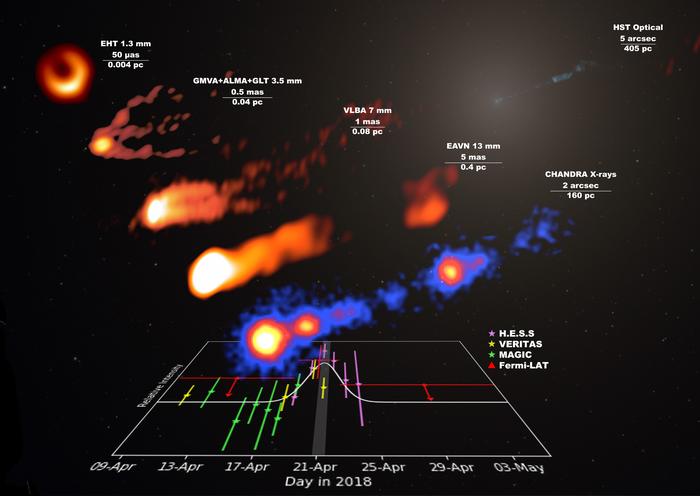
The bottom shows the light curve of the gamma-ray flare, while the top displays quas-simulated images of the M87 jet taken during the 2018 campaign in radio and X-ray at various scales. The instrument, observation wavelength, and scale are noted at the top left of each image.
Tyler O'Neal, Staff Editor ENGINEERING December 13, 2024, 2:00 am

M87's powerful gamma-ray outburst: Supercomputer simulation unveils the mysteries of the Universe

In a significant advancement in understanding celestial phenomena, the recent discovery of a rare gamma-ray outburst from the supermassive black hole M87 has generated excitement and opened new avenues for astrophysical research. This cosmic event has been thoroughly examined through cutting-edge supercomputer simulations, a historic achievement facilitated by the National Astronomical Observatory of Japan. This scientific endeavor illuminates the mysterious processes at the center of M87 and highlights the collaborative spirit that transcends geographical boundaries.

The gamma-ray outburst observed during the 2018 Event Horizon Telescope (EHT) campaign has ignited renewed interest in understanding the complex mechanisms governing the phenomena around M87. A notable aspect of this discovery is the high-energy gamma-ray flare, which unlocks valuable insights into the dynamics of particle acceleration, event horizons, and emissions that challenge conventional understanding.

The integration of advanced observational techniques, theoretical models, and state-of-the-art technology is at the forefront of this achievement. The supercomputer at the National Astronomical Observatory of Japan has been crucial in simulating and analyzing the movement of ultra-high-energy particles within M87's jet. This work raises fundamental questions that have intrigued scientists and enthusiasts for decades. The synergy between observational data, theoretical predictions, and supercomputer simulations highlights the interplay between technological advances and scientific inquiry, paving the way for remarkable discoveries in our understanding of the Universe.

Integrating observational data from the EHT and multiple wavelength campaigns conducted with over two dozen global facilities has created an exceptional data archive. This dataset provides a comprehensive view of the high-energy emissions from M87. By merging data from ground-based and space telescopes—including NASA's Fermi-LAT, HST, NuSTAR, Chandra, and Swift telescopes—and advanced Imaging Atmospheric Cherenkov Telescope arrays like HESS, MAGIC, and VERITAS—researchers can examine the gamma-ray outburst with unprecedented accuracy.

From a scientific perspective, this revelation is set to usher in a new era of understanding the Universe. It empowers researchers to investigate the workings of supermassive black holes, the nature of particle acceleration, and the fundamental physics behind celestial phenomena with renewed passion and optimism. The meticulous supercomputer simulation conducted by the National Astronomical Observatory of Japan offers crucial insights into the Universe's inner workings, likely inspiring numerous theoretical predictions and empirical studies that push the boundaries of current knowledge.

Additionally, this collaborative effort exemplifies the essence of scientific exploration, transcending national borders to foster a global community of collaboration and innovation. The combination of diverse perspectives, theoretical frameworks, and technological advancements creates a harmonious synergy that embodies the transformative potential of scientific inquiry, fostering an optimistic outlook for future research and collaboration.

In summary, the discovery of M87's rare gamma-ray outburst, enhanced by sophisticated supercomputer simulations, marks a pivotal milestone in astrophysical research. This development heralds a new era of scientific optimism and collective effort, inspiring future generations of researchers, scholars, and enthusiasts to gaze at the cosmos with endless fascination and determination, ready to uncover the Universe's mysteries one simulation at a time.
Concerns about the NASA, DOD study on coastal groundwater saltwater mixing

Concerns about the NASA, DOD study on coastal groundwater saltwater mixing

Tyler O'Neal, Staff Editor ENGINEERING December 11, 2024, 10:00 am

A recent study conducted by researchers at NASA’s Jet Propulsion Laboratory, in collaboration with the U.S. Department of Defense (DoD), has made bold claims about the potential widespread contamination of coastal groundwater by saltwater by the year 2100. The study suggests that factors such as sea level rise and slower groundwater recharge due to climate change will play crucial roles in driving saltwater intrusion into coastal aquifers around the world. However, can we truly accept these predictions at face value?

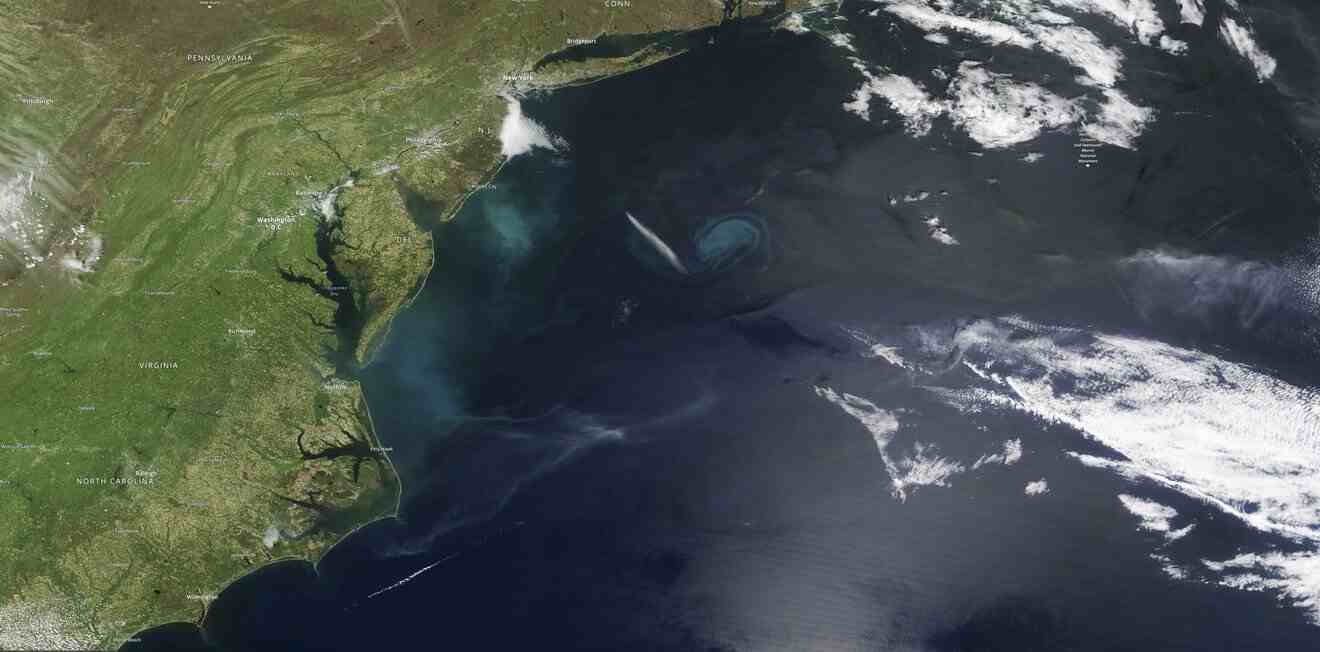
Published in Geophysical Research Letters, the study evaluates over 60,000 coastal watersheds globally, considering the effects of rising sea levels and decreasing groundwater recharge on saltwater intrusion. The researchers employed a model that accounted for various factors, including groundwater recharge rates, water table elevation, fresh and saltwater densities, and patterns of coastal migration.

While the methodology in this study appears comprehensive, it still warrants critical examination. The projection that saltwater will invade approximately 77% of the assessed coastal watersheds by the end of this century raises questions about the accuracy of such estimates. The complex interactions among climate change factors and hydrological dynamics make it notoriously difficult to forecast the precise extent of saltwater intrusion over the next 80 years.

Moreover, the suggestion that officials in affected regions can mitigate saltwater intrusion by protecting groundwater resources or diverting groundwater presents practical challenges. Implementing such strategies globally may face logistical and financial obstacles that could undermine their efficacy.

Skeptics may argue that relying on models and simulations, despite their sophistication, introduces an element of subjectivity and potential biases that could influence the results. Additionally, the co-funding of the research by NASA and DoD raises concerns about possible conflicts of interest or agendas that might affect the study's direction and reporting.

The involved researchers, including lead author Kyra Adams and coauthor Ben Hamlington, emphasize the importance of their findings for shaping future groundwater management policies. Nonetheless, it is essential to approach these claims with healthy skepticism, considering the myriad factors at play and the uncertainties inherent in long-term climate predictions.

In conclusion, while the NASA-DoD study on saltwater intrusion in coastal groundwater by 2100 offers valuable insights into the potential impacts of climate change on global water resources, a discerning approach is necessary. The complexities of hydrological systems and the dynamic nature of environmental processes require a nuanced evaluation of such forecasts to ensure sound decision-making and effective adaptation strategies in an uncertain future.

UK scientists unravel a black hole mystery

UK scientists unravel a black hole mystery

Tyler O'Neal, Staff Editor ENGINEERING December 11, 2024, 8:00 am

In the vast and enigmatic universe, mysteries often linger, challenging our understanding of the cosmos. The recent claim made by a team of researchers, as reported on the University of Surrey website, about settling the black hole debate by identifying stellar-mass black holes at the heart of the Milky Way's largest star cluster, Omega Centauri, raises eyebrows and invites a closer examination.

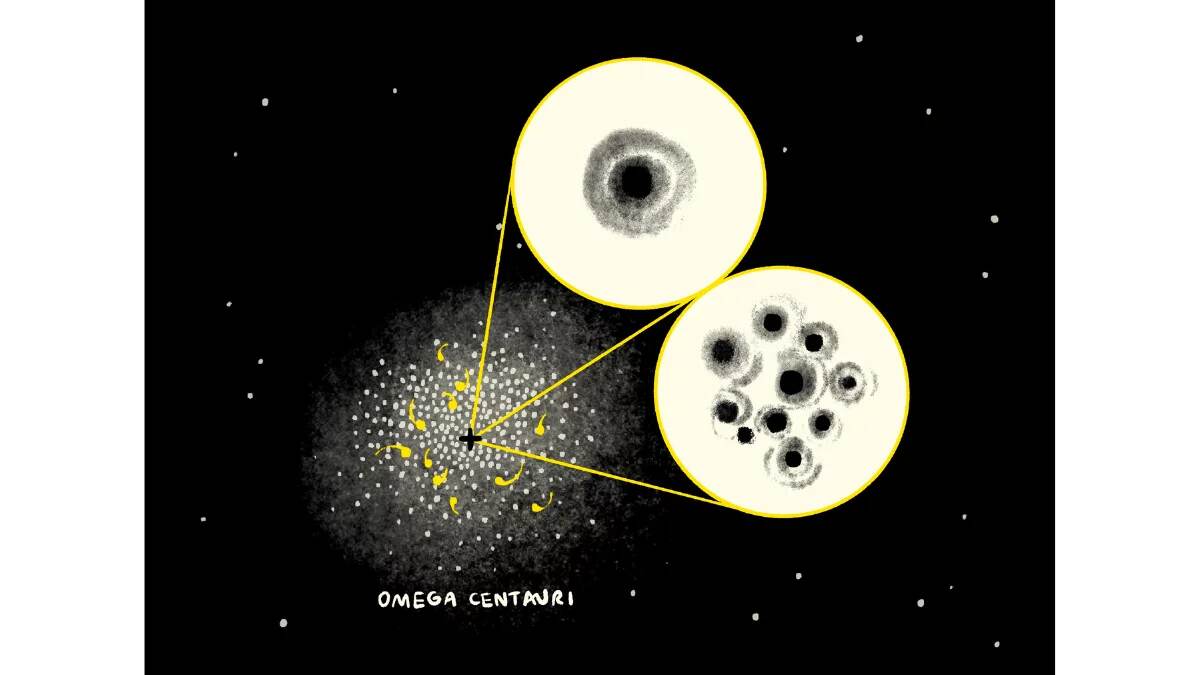
For decades, the peculiar movements of stars within Omega Centauri have baffled astronomers, leading to speculations about the presence of an "intermediate mass" black hole (IMBH) or a cluster of "stellar mass" black holes at the cluster's center. The narrative presented by the researchers leans towards the latter, suggesting that a cluster of stellar mass black holes, each weighing just a few times the mass of the Sun, might be the cause behind the observed anomalous velocities.

The core of this revelation lies in the researchers' innovative approach of combining anomalous velocity data with new data on the accelerations of pulsars, a first-time endeavor. Pulsars, dense remnants of dying stars emitting radio waves as they spin, provide crucial insights into the gravitational field strength at the center of Omega Centauri. The study, conducted by a collaborative team from the University of Surrey, Instituto de Astrofísica de Canarias (IAC, Spain), and Laboratoire de Physique Théorique LAPTh in Annecy (France), suggests a preference towards the presence of a cluster of black holes rather than a single IMBH.

While this research opens new avenues for exploring and understanding black holes in star clusters, a skeptical lens urges caution. The notion that this discovery settles a decades-long debate may be premature. The hunt for intermediate-mass black holes remains elusive, with uncertainties surrounding their existence and role in the cosmic framework.

The study hints at the potential coexistence of an IMBH (if present) with a cluster of stellar mass black holes at Omega Centauri's core, emphasizing the need for further investigation. As scientific inquiry progresses, it is essential to critically analyze the data and interpretations, ensuring that claims are scrutinized and validated through rigorous research methodologies.

In conclusion, while the recent findings regarding detecting stellar-mass black holes in Omega Centauri are intriguing, a healthy dose of skepticism is warranted to navigate the complexities of cosmic mysteries. The quest for understanding black holes, from stellar to supermassive scales, continues to unfold, beckoning researchers to delve deeper into the enigmatic realms of the universe.

  1. Woolpert, Black & Veatch closed $94.5M USACE master planning contract
  2. Supercomputers dive deep to predict coral survival in warming seas

Page 4 of 78

  • 1
  • 2
  • 3
  • 4
  • 5
  • 6
  • 7
  • 8
  • 9
  • 10
POPULAR RIGHT NOW
  • Meta’s next frontier may not be social media; it may be supercomputing
    Meta’s next frontier may not be social media; it may be supercomputing
  • The future of cancer research runs on supercomputers
    Jill Mesirov, PhD
    Jill Mesirov, PhD
  • Rebuilding a lost continent: Supercomputers reveal Antarctica before the ice
    Antarctic ice meets the rocky coastline. Researchers traced landscape features from the two-kilometre-high coastal escarpment of Dronning Maud Land to the subglacial Gamburtsev Mountains, buried beneath 1–3 km of ice  Credit Matt Palmer
    Antarctic ice meets the rocky coastline. Researchers traced landscape features from the two-kilometre-high coastal escarpment of Dronning Maud Land to the subglacial Gamburtsev Mountains, buried beneath 1–3 km of ice Credit Matt Palmer
  • Supercomputers uncover a new class of cosmic explosions hidden in plain sight
    Supercomputers uncover a new class of cosmic explosions hidden in plain sight
  • AI supercharges the hunt for stronger magnets: Iowa State researchers launch a new era of intelligent materials discovery
    AI supercharges the hunt for stronger magnets: Iowa State researchers launch a new era of intelligent materials discovery
  • IBM's Historic stock collapse raises questions for the future of enterprise supercomputing
    IBM's Historic stock collapse raises questions for the future of enterprise supercomputing
  • Could a novel dark matter theory simultaneously resolve multiple cosmic enigmas? Supercomputer simulations provide a compelling, albeit currently unverified, potential solution
    Could a novel dark matter theory simultaneously resolve multiple cosmic enigmas? Supercomputer simulations provide a compelling, albeit currently unverified, potential solution
  • Melting icebergs may be reshaping Earth’s greatest ocean current
    Melting icebergs may be reshaping Earth’s greatest ocean current
  • Supercomputers replace ‘bathtub’ flood maps with physics-based digital twins of Britain’s coastline
    Supercomputers replace ‘bathtub’ flood maps with physics-based digital twins of Britain’s coastline
  • Supercomputers push neural quantum simulation beyond previous limits
    Supercomputers push neural quantum simulation beyond previous limits
MOST READ THIS YEAR
  • Cosmic ambition at scale: UK’s supercomputer unlocks a 2.5 petabytes universe
    Cosmic ambition at scale: UK’s supercomputer unlocks a 2.5 petabytes universe
  • Intel's Q1 results signal supercomputing surge driving Xeon momentum
    Intel's Q1 results signal supercomputing surge driving Xeon momentum
  • When stars fall apart: Supercomputing reveals the hidden physics of black holes
    When stars fall apart: Supercomputing reveals the hidden physics of black holes
  • FRONTPAGE
  • LATEST
  • POPULAR
  • REGISTER
  • SOCIAL
  • VIDEO
  • SUBSCRIPTION
  • RSS
  • GUIDELINES
  • PRIVACY
  • TOS
  • ABOUT
  • +1 (816) 799-4488
  • editorial@supercomputingonline.com
© 2001 - 2026 SuperComputingOnline.com, LLC. All rights reserved. This material may not be published, broadcast, rewritten or redistributed without permission.
Sign In
  • FRONT PAGE
  • LATEST
    • MEDIA KIT
    • MOST READ
    • RSS FEED
    • ACADEMIA
    • AEROSPACE
    • APPLICATIONS
    • ASTRONOMY
    • AUTOMOTIVE
    • BIG DATA
    • BIOLOGY
    • CHEMISTRY
    • CLIENTS
    • CLOUD
    • DEFENSE
    • DEVELOPER TOOLS
    • EARTH SCIENCES
    • ECONOMICS
    • ENGINEERING
    • ENTERTAINMENT
    • HEALTH
    • INDUSTRY
    • INTERCONNECTS
    • GAMING
    • GOVERNMENT
    • MANUFACTURING
    • MIDDLEWARE
    • MOVIES
    • NETWORKS
    • OIL & GAS
    • PHYSICS
    • PROCESSORS
    • RETAIL
    • SCIENCE
    • STORAGE
    • SYSTEMS
    • VISUALIZATION
  • VIDEOS
    • ADD YOUR VIDEOS
    • MANAGE VIDEOS
  • COMMUNITY
    • TRADE SHOWS
    • SOCIAL NETWORK VIDEOS
    • SURVEYS
    • APPLICATIONS BROWSER
    • CONVERSATION INBOX
    • SOCIAL ADVERTISER
    • GROUPS
    • MARKETPLACE LISTINGS
    • PAGES
    • LEADERBOARD
    • POINTS LISTING
      • BADGES
    • PRIVACY CONFIRM REQUEST
    • PRIVACY CREATE REQUEST

Hey there! We noticed you’re using an ad blocker.