
SUPERCOMPUTING NEWS SUPERCOMPUTING NEWS
    • MEDIA KIT
    • MOST READ
    • RSS FEED
    • ACADEMIA
    • AEROSPACE
    • APPLICATIONS
    • ASTRONOMY
    • AUTOMOTIVE
    • BIG DATA
    • BIOLOGY
    • CHEMISTRY
    • CLIENTS
    • CLOUD
    • DEFENSE
    • DEVELOPER TOOLS
    • EARTH SCIENCES
    • ECONOMICS
    • ENGINEERING
    • ENTERTAINMENT
    • GAMING
    • GOVERNMENT
    • HEALTH
    • OIL & GAS
    • INDUSTRY
    • INTERCONNECTS
    • MANUFACTURING
    • MIDDLEWARE
    • MOVIES
    • NETWORKS
    • PHYSICS
    • PROCESSORS
    • RETAIL
    • SCIENCE
    • STORAGE
    • SYSTEMS
    • VISUALIZATION
    • AcyMailing subscription form

    • ADD YOUR VIDEOS
    • MANAGE VIDEOS
    • CONVERSATION INBOX
    • SOCIAL ADVERTISER
    • SOCIAL NETWORK VIDEOS
    • SURVEYS
    • GROUPS
    • PAGES
    • MARKETPLACE LISTINGS
    • APPLICATIONS BROWSER
    • PRIVACY CONFIRM REQUEST
    • PRIVACY CREATE REQUEST
    • LEADERBOARD
    • POINTS LISTING
      • BADGES
    • TRADE SHOWS
Sign In
Siemens + GlobalFoundries forge an AI manufacturing alliance
Tyler O'Neal, Staff Editor LATEST December 11, 2025, 3:16 pm

Siemens + GlobalFoundries forge an AI manufacturing alliance

In a move with far-reaching implications beyond the factory floor, Siemens and GlobalFoundries (GF) have announced a strategic collaboration to introduce AI-driven automation, electrification, and predictive systems into the core of semiconductor manufacturing. The two companies are not simply modernizing fabs; they are quietly bolstering the global supercomputing ecosystem.
 
At first glance, this partnership appears to be a manufacturing-efficiency initiative, but a broader view reveals its significance. Supercomputer systems and AI accelerators all rely on a consistent, secure, and energy-efficient supply of chips. By solidifying the semiconductor pipeline, Siemens and GF are effectively strengthening the foundation of the world's most advanced computing systems.

AI as the New Fabrication Foreman

The press release highlights a future in which fabs run on AI-enabled software, real-time sensor feedback, robotics, and predictive maintenance, all stitched together by Siemens’ automation platform and GF’s process technology. With fabs operating around the clock, even minor equipment downtime can ripple through global supply chains. AI eliminates that fragility.
 
More uptime in fabs → more chips → more GPUs, CPUs, accelerators, and controllers → more fuel for supercomputing and AI growth.
 
Supercomputing centers have already hit power walls, supply constraints, and long lead times for specialized silicon. This collaboration is a direct attempt to widen that bottleneck.

Why This Matters for Supercomputing’s Future

Supercomputing lives and dies by chip availability. Every exascale machine, from Frontier in the US to Aurora and Europe’s LUMI, relies on stable, high-yield semiconductor production. If the chip pipeline hiccups, innovation slows.
 
This deal addresses that in several ways:
• AI-driven fab automation increases yield reliability
Better yield means more chips meeting the precision tolerances required for HPC and AI workloads. Variability is the enemy of systems; AI reduces it.
• Predictive maintenance trims delays
Supercomputing depends on multi-year roadmaps for upgrades. A fab outage in Dresden or New York can throw global timelines off. AI gives visibility and predictability where none existed before.
• Energy-efficient manufacturing aligns with HPC sustainability goals
AI-guided energy systems in fabs lower production costs and carbon footprint. HPC centers, already under pressure to be sustainable, benefit indirectly from chips with lower embedded energy.
• Localized, secure semiconductor supply is critical for national supercomputing leadership
 
With GF operating major fabs in the US and Europe, Siemens and GF are reinforcing regional chip independence. That matters deeply as nations compete for AI leadership.
 
When Siemens says “our economy runs on Silicon,  one wafer at a time,” it’s not hyperbole.
 
Supercomputers, AI clusters, edge devices, and industrial robotics all trace back to a single origin: wafers moving through a fab.

A Subtle but Powerful Shift: Physical AI

A fascinating element in the release is the mention of “physical AI chips at scale.” GF (bolstered by MIPS and RISC-V IP) is positioning itself to build chips that bring intelligence into real-world devices, robots, vehicles, and industrial systems.
 
Supercomputing has long been the brain.
Physical AI becomes the nervous system.
 
This partnership helps marry both worlds:
• Supercomputing trains the models
• Fab automation fabricates the chips
• Physical AI devices deploy them back into the real world
 
It’s a flywheel.

The Optimistic View: A Supply Chain That Can Finally Keep Up

We’re entering an era where demand for high-performance chips is accelerating faster than at any time in history, from sovereign AI to quantum research to edge robotics. The Siemens + GF announcement is not just corporate news; it’s infrastructure news.
 
If AI is the engine of tomorrow’s economy, semiconductor supply is the fuel.
 
And supercomputing? It’s the ignition system.
 
By tightening the AI-driven loop between design, automation, fabrication, and deployment, this collaboration represents a confident step toward a future where:
• fabs don’t fail,
• supply chains don’t crack,
• supercomputers don’t stall,
• and innovation doesn’t wait.
 
In a world hungry for compute, Siemens and GF are quietly strengthening the ground beneath the entire AI revolution.
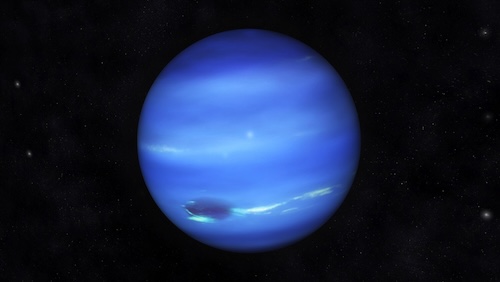
Uranus, Neptune. What lies beneath, a supercomputer unlocks the mystery

Uranus, Neptune. What lies beneath, a supercomputer unlocks the mystery

Tyler O'Neal, Staff Editor LATEST December 10, 2025, 6:50 pm
In a breakthrough that feels like cosmic archaeology, a research team at the University of Zurich (UZH) used cutting-edge supercomputer modeling to challenge decades-old assumptions about the icy giants of our solar system, Uranus and Neptune. The results? These planets might not be ice giants at all, but something far more surprising: worlds rich in rock and mystery.

Rebooting the “Ice Giant” Idea

For generations, scientists categorized Uranus and Neptune as “ice giants”, planets composed predominantly of water, ammonia, and methane ices beneath their atmospheres. Yet the new UZH study uses a hybrid modelling method that’s deliberately agnostic. Instead of assuming what’s inside, the computer starts with randomized internal profiles, then iterates until those profiles match known properties like gravity and density.
 
The outcome: both planets could just as plausibly be “rock-rich” as “ice-rich,” or somewhere in between. For Uranus, the models returned rock-to-water mass ratios ranging from ~0.04 up to nearly 4, a huge spread. Neptune’s best fits suggest similar ambiguity.
 
Modeling a planet’s interior is not trivial. You must simulate pressure, temperature, chemical composition, mass distribution, and gravitational moments, all under conditions that can’t be replicated on Earth. The UZH team used iterative algorithms that try countless plausible internal configurations, discard what doesn’t fit, and refine what does. This kind of brute force analysis demands enormous computational power.
 
It’s the same principle that has transformed cosmology and planetary science: powerful hardware + clever software = a time machine for the universe’s hidden corners. Much like how supercomputers once helped simulate star and galaxy formation for researchers at UZH and beyond.

A New View of Magnetic Fields and Planetary Identity

One of the strangest facts about Uranus and Neptune is their bizarre, multipolar magnetic fields, nothing like Earth’s simple dipole. The new models offer a possible explanation: if the interiors are layered differently than assumed, with rock-rich regions and various convective zones, magnetic field generation could behave differently than before thought.
 
In other words, these planets’ internal structure, not just external appearance, may be far more diverse than “ice giants.” They might be “rock giants,” “mixed giants,” or something in between.
  • The conclusions don’t assert Uranus or Neptune must be rock-heavy. Rather, they show that with current data, multiple internal configurations remain plausible.
  • As researchers note, uncertainties remain, especially regarding how materials behave under extreme interior pressures and temperatures, and exact composition gradients.
  • Definitive answers likely require future space missions to Uranus or Neptune to collect more observational data.
Because this work flips our assumptions. For decades, Uranus and Neptune comfortably sat in a neat box: “ice giants.” Now, thanks to computational bravery, that box is dissolving. These planets, mysterious, blue, distant, become laboratories for possibility.
 
Think about it: we can’t drill into them or bring back samples. We can’t replicate their interiors on Earth. But with enough processing power and creative algorithms, we can peer inside. It’s a reminder: sometimes the most radical discoveries aren’t from better telescopes, but from better simulations. The cosmos doesn’t always give answers, so we build them ourselves.
 
This kind of research, agile, computational, wide-open to possibilities, invites a rethinking of how we categorize planets, how we understand planet formation, and even how we search for exoplanets.
 
Maybe the neat categories we learned in school are just placeholders until someone powers up a supercomputer. And then: boom, the universe gets more weird, more beautiful.
 
AI rides into the arena: how code is reimagining rodeo

Edge-AI meets spurs, saddles

Tyler O'Neal, Staff Editor LATEST December 5, 2025, 6:35 pm
Palantir Technologies, together with TWG AI and backed by Teton Ridge, is launching a bold experiment that brings real-time artificial intelligence and computer vision into the dusty, data-scarce world of rodeo. This week, they announced a partnership with NVIDIA to deploy “edge AI” systems at live rodeo venues.
 
Instead of streaming raw video to the cloud and waiting, the new system processes footage on-site, using NVIDIA’s Holoscan infrastructure and powerful RTX PRO 6000 Blackwell GPUs, enabling lightning-fast analytics.
 
In effect, the rodeo arena becomes a living lab. Horses, riders, bulls, all tracked not just by human judges or spectators, but by silicon and algorithms. 
 

From past scores to live feedback

The project isn’t starting from scratch. Teton Ridge and its partners aggregated years of historical data: ride times, animal performance, rider stats across different rodeo disciplines. Using Palantir’s Foundry and AI-Platform (AIP), the collaborators trained computer-vision models to interpret each ride,  detecting motion, evaluating interactions between human and animal athletes, and exposing biomechanical and performance insights invisible to the naked eye.
 
What this means: Instead of relying solely on judges or memory, rodeo organizers and coaches can tap into a data-rich backend that dissects every gallop, pivot, and buck in near real-time.
 
According to reporting in Fast Company, this isn’t just a novelty; it reflects a broader push by Teton Ridge to transform one of America’s oldest sports through AI.

Why AI may change the rodeo game

  • Performance optimization for cowboys and cowgirls
    Algorithms can quantify subtle motion: body posture, reaction time, animal-rider dynamics. Over time, aggregated analytics might highlight training blind spots or ideal riding techniques.
  • Animal-athlete safety & welfare
    Tracking animal behavior and movement could help veterinarians, trainers, and event organizers detect stress or injury risks, giving rodeo a more humane, data-backed side.
  • Enhanced fan experience & broadcasting
    Real-time stats and analytics, delivered as overlays during broadcasts or arena jumbo-trons,  bring rodeo into the 21st century of immersive sports viewing. This aligns with broader trends of AI reshaping sports media and fan engagement.
  • Validating tradition through modern measurement
    Rodeo has always thrived on tradition, intuition, and human judgment. Now AI introduces a layer of objective data, a way to measure excellence and performance beyond lore and anecdotes.

Challenges and questions because reality isn't a clean Git push

This isn't Hollywood. Implementing real-time AI in the rodeo world will bump against real constraints:
  • Edge-AI hardware in dusty, unpredictable arenas may face connectivity, maintenance, or latency challenges. Running GPUs under such conditions isn’t trivial.
  • Data fairness and animal welfare: Introducing analytics could shift the spotlight. Will riders, trainers, or animals be pressured into chasing numbers rather than safety or tradition?
  • Cultural pushback: Rodeo is deeply rooted in heritage; adding algorithmic scrutiny might ruffle feathers among purists who believe in gut, instinct, and human judgment over code.

The long view, rodeo 2.0

Those dusty arenas, once reserved for tradition and adrenaline, may soon host another kind of spectacle, data + performance + insight. With Palantir, TWG AI, and NVIDIA building the infrastructure, and Teton Ridge investing in the vision, rodeo could evolve into one of the first “high-tech frontier sports.”
 
Watching a cowboy ride? Soon, you might also see real-time stats on posture, force, animal response, and analytics dashboards powered by edge AI. Maybe one day you’ll even watch a chatbot co-commentate a bull ride.
 
It’s wild west meets high-tech. And just like that, the future of rodeo looks like code rode sidesaddle with tradition.
  1. Scholars harness supercomputers to peer inside black holes, through code, not telescopes
  2. Seeing the unseeable: How AI, Supercomputers provide a clearer view of black holes
  3. Big numbers, big bets: Dell scales up HPC for the AI era
  4. SC25 pushes network frontiers as Pegatron unveils modular server ambitions
  5. Castrol expands its thermal management empire with strategic investment in ECS
  6. Abstraction, automation: Scientific computing enters a new era at SC25
  7. A retrospective on science-driven system architecture, the grand challenges ahead

Page 39 of 62

  • 34
  • 35
  • 36
  • 37
  • 38
  • 39
  • 40
  • 41
  • 42
  • 43
POPULAR RIGHT NOW
  • Supercomputers replace ‘bathtub’ flood maps with physics-based digital twins of Britain’s coastline
    Supercomputers replace ‘bathtub’ flood maps with physics-based digital twins of Britain’s coastline
  • Supercomputers push neural quantum simulation beyond previous limits
    Supercomputers push neural quantum simulation beyond previous limits
  • Intel’s AI supercomputing revival: Q2 financial surge signals new era for CPU-powered HPC infrastructure
    Intel’s AI supercomputing revival: Q2 financial surge signals new era for CPU-powered HPC infrastructure
  • AI infrastructure financing fears shake semiconductor sector
    AI infrastructure financing fears shake semiconductor sector
  • AWS supercomputing investment reaches historic scale as Amazon’s AI strategy powers record financial results
    AWS supercomputing investment reaches historic scale as Amazon’s AI strategy powers record financial results
  • Catching the wave of the future: Supercomputers unlock the hidden dynamics of Venus
    Catching the wave of the future: Supercomputers unlock the hidden dynamics of Venus
  • NCAR supercomputers run planet scale climate experiments impossible in the real world
    NCAR supercomputers run planet scale climate experiments impossible in the real world
  • AI hunts the cosmos: Machine learning helps astronomers discover the first ‘Wandering’ supermassive black hole caught destroying a star
    AI hunts the cosmos: Machine learning helps astronomers discover the first ‘Wandering’ supermassive black hole caught destroying a star
  • Supercomputing for the masses: Meta's vision of a personal superintelligence for everyone
    Supercomputing for the masses: Meta's vision of a personal superintelligence for everyone
  • NVIDIA helps turn AI compute into a new asset class as Wall Street mobilizes $500 billion
    NVIDIA helps turn AI compute into a new asset class as Wall Street mobilizes $500 billion
THIS YEAR'S MOST READ
  • Beamforming the future: BeammWave's 6G push signals the rise of orbital-terrestrial wireless networks
    Joakim Axmon
    Joakim Axmon
  • Wall Street wants to trade supercomputing power like oil
    Wall Street wants to trade supercomputing power like oil
  • Cosmic ambition at scale: UK’s supercomputer unlocks a 2.5 petabytes universe
    Cosmic ambition at scale: UK’s supercomputer unlocks a 2.5 petabytes universe
  • Hidden order, revealed at scale: Supercomputing, electron ptychography uncover the inner workings of relaxor ferroelectrics
    Hidden order, revealed at scale: Supercomputing, electron ptychography uncover the inner workings of relaxor ferroelectrics
  • Intel's Q1 results signal supercomputing surge driving Xeon momentum
    Intel's Q1 results signal supercomputing surge driving Xeon momentum
  • Huawei’s Tau Scaling ambition tests the limits of post-Moore semiconductor reality
    He Tingbo from HUAWEI delivered a keynote speech titled "New Semiconductor Path in Practice"
    He Tingbo from HUAWEI delivered a keynote speech titled "New Semiconductor Path in Practice"
  • When stars fall apart: Supercomputing reveals the hidden physics of black holes
    When stars fall apart: Supercomputing reveals the hidden physics of black holes
  • MIT develops computational framework to probe dark matter via gravitational waves
    MIT develops computational framework to probe dark matter via gravitational waves
  • Memory has become the new compute: Why Micron, SK Hynix crossing $1 trillion matters to supercomputing
    Memory has become the new compute: Why Micron, SK Hynix crossing $1 trillion matters to supercomputing
  • AI breaks conservation barriers: Australia’s Wildlife Observatory leverages supercomputing to protect biodiversity
    AI breaks conservation barriers: Australia’s Wildlife Observatory leverages supercomputing to protect biodiversity
  • FRONTPAGE
  • LATEST
  • POPULAR
  • REGISTER
  • SOCIAL
  • VIDEO
  • SUBSCRIPTION
  • RSS
  • GUIDELINES
  • PRIVACY
  • TOS
  • ABOUT
  • +1 (816) 799-4488
  • editorial@supercomputingonline.com
© 2001 - 2026 SuperComputingOnline.com, LLC. All rights reserved. This material may not be published, broadcast, rewritten or redistributed without permission.
Sign In
  • FRONT PAGE
  • LATEST
    • MEDIA KIT
    • MOST READ
    • RSS FEED
    • ACADEMIA
    • AEROSPACE
    • APPLICATIONS
    • ASTRONOMY
    • AUTOMOTIVE
    • BIG DATA
    • BIOLOGY
    • CHEMISTRY
    • CLIENTS
    • CLOUD
    • DEFENSE
    • DEVELOPER TOOLS
    • EARTH SCIENCES
    • ECONOMICS
    • ENGINEERING
    • ENTERTAINMENT
    • HEALTH
    • INDUSTRY
    • INTERCONNECTS
    • GAMING
    • GOVERNMENT
    • MANUFACTURING
    • MIDDLEWARE
    • MOVIES
    • NETWORKS
    • OIL & GAS
    • PHYSICS
    • PROCESSORS
    • RETAIL
    • SCIENCE
    • STORAGE
    • SYSTEMS
    • VISUALIZATION
  • VIDEOS
    • ADD YOUR VIDEOS
    • MANAGE VIDEOS
  • COMMUNITY
    • TRADE SHOWS
    • SOCIAL NETWORK VIDEOS
    • SURVEYS
    • APPLICATIONS BROWSER
    • CONVERSATION INBOX
    • SOCIAL ADVERTISER
    • GROUPS
    • MARKETPLACE LISTINGS
    • PAGES
    • LEADERBOARD
    • POINTS LISTING
      • BADGES
    • PRIVACY CONFIRM REQUEST
    • PRIVACY CREATE REQUEST

Hey there! We noticed you’re using an ad blocker.