Supercomputers illuminate the cosmic life cycle: Charting stars off the beaten path

In the grand cosmic ballet, stars live tumultuous lives,  forming in blazing clouds of gas, burning for millions of years, and ultimately exploding as supernovae that reshape entire galaxies. Now, thanks to cutting-edge astronomical surveys and the next generation of supercomputer simulations, scientists are beginning to see where and how these cataclysmic events unfold across the vast tapestry of space, even in places once thought unlikely.
 
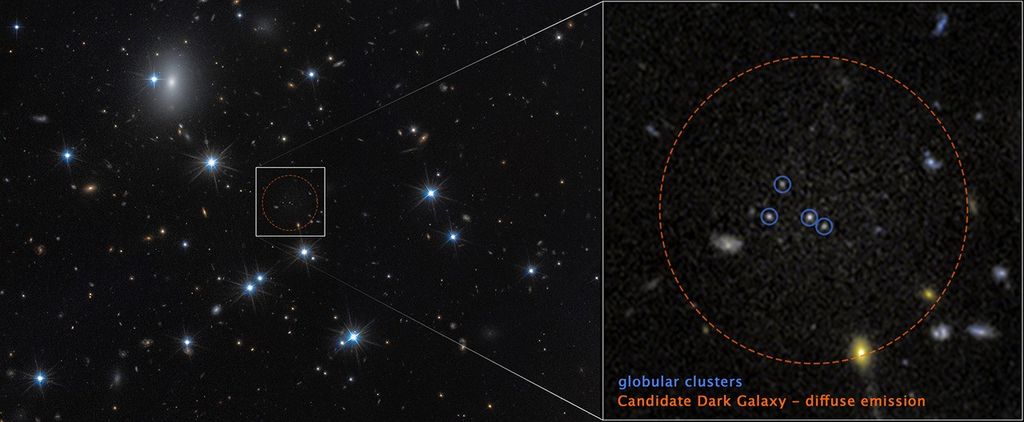
A collaborative team of astronomers has produced the first large-scale census of evolved massive stars,  those on the brink of explosive death, across the nearby spiral galaxy M33. By overlaying high-resolution gas maps from the NSF’s Very Large Array and ALMA with catalogs of thousands of red supergiants, Wolf–Rayet stars, and known supernova remnants, researchers uncovered a surprising truth: a majority of future stellar explosions are likely to occur outside the dense clouds where stars are born.
 
This revelation reshapes our understanding of how galaxies evolve. Supernovae don’t merely spew heavy elements into dense star-forming chambers; many detonate within the more diffuse interstellar medium. In these off the beaten path locales, their shock waves travel farther before dissipating, stirring gas over larger scales and influencing the cosmic ecosystem in ways that traditional models hadn’t fully captured.

Supercomputing: The Engine Behind Cosmic Insight

Bringing this level of detail to astrophysics isn’t possible without supercomputing, the computational backbone of modern galaxy simulations. Observational efforts like the Local Group L-Band Survey provide exquisite maps of gas and stars, but only large-scale cosmological simulations can trace millions to billions of years of galactic evolution, modeling how stars interact with their environments over cosmic time.

These simulations, ambitious in both scale and physics, run on some of the world’s most powerful supercomputers, incorporating gravity, hydrodynamics, radiative feedback, and turbulent gas flows.
 
Models such as FIRE, Illustris, TIGRESS, and SILCC integrate complex subgrid physics to approximate processes occurring at scales far smaller than individual simulation cells. The new stellar census from M33 provides a critical benchmark for these simulations, giving astrophysicists real-world data against which to test and refine their codes.
 
Without high-performance computing, tracking the intricate interplay between massive stars and their gaseous surroundings across an entire galaxy, from cold molecular clouds to tenuous atomic hydrogen, would be unthinkable. Supercomputers enable researchers to explore how stellar winds, supernova blasts, and runaway stars shape the evolution of galaxies over billions of years, bridging the gap between theoretical physics and observable astrophysical phenomena.

Polishing the Future of Galaxy Modeling

The realization that many stars meet their end far from dense clouds is reshaping our view of galactic evolution. This new understanding challenges long-held beliefs about where energy and momentum are distributed throughout galaxies, alters predictions for galactic winds and the spread of elements, and drives simulation models to include more accurate feedback mechanisms. As new data from ALMA and future telescopes like the Next Generation Very Large Array become available, astronomers will continue to refine their insights with supercomputers playing a critical role in making sense of it all.
 
In this era of astronomical breakthroughs, supercomputing is more than just a tool for simulating the cosmos; it is a key to understanding our own cosmic origins. By combining detailed observations with immense computational power, scientists are piecing together the life cycles of stars and, through them, the evolution of galaxies. This blend of data and simulation marks a pivotal step forward in humanity’s journey to understand the universe.

Universal Music Group, NVIDIA AI: A new dawn for music discovery, creation

Amidst a sea of streaming services and algorithms, Universal Music Group (UMG) and NVIDIA are joining forces to revolutionize the way billions engage with music. No longer confined to passive listening, audiences can now participate in a more immersive, AI-driven musical landscape. For the supercomputing community, this collaboration marks a significant milestone: the fusion of artistic creativity and artificial intelligence on an unprecedented scale, made possible by extraordinary computational power.
 
Central to this partnership is NVIDIA AI infrastructure and the cutting-edge Music Flamingo model, an audio-language AI system crafted to interpret music with a depth of understanding once reserved for expert listeners and years of cultural context. Capable of analyzing tracks up to 15 minutes in length, Music Flamingo surpasses basic genre or tempo classifications. It explores harmony, structure, timbre, lyrics, emotional progression, and cultural significance, translating songs into a form that AI can process with genuine insight.
 
This isn't just a futuristic concept; it's a computational heavyweight challenge that relies on high-performance AI training and inference, the very domains where supercomputing shines. Training a model to parse millions of tracks with rich, expressive understanding demands massive parallel processing, optimized data pipelines, and cutting-edge GPU acceleration. NVIDIA AI infrastructure, the same underlying systems that power scientific simulations, large language models, and climate modeling, becomes the engine that unlocks this new musical intelligence.
 
Imagine a world where discovering music transcends playlist algorithms and popularity charts. With this collaboration, fans may one day navigate music libraries through conversational exploration, asking an AI to find tracks that match their mood, evoke the emotional depth of a favorite lyric, or reflect cultural moments they care about. Rather than passively consuming, listeners could engage with music as if exploring an intelligent, contextual universe of sound.
 
But the ambitions here extend beyond discovery. Fan engagement and creative tools are poised for transformation. Music Flamingo's outputs will help artists analyze and describe their own work with unprecedented depth, facilitating intimate connections with audiences and empowering creators to communicate their intentions in richer ways. UMG and NVIDIA are also establishing a dedicated artist incubator where musicians, songwriters, and producers collaborate with AI tools, co-designing workflows that preserve authenticity and originality rather than producing generic outputs often derided as AI slop.
 
What makes this partnership especially inspirational for the HPC and AI communities is how it marries computational innovation with cultural impact. The same architectures and algorithms that power weather forecasting, genomics, and materials discovery will help millions of music fans tear down the walls between creation and understanding. Supercomputers aren't just crunching numbers; they’re helping to amplify emotional resonance, cultural narrative, and human connection in the world’s most ubiquitous art form.
 
Critically, both Universal and NVIDIA emphasize responsible AI development, protecting artist rights, ensuring proper attribution, and embedding ethical principles into the technology stack. In an era when AI’s rapid rise has sparked debates about creativity, ownership, and fairness, this collaboration stands out for actively involving artists in shaping the very tools that will influence their craft and livelihood.
 
For SC Online readers, this story isn’t just about music; it’s about how AI and supercomputing can elevate human experience at scale. Here, cutting-edge GPU clusters and advanced neural architectures aren’t confined to laboratories; they’re weaving into the cultural fabric of everyday life, inviting billions of fans to connect with music in ways once thought impossible.
 
As this collaboration unfolds, it will be fascinating to watch how supercomputing continues to push boundaries not only in science and industry but also in art, emotion, and global cultural engagement. This isn't just a technological leap; it's a celebration of what happens when AI amplifies, rather than replaces, human creativity.

Adaptive intelligence in molecular matter, bold claims, but where’s the supercomputing?

The Indian Institute of Science (IISc) recently announced a study proposing that specially engineered molecular devices can encode adaptive intelligence, functioning as memory, processor, synapse, or logic element within a single material system. The press release borders on science fiction: circuitry that morphs its own function, learning and unlearning, and potentially forming the foundation of future brain-like hardware. Yet for a newspaper focused on supercomputing, a pressing question arises: what concrete role did supercomputing play in these claims, and is its significance being exaggerated?
 
On the surface, this research targets the grand challenges that energize the high-performance computing (HPC) community: forecasting the behavior of electrons and ions in intricate, interacting molecular systems, and engineering materials whose properties arise from atomic-scale chemistry rather than top-down design. These are precisely the sorts of questions that call for large-scale simulation, many-body theory, quantum chemistry, and advanced transport calculations, the computational workloads that routinely stretch supercomputers to their limits.
 
Yet in the public materials released so far, mention of any actual use of supercomputers, HPC clusters, or large-scale simulations is conspicuously absent. Instead, the study emphasizes chemical design and experimental fabrication of 17 ruthenium complexes, and a theoretical transport framework that explains switching behaviour. But the press release from IISc and related summaries do not specify whether that theory was developed or tested using supercomputing resources, what software was used, what scale of computation was necessary, or how HPC accelerated the work compared with more modest computing setups.
 
For readers of Supercomputing Online, this gap matters. Our field recognizes that meaningful advances in predictive materials science and neuromorphic design typically leverage HPC because:
  • Quantum chemistry and many-body simulations: accurate modeling of electrons in complex media, almost always demand large parallel jobs on clusters with optimized libraries and terabytes of memory.
  • Data-driven design loops, where simulations generate datasets to train surrogate models, can involve tens of thousands of individual compute jobs, far beyond the capabilities of standard workstations.
  • Exploration of high-dimensional parameter spaces (e.g., geometry, ionic environment) benefits greatly from HPC scheduling and resource management.
Yet the IISc announcement makes none of this transparent. In the absence of clear indicators, such as named supercomputers, compute hours used, parallel methods employed, or collaborations with HPC centers, the reader is left to wonder if computation here means traditional lab data fitting or truly large-scale simulation.
 
There’s also reason to be cautious about the broader narrative. The claim that a single molecular device can store information, compute with it, or even learn and unlearn is striking, but such phrases are often used metaphorically in early-stage research. Without benchmarks against established neuromorphic platforms (which often rely on HPC for modeling and validation), it’s difficult to assess the true novelty and where, if at all, HPC played a decisive role.
 
Supercomputing has indisputably transformed materials science, enabling predictions that guide experiments and hasten discovery. But as Supercomputing Online readers know well, the mere invocation of computational theory does not automatically imply HPC involvement. Rigorous reporting should distinguish between conceptual frameworks and computational achievements enabled by large-scale systems.
 
In sum, while the IISc study touches on exciting concepts, molecular adaptability and neuromorphic hardware, the connection to supercomputing remains vague. Before we herald a new chapter in intelligent materials at HPC-scale, we need concrete evidence: what machines were used, what codes scaled to them, what challenges were overcome thanks to parallel computation, and how this work compares with existing HPC-driven materials research.
 
Only then can we judge whether this research truly aligns with the high-performance computing frontier,  or whether the term adaptive intelligence is being applied with more flair than computational substance.

Finnish supercomputing powers a breakthrough in predicting protein-nanocluster interactions

 
In a bold stride forward for computational nanoscience and biomedical innovation, researchers at the University of Jyväskylä’s Nanoscience Center in Finland have unveiled a groundbreaking machine-learning model that predicts how proteins bind to gold nanoclusters, a pivotal challenge in designing next-generation nanomaterials for bioimaging, biosensing, and targeted drug delivery. The work exemplifies how supercomputing, the very heart of high-performance computing, is accelerating discovery in fields that once lay beyond our computational reach.
 
At the core of this achievement is a novel clustering-based machine-learning framework that uncovers the chemical rules governing interactions between biomolecules and ligand-stabilized gold nanoclusters. Predicting protein adsorption at this level of detail has long stymied researchers due to the sheer complexity inherent in nanoscale interfaces. Traditional computational methods, even on powerful desktops, can require prohibitively long times and often lack the generalizability necessary to guide design across diverse proteins.
 
Here’s where supercomputing comes in. The team harnessed the LUMI supercomputer to perform atomistic simulations at an unprecedented scale and fidelity. These simulations provided the rich, high-resolution data necessary to train and validate the machine-learning model, a task virtually impossible without supercomputing resources capable of executing massive parallel computations with blistering performance.
 
Supercomputing enables scientists to tackle problems that are too large, too complex, or too data-intensive for conventional computing systems. By integrating hundreds or thousands of compute nodes working in concert, supercomputers like LUMI can complete simulations and data-driven training tasks orders of magnitude faster than standard hardware, dramatically shortening the cycle from hypothesis to discovery.
 
This synergy between machine learning and supercomputing yields not just faster computation, but also expands insight. The Jyväskylä model determines which amino acids are more or less likely to bind to gold nanoclusters and pinpoints chemical groups responsible for these interactions, a roadmap for rational design of nanomaterials with tailored properties. Importantly, the framework’s general and scalable design means it can be extended beyond a single peptide system to broadly inform how proteins interact with nanomaterials.
 
The implications are profound. With supercomputing-driven machine learning at their disposal, researchers can rapidly screen thousands of protein candidates and optimize nanomaterials for specific biomedical applications, from enhancing contrast in imaging to improving the specificity of drug delivery vehicles. What once required months or years of trial and error can now proceed at the speed of computation.
 
For the supercomputing community, this research highlights a powerful truth: the next wave of scientific breakthroughs will increasingly emerge where advanced algorithms meet extreme computing power. As the global high-performance computing ecosystem continues to evolve, with ever-faster machines and more sophisticated AI integrations, the frontier of what’s computationally possible will only expand.
 
In the words of the study’s lead researchers, this is not merely a model for a single system; it is a foundation for a new paradigm in computational nanoscience, propelled by the unparalleled capabilities of supercomputing.

Century-old Pi mysteries power bleeding-edge physics

How Ramanujan’s formulae for π fuel modern high-energy physics and supercomputational frontiers

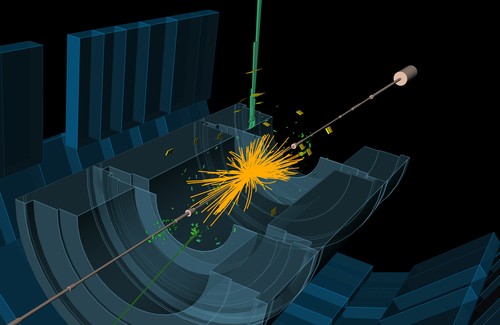
When Srinivasa Ramanujan penned his remarkable series for the constant π more than a century ago, he could hardly have imagined that his deep mathematical insights would one day illuminate some of the most baffling questions in physics. Yet a new study, published this December in Physical Review Letters, reveals that structures Ramanujan discovered in 1914 are not mere curiosities of pure mathematics, but lie at the heart of modern high-energy physics and advanced computational methods.
 
Ramanujan’s enigmatic infinite series for 1/π compact formulas that accelerate calculations with astonishing efficiency were originally formulated in the early 20th century with no apparent connection to the physical world. In recent years, they have become the basis for modern algorithms that compute π to staggering precision, exceeding 200 trillion digits.
 
Yet the real surprise comes from interdisciplinary exploration at the Centre for High Energy Physics (CHEP) at the Indian Institute of Science (IISc), where Professors Aninda Sinha and Faizan Bhat asked an audacious question: Why do Ramanujan’s formulas work so brilliantly, and could they be pointing to more than arithmetic beauty?
 
Their answer bridges mathematics and physics in an unprecedented way. The team discovered that Ramanujan’s formulas naturally arise from logarithmic conformal field theories (LCFTs), sophisticated theoretical frameworks used to describe systems with scale invariance, where phenomena appear the same at every magnification. These theories are central to understanding critical physical processes, such as fluid turbulence, percolation (the process by which substances spread through media), and aspects of black hole physics.
 
In essence, the formulas Ramanujan discovered as elegant mathematical identities are now showing up as powerful computational tools in physical models. Specifically, the underlying structure of his 1/π series mirrors the mathematics governing two-dimensional LCFTs, models that appear across diverse physical contexts, from polymer physics to quantum Hall effects.
 
What makes this discovery especially profound for supercomputing and high-energy physics is the computational leverage it offers. By exploiting the shared mathematical architecture between Ramanujan’s series and LCFTs, researchers can compute key quantities in these theories with greater efficiency, much as Ramanujan originally harnessed compact formulas to leapfrog slower π approximations a century ago. This reflects a deep and inspiring symmetry between mathematical ingenuity and physical law.
 
“We wanted to see whether the starting point of his formulas fits naturally into some physics,” said Sinha, underscoring that the aim was not merely computational optimization but understanding why such formulas exist at all.
 
Indeed, logarithmic conformal field theories, once thought of as abstract mathematical playgrounds, have now become a nexus where century-old mathematics meets the frontiers of theoretical physics and advanced computation. These theories describe systems at critical points where small changes can lead to dramatic shifts, including transitions from laminar to turbulent flows and the exotic behavior near black holes’ event horizons. The fact that Ramanujan’s series resonates within these contexts highlights how pure thought, unfettered by application, can anticipate the structures of nature itself.
 
For the supercomputing community, this research is more than a historical curiosity. It represents a testament to the enduring power of mathematical ideas to accelerate computing and advance our understanding of the universe. As supercomputers tackle ever more complex simulations, from plasma dynamics to quantum field computations, the legacy of Ramanujan’s pi formulas proves that efficiency and deep structure often go hand in hand.
 
In an age where computation, mathematics, and theoretical physics intertwine more closely than ever, the resurrection of Ramanujan’s work in high-energy physics stands as a beacon of inspiration, a reminder that the mathematical rhythms discovered in solitude can echo across the cosmos, shaping how we compute, model, and ultimately grasp the universe’s deepest secrets.