

SUPERCOMPUTING NEWS SUPERCOMPUTING NEWS
    • MEDIA KIT
    • MOST READ
    • RSS FEED
    • ACADEMIA
    • AEROSPACE
    • APPLICATIONS
    • ASTRONOMY
    • AUTOMOTIVE
    • BIG DATA
    • BIOLOGY
    • CHEMISTRY
    • CLIENTS
    • CLOUD
    • DEFENSE
    • DEVELOPER TOOLS
    • EARTH SCIENCES
    • ECONOMICS
    • ENGINEERING
    • ENTERTAINMENT
    • GAMING
    • GOVERNMENT
    • HEALTH
    • OIL & GAS
    • INDUSTRY
    • INTERCONNECTS
    • MANUFACTURING
    • MIDDLEWARE
    • MOVIES
    • NETWORKS
    • PHYSICS
    • PROCESSORS
    • RETAIL
    • SCIENCE
    • STORAGE
    • SYSTEMS
    • VISUALIZATION
    • AcyMailing subscription form

    • ADD YOUR VIDEOS
    • MANAGE VIDEOS
    • CONVERSATION INBOX
    • SOCIAL ADVERTISER
    • SOCIAL NETWORK VIDEOS
    • SURVEYS
    • GROUPS
    • PAGES
    • MARKETPLACE LISTINGS
    • APPLICATIONS BROWSER
    • PRIVACY CONFIRM REQUEST
    • PRIVACY CREATE REQUEST
    • LEADERBOARD
    • POINTS LISTING
      • BADGES
    • TRADE SHOWS
Sign In
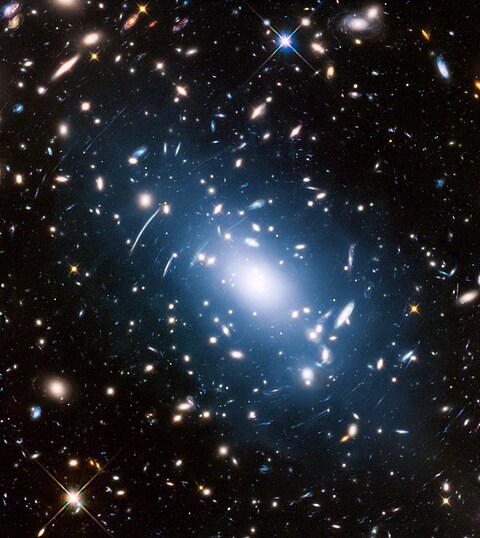
NASA, ESA, and M. Montes (University of New South Wales) Massive galaxy cluster Abell S1063 as captured by NASA's Hubble Space Telescope
Tyler O'Neal, Staff Editor ACADEMIA March 23, 2023, 10:00 am

Institute for Advanced Study astrophysicists deploy AI to show how to 'weigh' galaxy clusters

Scholars from the Institute for Advanced Study in Princeton, New Jersey, have used a machine learning algorithm known as “symbolic regression” to generate new equations that help solve a fundamental problem in astrophysics: inferring the mass of galaxy clusters.

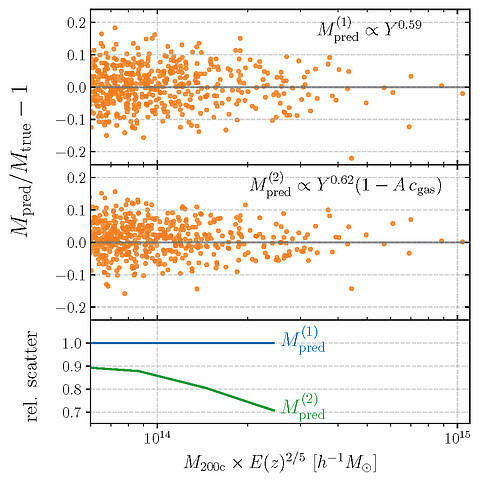
Galaxy clusters are the most massive objects in the Universe: a single cluster contains anything from a hundred to many thousands of galaxies, alongside collections of plasma, hot X-ray emitting gas, and dark matter. These components are held together by the cluster’s gravity. Understanding such galaxy clusters is crucial to pinning down the origin and continuing evolution of our universe. Digvijay Wadekar The performance of the new equation from symbolic regression is shown in the middle panel, whereas that of the traditional method is shown in the top. The lower panel explicitly quantifies the reduction in the scatter.
Perhaps the most crucial quantity determining the properties of a galaxy cluster is its total mass. But measuring this quantity is difficult—galaxies cannot be “weighed” by placing them on a scale. The problem is further complicated by the fact that the dark matter that makes up much of a cluster’s mass is invisible. Instead, scientists infer the mass of a cluster from other observable quantities.

Previously, scholars considered a cluster’s mass to be roughly proportional to another, more easily measurable quantity called the “integrated electron pressure” (or the Sunyaev-Zel’dovich flux, often abbreviated to YSZ). The theoretical foundations of the Sunyaev-Zel’dovich flux were laid in the early 1970s by Rashid Sunyaev, a current Distinguished Visiting Professor in the Institute’s School of Natural Sciences, and his collaborator Yakov B. Zel’dovich.

However, the integrated electron pressure is not a reliable proxy for mass because it can behave inconsistently across different galaxy clusters. The outskirts of clusters tend to exhibit very similar YSZ, but their cores are much more variable. The YSZ/mass equivalence was problematic in that it gave equal weight to all parts of the cluster. As a result, a lot of “scatter” was observed, meaning that the error bars on the mass inferences were large.

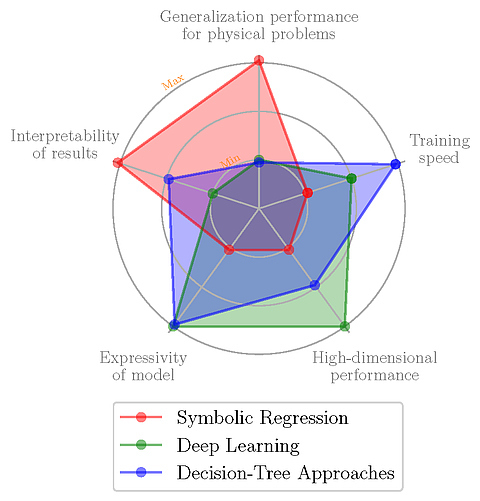
Digvijay Wadekar, a current Member of the Institute’s School of Natural Sciences, has worked with collaborators across ten different institutions to develop an AI program to improve the understanding of the relationship between the mass and the YSZ. Digvijay Wadekar The trade-offs between different machine learning techniques. Symbolic regression is much less powerful than deep neural networks on high-dimensional datasets, but it is much more interpretable as it provides mathematical equations as output.
Wadekar and his collaborators “fed” their AI program with state-of-the-art cosmological simulations that have been developed by groups at the Harvard & Smithsonian Center for Astrophysics, and at the Flatiron Institute's Center for Computational Astrophysics (CCA) in New York. Their program searched for and identified additional variables that might make inferring the mass from the YSZ more accurate.

AI is useful for identifying new parameter combinations that could be overlooked by human analysts. While it is easy for human analysts to identify two significant parameters in a data set, AI is better able to parse through high volumes often revealing unexpected influencing factors.

More specifically, the AI method that Wadekar and his collaborators employed is known as symbolic regression. “Right now, a lot of the machine learning community focuses on deep neural networks,” Wadekar explained. “These are very powerful but the drawback is that they are almost like a black box. We cannot understand what goes on in them. In physics, if something is giving good results, we want to know why it is doing so. Symbolic regression is beneficial because it searches a given dataset and generates simple, mathematical expressions in the form of simple equations that you can understand. It provides an easily interpretable model.”

Their symbolic regression program (called PySR) handed them a new equation, which was able to better predict the mass of the galaxy cluster by augmenting YSZ with information about the cluster’s gas concentration. Wadekar and his collaborators then worked backward from this AI-generated equation and tried to find a physical explanation for it. They realized that gas concentration is correlated with the noisy areas of clusters where mass inferences are less reliable. Their new equation, therefore, improved mass inferences by providing a way for these noisy areas of the cluster to be “down-weighted”. In a sense, the galaxy cluster can be compared to a spherical doughnut. The new equation extracts the jelly at the center of the doughnut (that introduces larger errors), and concentrates on the doughy outskirts for more reliable mass inferences.

The new equations can provide observational astronomers engaged in upcoming galaxy cluster surveys with better insights into the mass of the objects that they observe. “There are quite a few surveys targeting galaxy clusters which are planned shortly,” Wadekar stated. “Examples include the Simons Observatory (SO), the Stage 4 CMB experiment (CMB-S4), and an X-ray survey called eROSITA. The new equations can help us in maximizing the scientific return from these surveys.”

He also hopes that this publication will be just the tip of the iceberg when it comes to using symbolic regression in astrophysics. “We think that symbolic regression is highly applicable to answering many astrophysical questions,” Wadekar added. “In a lot of cases in astronomy, people make a linear fit between two parameters and ignore everything else. But nowadays, with these tools, you can go further. Symbolic regression and other artificial intelligence tools can help us go beyond existing two-parameter power laws in a variety of different ways, ranging from investigating small astrophysical systems like exoplanets to galaxy clusters, the biggest things in the universe.”
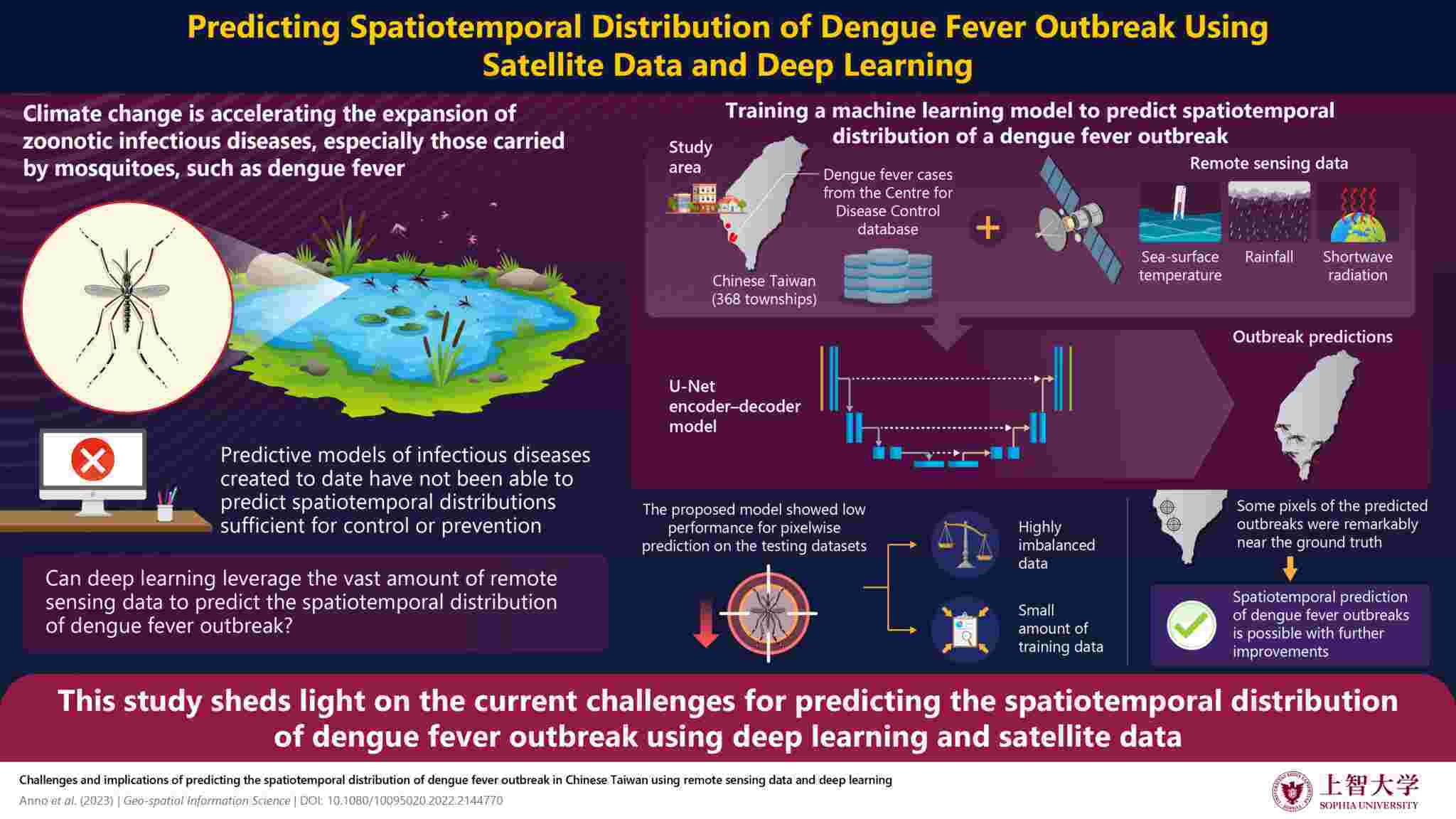
Climate change is making outbreaks zoonotic diseases, such as dengue fever, more frequent in Chinese Taiwan. Leveraging climatic data and artificial intelligence models could be a convenient strategy to predict the most likely time and place of future outbreaks, helping local governments give out early warnings to potentially affected areas.

Japanese prof Anno trains ML model with climatic, epidemiology remote sensing data to predict the spatiotemporal distribution of disease outbreaks

Tyler O'Neal, Staff Editor ACADEMIA March 23, 2023, 7:00 am

Cases of dengue fever and other zoonotic diseases will keep increasing owing to climate change, and prevention via early warning is one of our best options against them. Recently, researchers combined a machine learning model with remote sensing climatic data and information on past dengue fever cases in Chinese Taiwan, to predict likely outbreak locations. Their findings highlight the hurdles to this approach and could facilitate more accurate predictive models.

Outbreaks of zoonotic diseases, which are those transmitted from animals to humans, are globally on the rise owing to climate change. In particular, the spread of diseases transmitted by mosquitoes is very sensitive to climate change, and Chinese Taiwan has seen a worrisome increase in the number of cases of dengue fever in recent years.

Like for most known diseases, the popular saying “an ounce of prevention is worth a pound of cure” also rings true for dengue fever. Since there is still no safe and effective vaccine for all on a global scale, dengue fever prevention efforts rely on limiting places where mosquitoes can lay their eggs and giving people an early warning when an outbreak is likely to happen. However, thus far, there are no mathematical models that can accurately predict the location of dengue fever outbreaks ahead of time.

To address this issue, a research team including Professor Sumiko Anno from Sophia University, Japan, sought to combine artificial intelligence (AI) with remote sensing data to predict the spatiotemporal distribution of dengue fever outbreaks in Chinese Taiwan. This work, which was published in Geo-spatial Information Science, was co-authored by Hirakawa Tsubasa, Satoru Sugita, and Shinya Yasumoto, all from Chubu University, Ming-An Lee from National Taiwan Ocean University, and Yoshinobu Sasaki and Kei Oyoshi from the Japan Aerospace Exploration Agency (JAXA), Japan.

First, the team gathered climatic data of Chinese Taiwan from 2002 to 2020, including data on rainfall, sea-surface temperature, and shortwave radiation. They also gathered information on the place of residence of all reported dengue fever cases registered in the Chinese Taiwan Centre for Disease Control. This enabled the researchers to prepare a labeled training dataset for the AI model, which should ideally be capable of finding hidden patterns between dengue fever cases and climatic parameters.

The AI model in question was a convolutional neural network (CNN) with a U-Net-based encoder–decoder architecture. “The U-Net model works with remarkably few training images and yields more precise semantic segmentation when provided with the location information,” explains Prof. Anno about the choice of AI model for their study. This well-established design usually performs well in image segmentation tasks, even when trained with few samples. After training the model, the team attempted to validate it using the remaining gathered data.

Unfortunately, the model did not perform as well as the researchers hoped it would. Most of the pixels on the map of Taiwan marked as predicted dengue fever outbreak locations did not match the original data. However, not all hope is lost for this approach, as Prof. Anno highlights: “While most of the predicted outbreak pixels did not overlap with the ground truth, some of them were located quite close to actual outbreak locations. This implies that the spatiotemporal prediction of dengue fever outbreaks using remote sensing data is possible.”

Despite the low accuracy of the AI model, this study brought to light some of the current challenges of using remote sensing data for predicting the spatiotemporal distribution of zoonotic disease outbreaks. The research team believes that using a different model architecture, finding a way of balancing the training dataset and gathering higher-resolution satellite data could all be promising ways to achieve the necessary performance. 

More work will be required before we can use machine learning as a tool to pinpoint potential disease outbreak zones based on climatic data, but we must not falter. “Spatiotemporal visualizations generated by deep learning models could potentially guide the implementation of effective measures against disease outbreaks at the optimal time and location for disease prevention and control,” concludes Prof. Anno, optimistically.

China aims to improve the capability of models in simulating key climate patterns of the Northern Hemisphere

Tyler O'Neal, Staff Editor ACADEMIA March 22, 2023, 1:00 pm

The warm Arctic-cold Eurasia (WACE) climate pattern is the main feature of winter temperature in the Northern Hemisphere in the last 20 years. Extreme cold events related to this pattern have occurred frequently in the Northern Hemisphere.

The ability of climate models to simulate WACE directly affects the skill in simulating winter temperature. Past studies have shown that previous generations of climate models were poor at simulating midlatitude atmospheric response to sea ice, making them simulate a weaker-than-observed WACE.

Now, scientists from the Institute of Atmospheric Physics of the Chinese Academy of Sciences, China Meteorological Administration, and Nanjing University of Information Science and Technology have evaluated the ability of CMIP6 models (i.e., models participating in phase 6 of the Coupled Model Intercomparison Project) to simulate WACE and revealed the key factors influencing the differences in simulation capability.

Results showed that the CMIP6 multi-model ensemble mean was better able to simulate WACE, but there were still large gaps among individual models. Models with good ability in simulating climatic states and extremes of Eurasian winter temperatures also showed more skill in simulating WACE.

"The difference in the simulation of extremes was mainly reflected in the ability to simulate the warming anomalies in the Barents Sea-Kara Sea (BKS) region," said ZHAO Liang, co-author of the study.

Further analysis showed that the models' simulations of BKS warming anomalies were related to their reflection of the location and persistence of the Ural blocking (a large-scale anticyclone that occurs in the Ural Mountains region), which transmits heat northwards to the BKS, thereby warming the Arctic, strengthening the downstream westerly trough, and cooling central Eurasia. Therefore, the simulation of the Ural blocking is the key to improving the capability of climate models in simulating WACE.

  1. Lancaster prof Stefanovska enables viz of electron dynamics on liquid helium
  2. Audibert discovers relativistic jets blowing bubbles in the central region of the Teacup Galaxy

Page 38 of 123

  • 33
  • 34
  • 35
  • 36
  • 37
  • 38
  • 39
  • 40
  • 41
  • 42
POPULAR RIGHT NOW
  • Supercomputers uncover a new class of cosmic explosions hidden in plain sight
    Supercomputers uncover a new class of cosmic explosions hidden in plain sight
  • AI supercharges the hunt for stronger magnets: Iowa State researchers launch a new era of intelligent materials discovery
    AI supercharges the hunt for stronger magnets: Iowa State researchers launch a new era of intelligent materials discovery
  • IBM's Historic stock collapse raises questions for the future of enterprise supercomputing
    IBM's Historic stock collapse raises questions for the future of enterprise supercomputing
  • Could a novel dark matter theory simultaneously resolve multiple cosmic enigmas? Supercomputer simulations provide a compelling, albeit currently unverified, potential solution
    Could a novel dark matter theory simultaneously resolve multiple cosmic enigmas? Supercomputer simulations provide a compelling, albeit currently unverified, potential solution
  • Melting icebergs may be reshaping Earth’s greatest ocean current
    Melting icebergs may be reshaping Earth’s greatest ocean current
  • Supercomputers replace ‘bathtub’ flood maps with physics-based digital twins of Britain’s coastline
    Supercomputers replace ‘bathtub’ flood maps with physics-based digital twins of Britain’s coastline
  • Supercomputers push neural quantum simulation beyond previous limits
    Supercomputers push neural quantum simulation beyond previous limits
  • Intel’s AI supercomputing revival: Q2 financial surge signals new era for CPU-powered HPC infrastructure
    Intel’s AI supercomputing revival: Q2 financial surge signals new era for CPU-powered HPC infrastructure
  • AI infrastructure financing fears shake semiconductor sector
    AI infrastructure financing fears shake semiconductor sector
  • AWS supercomputing investment reaches historic scale as Amazon’s AI strategy powers record financial results
    AWS supercomputing investment reaches historic scale as Amazon’s AI strategy powers record financial results
THIS YEAR'S MOST READ
  • Wall Street wants to trade supercomputing power like oil
    Wall Street wants to trade supercomputing power like oil
  • Cosmic ambition at scale: UK’s supercomputer unlocks a 2.5 petabytes universe
    Cosmic ambition at scale: UK’s supercomputer unlocks a 2.5 petabytes universe
  • Hidden order, revealed at scale: Supercomputing, electron ptychography uncover the inner workings of relaxor ferroelectrics
    Hidden order, revealed at scale: Supercomputing, electron ptychography uncover the inner workings of relaxor ferroelectrics
  • Beamforming the future: BeammWave's 6G push signals the rise of orbital-terrestrial wireless networks
    Joakim Axmon
    Joakim Axmon
  • Intel's Q1 results signal supercomputing surge driving Xeon momentum
    Intel's Q1 results signal supercomputing surge driving Xeon momentum
  • When stars fall apart: Supercomputing reveals the hidden physics of black holes
    When stars fall apart: Supercomputing reveals the hidden physics of black holes
  • Multi-layer simulations reveal the hidden supply chain of solar prominences
    Multi-layer simulations reveal the hidden supply chain of solar prominences
  • Japanese scientists decode dolphin speed with supercomputing: Turbulence, vortices, and the hidden physics of propulsion
    Japanese scientists decode dolphin speed with supercomputing: Turbulence, vortices, and the hidden physics of propulsion
  • Cosmic feedback at scale: Supercomputing reveals how quasars regulate the early Universe
    Cosmic feedback at scale: Supercomputing reveals how quasars regulate the early Universe
  • Modeling life at the microscopic scale: A computational breakthrough in oxygen transport
    Modeling life at the microscopic scale: A computational breakthrough in oxygen transport
MOST READ OF ALL-TIME
  • Largest Computational Biology Simulation Mimics The Ribosome
    Details
    112108
    The amino acid (green) slithers into the chemical reaction center, moving through an evolutionarily ancient corridor of the ribosome (purple). The amino acid is delivered to the reaction core by the transfer RNA molecule (yellow).
    The amino acid (green) slithers into the chemical reaction center, moving through an evolutionarily ancient corridor of the ribosome (purple). The amino acid is delivered to the reaction core by the transfer RNA molecule (yellow).
  • Silicon 'neurons' may add a new dimension to chips
    Details
    80995
    Silicon 'neurons' may add a new dimension to chips
  • Linux Networx Accelerators Expected to Drive up to 4x Price/Performance
    Details
    75538
  • Complex Concepts That Really Add Up
    Details
    73639
    Complex Concepts That Really Add Up
  • Blue Sky Studios Donates Animation SuperComputer to Wesleyan
    Details
    68141
    Each rack holds 52 Angstrom Microsystem-brand “blades,” with a memory footprint of 12 or 24 gigabytes each. (Photos by Olivia Bartlett Drake)
    Each rack holds 52 Angstrom Microsystem-brand “blades,” with a memory footprint of 12 or 24 gigabytes each. (Photos by Olivia Bartlett Drake)
  • Humanities, HPC connect at NERSC
    Details
    57948
  • TeraGrid ’09 'Call for Participation'
    Details
    54952
  • Turbulence responsible for black holes' balancing act
    Details
    52313
  • Cray Wins $52 Million SuperComputer Contract
    Details
    50140
  • SDSC Researchers Accurately Predict Protein Docking
    Details
    46082
  • FRONTPAGE
  • LATEST
  • POPULAR
  • REGISTER
  • SOCIAL
  • VIDEO
  • SUBSCRIPTION
  • RSS
  • GUIDELINES
  • PRIVACY
  • TOS
  • ABOUT
  • +1 (816) 799-4488
  • editorial@supercomputingonline.com
© 2001 - 2026 SuperComputingOnline.com, LLC. All rights reserved. This material may not be published, broadcast, rewritten or redistributed without permission.
Sign In
  • FRONT PAGE
  • LATEST
    • MEDIA KIT
    • MOST READ
    • RSS FEED
    • ACADEMIA
    • AEROSPACE
    • APPLICATIONS
    • ASTRONOMY
    • AUTOMOTIVE
    • BIG DATA
    • BIOLOGY
    • CHEMISTRY
    • CLIENTS
    • CLOUD
    • DEFENSE
    • DEVELOPER TOOLS
    • EARTH SCIENCES
    • ECONOMICS
    • ENGINEERING
    • ENTERTAINMENT
    • HEALTH
    • INDUSTRY
    • INTERCONNECTS
    • GAMING
    • GOVERNMENT
    • MANUFACTURING
    • MIDDLEWARE
    • MOVIES
    • NETWORKS
    • OIL & GAS
    • PHYSICS
    • PROCESSORS
    • RETAIL
    • SCIENCE
    • STORAGE
    • SYSTEMS
    • VISUALIZATION
  • VIDEOS
    • ADD YOUR VIDEOS
    • MANAGE VIDEOS
  • COMMUNITY
    • TRADE SHOWS
    • SOCIAL NETWORK VIDEOS
    • SURVEYS
    • APPLICATIONS BROWSER
    • CONVERSATION INBOX
    • SOCIAL ADVERTISER
    • GROUPS
    • MARKETPLACE LISTINGS
    • PAGES
    • LEADERBOARD
    • POINTS LISTING
      • BADGES
    • PRIVACY CONFIRM REQUEST
    • PRIVACY CREATE REQUEST

Hey there! We noticed you’re using an ad blocker.