SUPERCOMPUTING NEWS SUPERCOMPUTING NEWS
    • MEDIA KIT
    • MOST READ
    • RSS FEED
    • ACADEMIA
    • AEROSPACE
    • APPLICATIONS
    • ASTRONOMY
    • AUTOMOTIVE
    • BIG DATA
    • BIOLOGY
    • CHEMISTRY
    • CLIENTS
    • CLOUD
    • DEFENSE
    • DEVELOPER TOOLS
    • EARTH SCIENCES
    • ECONOMICS
    • ENGINEERING
    • ENTERTAINMENT
    • GAMING
    • GOVERNMENT
    • HEALTH
    • OIL & GAS
    • INDUSTRY
    • INTERCONNECTS
    • MANUFACTURING
    • MIDDLEWARE
    • MOVIES
    • NETWORKS
    • PHYSICS
    • PROCESSORS
    • RETAIL
    • SCIENCE
    • STORAGE
    • SYSTEMS
    • VISUALIZATION
    • AcyMailing subscription form

    • ADD YOUR VIDEOS
    • MANAGE VIDEOS
    • CONVERSATION INBOX
    • SOCIAL ADVERTISER
    • SOCIAL NETWORK VIDEOS
    • SURVEYS
    • GROUPS
    • PAGES
    • MARKETPLACE LISTINGS
    • APPLICATIONS BROWSER
    • PRIVACY CONFIRM REQUEST
    • PRIVACY CREATE REQUEST
    • LEADERBOARD
    • POINTS LISTING
      • BADGES
    • TRADE SHOWS
Sign In
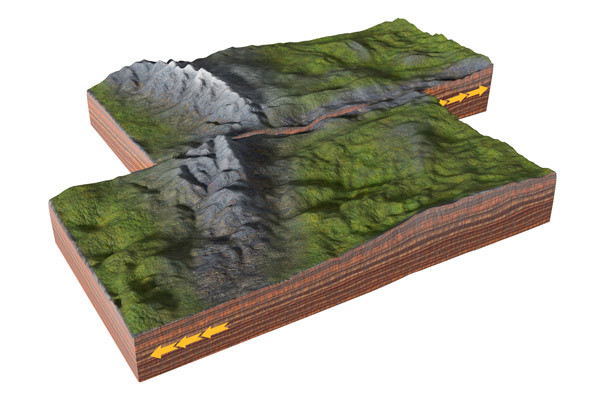
Figure 1: Illustration of a strike-slip fault at a tectonic plate boundary. The tectonic plates move parallel to each other, leading to so-called strike-slip earthquakes with relatively little deformation. RIKEN researchers have used artificial neural networks to accurately predict the behavior of the Earth’s crust at a strike-slip fault. © 2023 RIKEN
Tyler O'Neal, Staff Editor EARTH SCIENCES March 3, 2023, 9:00 am

RIKEN researcher Ueda demos PINN for modeling earthquakes

Machine-learning method could offer a more reliable way to predict deformations in the Earth’s crust

An artificial neural network has taken its first steps toward predicting the timing and size of future destructive earthquakes, according to RIKEN researchers.

Earthquakes typically occur when parts of the Earth’s crust suddenly move around a fracture, or fault, in the rock. This releases a huge amount of strain energy that shakes the surrounding region, sometimes unleashing enormous destruction, such as in the case of the February earthquake in Turkey and Syria. 

Predicting an earthquake before it hits could give people enough time to evacuate threatened areas, potentially saving many thousands of lives. But earthquake prediction is notoriously difficult.

To create mathematical models of earthquakes, researchers often draw an analogy to defects within the structures of crystals—cracks within crystals resemble faults in the Earth’s crust. When applied to the motion of crustal faults, these ‘dislocation models’ describe the movement and deformation of the Earth’s crust during earthquakes.

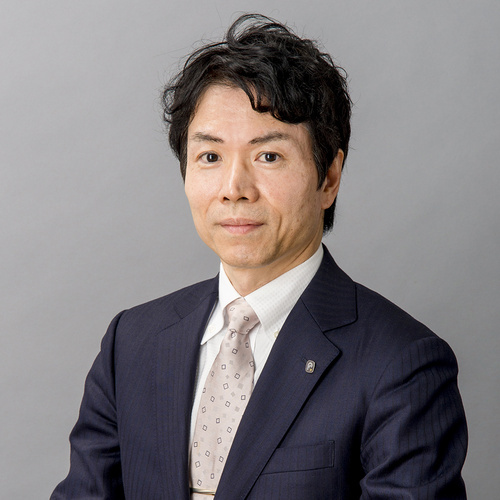
In contrast, a team led by Naonori Ueda of the RIKEN Center for Advanced Intelligence Project (AIP) considered applying a neural network that learns physical laws, called a physics-informed neural network (PINN). Conventional neural networks learn functional relationships between inputs and outputs, whereas PINNs differ in that they learn to satisfy a physical model described by partial differential equations. Naonori Ueda Deputy Director, RIKEN Center for Advanced Intelligence Project
However, the team found that a PINN, which learns continuous functions, would be difficult to directly apply to cases such as crustal deformation models, where the displacement is discontinuous across a fault line.

Ueda and his co-workers have overcome this difficulty by using a specially designed coordinate system to deal with the discontinuity across faults. This allowed them to accurately model the deformation of the Earth’s crust, even in regions close to faults.

“The proposed modeling has the potential to realize a high-precision prediction,” says Ueda.

The researchers trained their neural networks using physical laws rather than data, which is ideal for applications where data acquisition can be difficult.

To demonstrate the effectiveness of the approach, the researchers applied their physics-informed neural networks to model strike-slip faults, in which two blocks of the Earth’s crust move horizontally about a vertical fracture (Fig. 1). The network could turn information about a particular location inside the Earth into a prediction of the amount of crustal displacement at that point.

“This work demonstrated PINN’s ability to accurately model crustal deformation on complex structures,” says Tomohisa Okazaki, also of AIP.

PINNs represent a relatively new form of machine learning, and the researchers hope that their approach could be applied to many other problems involving crustal deformation.
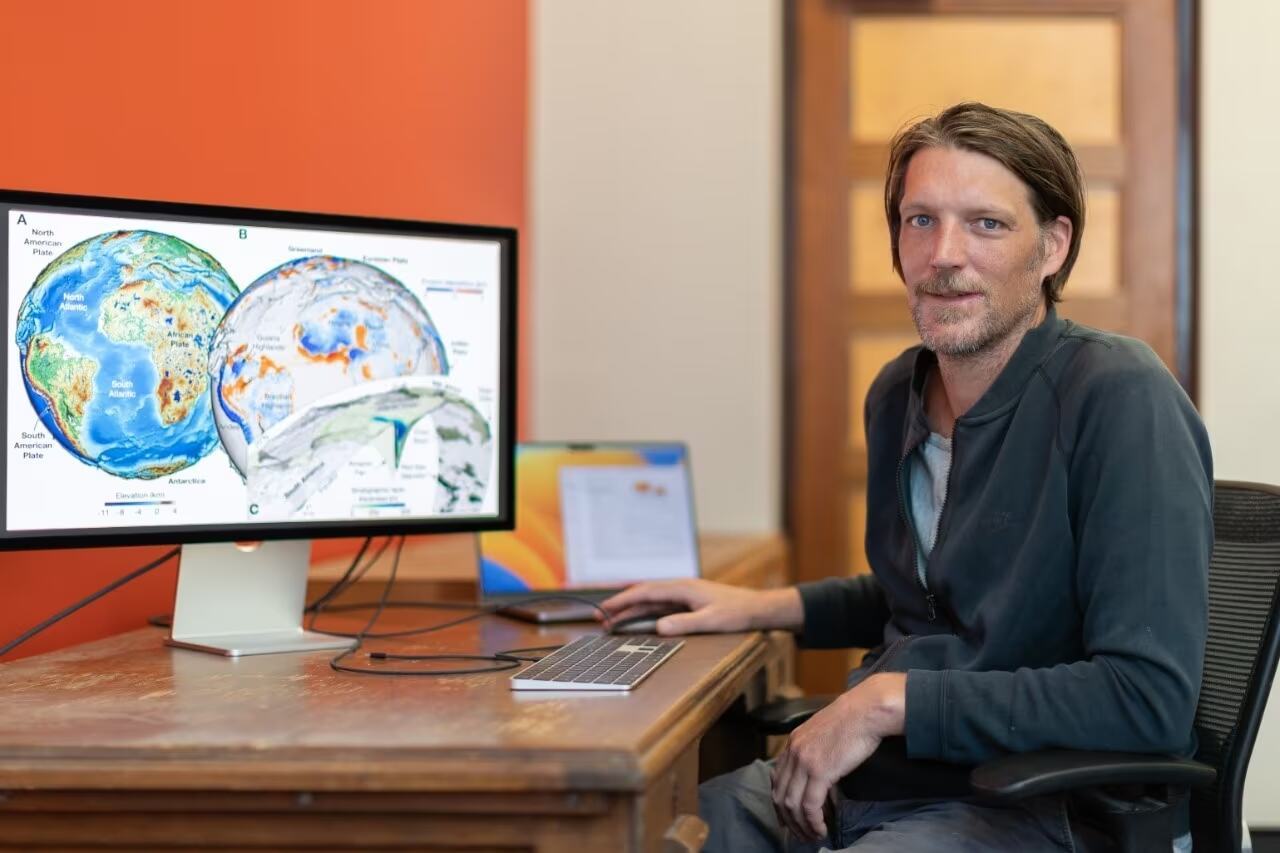
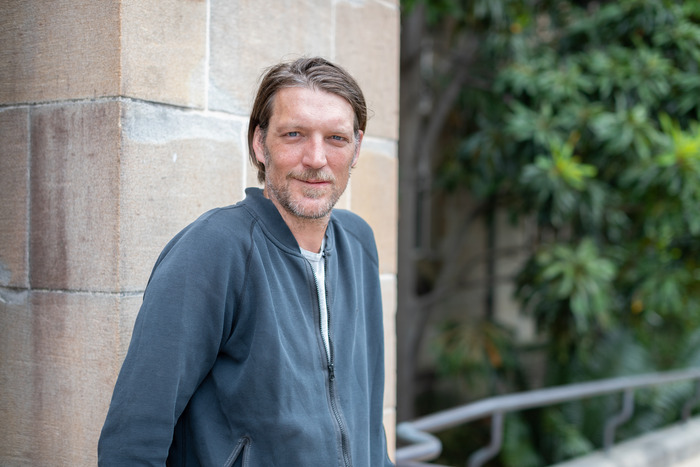
 

Dr Tristan Salles from the School of Geosciences. Photo: Stefanie Zingsheim

University of Sydney geoscientist Salles builds a model that reveals Earth's past 100 million years

Tyler O'Neal, Staff Editor EARTH SCIENCES March 3, 2023, 6:13 am

The digital tool can help us understand the past, predict Earth's future

For the first time, scientists have a high-resolution model of how today's geophysical landscapes were created and how millions of tonnes of sediment have flowed to the oceans.

Climate, tectonics, and time combine to create powerful forces that craft the face of our planet. Add the gradual sculpting of the Earth’s surface by rivers and what to us seems solid as a rock is constantly changing.

However, our understanding of this dynamic process has at best been patchy. 

{media id=298,layout=solo}

Scientists today have published new research revealing a detailed and dynamic model of the Earth’s surface over the past 100 million years. 

Working with scientists in France, University of Sydney geoscientists have published this new model in the prestigious journal Science.

For the first time, it provides a high-resolution understanding of how today’s geophysical landscapes were created and how millions of tonnes of sediment have flowed to the oceans.

Lead author Dr. Tristan Salles from the University of Sydney School of Geosciences said: “To predict the future, we must understand the past. But our geological models have only provided a fragmented understanding of how our planet’s recent physical features formed.

“If you look for a continuous model of the interplay between river basins, global-scale erosion, and sediment deposition at high resolution for the past 100 million years, it just doesn’t exist.

“So, this is a big advance. It’s not only a tool to help us investigate the past but will help scientists understand and predict the future, as well.”  Lead author Dr Tristan Salles from the School of Geosciences at the University of Sydney.  CREDIT Stefanie Zingsheim, The University of Sydney

Using a framework incorporating geodynamics, tectonic and climatic forces with surface processes, the scientific team has presented a new dynamic model of the past 100 million years at high resolution (down to 10 kilometers), broken into frames of a million years.

Second author Dr. Laurent Husson from Institut des Sciences de la Terre in Grenoble, France, said: “This unprecedented high-resolution model of Earth’s recent past will equip geoscientists with a more complete and dynamic understanding of the Earth’s surface.

“Critically, it captures the dynamics of sediment transfer from the land to oceans in a way we have not previously been able to.”

Dr. Salles said that understanding the flow of terrestrial sediment to marine environments is vital to comprehend present-day ocean chemistry.

“Given that ocean, chemistry is changing rapidly due to human-induced climate change, having a more complete picture can assist our understanding of marine environments,” he said. 

{media id=299,layout=solo}

The model will allow scientists to test different theories as to how the Earth’s surface will respond to changing climate and tectonic forces.

Further, the research provides an improved model to understand how the transportation of Earth sediment regulates the planet’s carbon cycle over millions of years.

“Our findings will provide a dynamic and detailed background for scientists in other fields to prepare and test hypotheses, such as in biochemical cycles or biological evolution.” 

Authors Dr. Salles, Dr. Claire Mallard, and Ph.D. student Beatriz Hadler Boggiani are members of the EarthColab Group, and Associate Professor Patrice Rey and Dr. Sabin Zahirovic are part of the EarthByte Group. Both groups are in the School of Geosciences at the University of Sydney.

The research was undertaken in collaboration with French geoscientists from CNRS, France, Université Lyon, and ENS Paris.

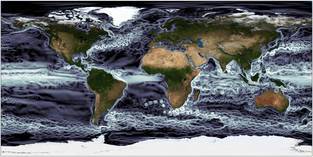
Global map of eddies (Graphic: Nathan Beech)

EERIE project uses supercomputers for improved Earth system simulations

Tyler O'Neal, Staff Editor EARTH SCIENCES February 27, 2023, 6:00 am

The ocean has a large effect on our planet’s climate. In this regard, mesoscale – i.e., medium-sized – eddies, which constitute essentially the weather on the ocean, could be far more important than previously believed. Accordingly, a new project, led by the Alfred Wegener Institute has just been launched to assess this aspect. By doing so, “European Eddy Rich Earth System Models” (EERIE) could significantly improve today’s Earth system models and therefore projections of the climate’s future development. 

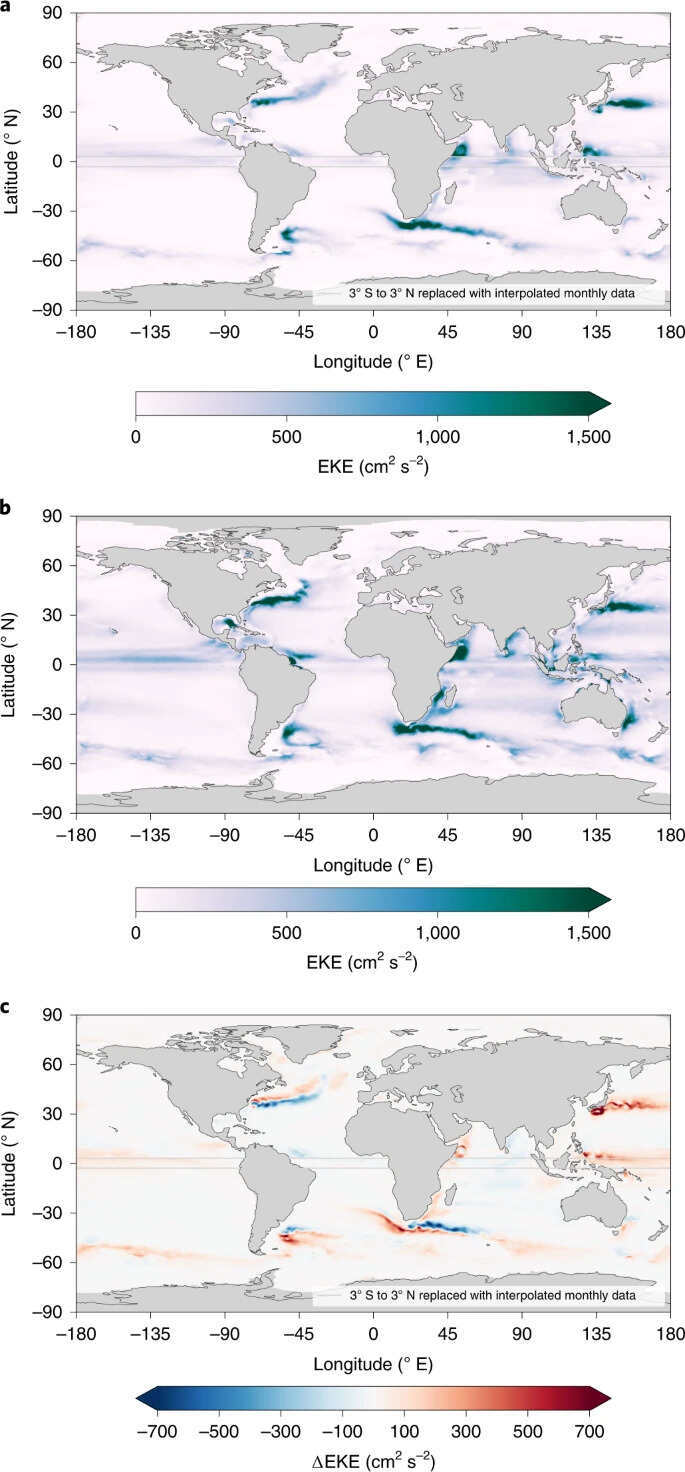
Eddies come in a range of sizes, with diameters from only a few meters to several kilometers. Their influence on the climate depends on their size. Although these eddies have existed for some time, we still have limited quantitative information on their role, bearing in mind the impacts of a warming climate (Beech et al. 2022). A new EU-financed project aims to change that: with the aid of “European Eddy Rich Earth System Models” (EERIE), eddies will be more realistically represented in climate models – i.e., by the laws of physics rather than empirical parameterizations. Simulated and observed eddy kinetic energy patterns in the global ocean.

EERIE’s goal is to help produce a new generation of Earth system models (ESMs). To do so, it will focus on improving the simulation of mesoscale eddies, which, depending on the region, can be anywhere from five to 40 kilometers wide. The supercomputer modeling improvements will include e.g. the inclusion of open channels of water (“leads”) in sea ice, where the ocean influences the atmosphere via powerful heat fluxes. “The technological hurdles to achieving these high-resolution simulations are immense,” says Prof Thomas Jung, responsible for coordinating the project at the Alfred Wegener Institute, Helmholtz Centre for Polar and Marine Research (AWI). “In order to allow quantitative statements, EERIE will have to achieve a simulation rate of up to five simulated years per day on the latest pre-exascale supercomputers available in Europe. Here, efficiency is a key factor – also to keep the simulations’ energy consumption and CO2 footprint to a minimum.” In order to implement, save and analyze these complex high-resolution simulations, the researchers will have to work hand in hand with software engineers to develop radically new software technologies.

In the course of the project, the researchers also plan to develop new simulation protocols, contributing to national and international climate change assessments in the process. In this way, EERIE is to yield valid and directly applicable climate information and to make valuable contributions in preparation for the IPCC’s next Assessment Report.

The project budget is over 10 million euros. 17 partner institutions are involved, including seven universities. The kick-off event for EERIE took place on 23 and 24 February 2023. The project, which officially began on 1 January 2023, will continue for four years.

  1. Weizmann scientists solve a 50-year-old puzzle on why Earth’s hemispheres look equally bright when viewed from space
  2. UK scientists find radioactive isotopes reach Earth by surfing supernova blast waves

Page 6 of 23

  • 1
  • 2
  • 3
  • 4
  • 5
  • 6
  • 7
  • 8
  • 9
  • 10
POPULAR RIGHT NOW
  • AI supercharges the hunt for stronger magnets: Iowa State researchers launch a new era of intelligent materials discovery
    AI supercharges the hunt for stronger magnets: Iowa State researchers launch a new era of intelligent materials discovery
  • IBM's Historic stock collapse raises questions for the future of enterprise supercomputing
    IBM's Historic stock collapse raises questions for the future of enterprise supercomputing
  • Could a novel dark matter theory simultaneously resolve multiple cosmic enigmas? Supercomputer simulations provide a compelling, albeit currently unverified, potential solution
    Could a novel dark matter theory simultaneously resolve multiple cosmic enigmas? Supercomputer simulations provide a compelling, albeit currently unverified, potential solution
  • Melting icebergs may be reshaping Earth’s greatest ocean current
    Melting icebergs may be reshaping Earth’s greatest ocean current
  • Supercomputers replace ‘bathtub’ flood maps with physics-based digital twins of Britain’s coastline
    Supercomputers replace ‘bathtub’ flood maps with physics-based digital twins of Britain’s coastline
  • Supercomputers push neural quantum simulation beyond previous limits
    Supercomputers push neural quantum simulation beyond previous limits
  • Intel’s AI supercomputing revival: Q2 financial surge signals new era for CPU-powered HPC infrastructure
    Intel’s AI supercomputing revival: Q2 financial surge signals new era for CPU-powered HPC infrastructure
  • AI infrastructure financing fears shake semiconductor sector
    AI infrastructure financing fears shake semiconductor sector
  • AWS supercomputing investment reaches historic scale as Amazon’s AI strategy powers record financial results
    AWS supercomputing investment reaches historic scale as Amazon’s AI strategy powers record financial results
  • Catching the wave of the future: Supercomputers unlock the hidden dynamics of Venus
    Catching the wave of the future: Supercomputers unlock the hidden dynamics of Venus
THIS YEAR'S MOST READ
  • Wall Street wants to trade supercomputing power like oil
    Wall Street wants to trade supercomputing power like oil
  • Beamforming the future: BeammWave's 6G push signals the rise of orbital-terrestrial wireless networks
    Joakim Axmon
    Joakim Axmon
  • Cosmic ambition at scale: UK’s supercomputer unlocks a 2.5 petabytes universe
    Cosmic ambition at scale: UK’s supercomputer unlocks a 2.5 petabytes universe
  • Hidden order, revealed at scale: Supercomputing, electron ptychography uncover the inner workings of relaxor ferroelectrics
    Hidden order, revealed at scale: Supercomputing, electron ptychography uncover the inner workings of relaxor ferroelectrics
  • Intel's Q1 results signal supercomputing surge driving Xeon momentum
    Intel's Q1 results signal supercomputing surge driving Xeon momentum
  • When stars fall apart: Supercomputing reveals the hidden physics of black holes
    When stars fall apart: Supercomputing reveals the hidden physics of black holes
  • Multi-layer simulations reveal the hidden supply chain of solar prominences
    Multi-layer simulations reveal the hidden supply chain of solar prominences
  • Japanese scientists decode dolphin speed with supercomputing: Turbulence, vortices, and the hidden physics of propulsion
    Japanese scientists decode dolphin speed with supercomputing: Turbulence, vortices, and the hidden physics of propulsion
  • Cosmic feedback at scale: Supercomputing reveals how quasars regulate the early Universe
    Cosmic feedback at scale: Supercomputing reveals how quasars regulate the early Universe
  • Modeling life at the microscopic scale: A computational breakthrough in oxygen transport
    Modeling life at the microscopic scale: A computational breakthrough in oxygen transport
MOST READ OF ALL-TIME
  • Largest Computational Biology Simulation Mimics The Ribosome
    Details
    112127
    The amino acid (green) slithers into the chemical reaction center, moving through an evolutionarily ancient corridor of the ribosome (purple). The amino acid is delivered to the reaction core by the transfer RNA molecule (yellow).
    The amino acid (green) slithers into the chemical reaction center, moving through an evolutionarily ancient corridor of the ribosome (purple). The amino acid is delivered to the reaction core by the transfer RNA molecule (yellow).
  • Silicon 'neurons' may add a new dimension to chips
    Details
    81040
    Silicon 'neurons' may add a new dimension to chips
  • Linux Networx Accelerators Expected to Drive up to 4x Price/Performance
    Details
    75563
  • Complex Concepts That Really Add Up
    Details
    73693
    Complex Concepts That Really Add Up
  • Blue Sky Studios Donates Animation SuperComputer to Wesleyan
    Details
    68166
    Each rack holds 52 Angstrom Microsystem-brand “blades,” with a memory footprint of 12 or 24 gigabytes each. (Photos by Olivia Bartlett Drake)
    Each rack holds 52 Angstrom Microsystem-brand “blades,” with a memory footprint of 12 or 24 gigabytes each. (Photos by Olivia Bartlett Drake)
  • Humanities, HPC connect at NERSC
    Details
    57973
  • TeraGrid ’09 'Call for Participation'
    Details
    54976
  • Turbulence responsible for black holes' balancing act
    Details
    52339
  • Cray Wins $52 Million SuperComputer Contract
    Details
    50162
  • SDSC Researchers Accurately Predict Protein Docking
    Details
    46115
  • FRONTPAGE
  • LATEST
  • POPULAR
  • REGISTER
  • SOCIAL
  • VIDEO
  • SUBSCRIPTION
  • RSS
  • GUIDELINES
  • PRIVACY
  • TOS
  • ABOUT
  • +1 (816) 799-4488
  • editorial@supercomputingonline.com
© 2001 - 2026 SuperComputingOnline.com, LLC. All rights reserved. This material may not be published, broadcast, rewritten or redistributed without permission.
Sign In
  • FRONT PAGE
  • LATEST
    • MEDIA KIT
    • MOST READ
    • RSS FEED
    • ACADEMIA
    • AEROSPACE
    • APPLICATIONS
    • ASTRONOMY
    • AUTOMOTIVE
    • BIG DATA
    • BIOLOGY
    • CHEMISTRY
    • CLIENTS
    • CLOUD
    • DEFENSE
    • DEVELOPER TOOLS
    • EARTH SCIENCES
    • ECONOMICS
    • ENGINEERING
    • ENTERTAINMENT
    • HEALTH
    • INDUSTRY
    • INTERCONNECTS
    • GAMING
    • GOVERNMENT
    • MANUFACTURING
    • MIDDLEWARE
    • MOVIES
    • NETWORKS
    • OIL & GAS
    • PHYSICS
    • PROCESSORS
    • RETAIL
    • SCIENCE
    • STORAGE
    • SYSTEMS
    • VISUALIZATION
  • VIDEOS
    • ADD YOUR VIDEOS
    • MANAGE VIDEOS
  • COMMUNITY
    • TRADE SHOWS
    • SOCIAL NETWORK VIDEOS
    • SURVEYS
    • APPLICATIONS BROWSER
    • CONVERSATION INBOX
    • SOCIAL ADVERTISER
    • GROUPS
    • MARKETPLACE LISTINGS
    • PAGES
    • LEADERBOARD
    • POINTS LISTING
      • BADGES
    • PRIVACY CONFIRM REQUEST
    • PRIVACY CREATE REQUEST

Hey there! We noticed you’re using an ad blocker.