

SUPERCOMPUTING NEWS SUPERCOMPUTING NEWS
    • MEDIA KIT
    • MOST READ
    • RSS FEED
    • ACADEMIA
    • AEROSPACE
    • APPLICATIONS
    • ASTRONOMY
    • AUTOMOTIVE
    • BIG DATA
    • BIOLOGY
    • CHEMISTRY
    • CLIENTS
    • CLOUD
    • DEFENSE
    • DEVELOPER TOOLS
    • EARTH SCIENCES
    • ECONOMICS
    • ENGINEERING
    • ENTERTAINMENT
    • GAMING
    • GOVERNMENT
    • HEALTH
    • OIL & GAS
    • INDUSTRY
    • INTERCONNECTS
    • MANUFACTURING
    • MIDDLEWARE
    • MOVIES
    • NETWORKS
    • PHYSICS
    • PROCESSORS
    • RETAIL
    • SCIENCE
    • STORAGE
    • SYSTEMS
    • VISUALIZATION
    • AcyMailing subscription form

    • ADD YOUR VIDEOS
    • MANAGE VIDEOS
    • CONVERSATION INBOX
    • SOCIAL ADVERTISER
    • SOCIAL NETWORK VIDEOS
    • SURVEYS
    • GROUPS
    • PAGES
    • MARKETPLACE LISTINGS
    • APPLICATIONS BROWSER
    • PRIVACY CONFIRM REQUEST
    • PRIVACY CREATE REQUEST
    • LEADERBOARD
    • POINTS LISTING
      • BADGES
    • TRADE SHOWS
Sign In
Tyler O'Neal, Staff Editor EARTH SCIENCES October 12, 2022, 5:00 am

Swedish researchers present a breakthrough in the calculation of the atomic nucleus of the element lead

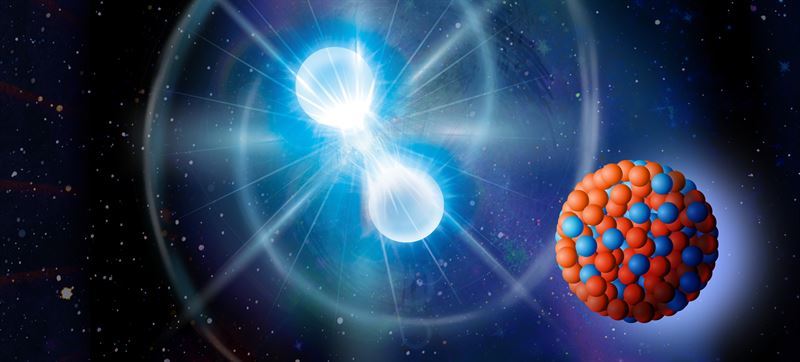
91fab603b837d3f0 800x800ar 52ee8Massive neutron stars colliding in space are thought to be able to create precious metals such as gold and platinum. The properties of these stars are still an enigma, but the answer may lie beneath the skin of one of the smallest building blocks on Earth – an atomic nucleus of lead. Getting the nucleus of the atom to reveal the secrets of the strong force that governs the interior of neutron stars has proven difficult. Now a new computer model from the Chalmers University of Technology, Sweden, can provide answers.

The strong force plays the main role

Despite the huge size difference between a microscopic atomic nucleus and a neutron star several kilometers in size, it is largely the same physics that governs their properties. The common denominator is the strong force that holds the particles – the protons and neutrons – together in an atomic nucleus. The same force also prevents a neutron star from collapsing. The strong force is fundamental in the universe, but it is difficult to include in computational models, not least when it comes to heavy neutron-rich atomic nuclei such as lead. Therefore, the researchers have wrestled with many unanswered questions in their challenging calculations.

A reliable way to make calculations

"To understand how the strong force works in the neutron-rich matter, we need meaningful comparisons between theory and experiment. In addition to the observations made in laboratories and with telescopes, reliable theoretical simulations are therefore also needed. Our breakthrough means that we have been able to carry out such calculations for the heaviest stable element – lead,” says Andreas Ekström, Associate Professor at the Department of Physics at Chalmers and one of the main authors of the article. Andreas Ekström, Associate Professor, Department of Physics, Chalmers University of Technology, Sweden. Photographer: Chalmers University of Technology | Anna-Lena Lundqvist

The new supercomputer model from Chalmers, developed together with colleagues in North America and England, now shows the way forward. It enables high-precision predictions of properties for the isotope* lead-208 and its so-called ‘neutron skin’.

The thickness of the skin matters

It is the 126 neutrons in the atomic nucleus that form an outer envelope, which can be described as skin. How thick the skin is, is linked to the properties of the strong force. By predicting the thickness of the neutron skin, knowledge can increase about how the strong force works – both in atomic nuclei and in neutron stars.

"We predict that the neutron skin is surprisingly thin, which can provide new insights into the force between the neutrons. A groundbreaking aspect of our model is that it not only provides predictions but also has the ability to assess theoretical margins of error. This is crucial for being able to make scientific progress," says research leader Christian Forssén, Professor at the Department of Physics at Chalmers.

The model used for the spread of the coronavirus

To develop the new computational model, the researchers have combined theories with existing data from experimental studies. The complex calculations have then been combined with a statistical method previously used to simulate the possible spread of the coronavirus.

With the new model for lead, it is now possible to evaluate different assumptions about the strong force. The model also makes it possible to make predictions for other atomic nuclei, from the lightest to the heaviest. Christian Forssén, Professor, Department of Physics, Chalmers University of Technology, Sweden. Photographer: Chalmers University of Technology | Anna-Lena Lundqvist

The breakthrough could lead to much more precise models of, for example, neutron stars and increased knowledge of how these are formed.

"The goal for us is to gain a greater understanding of how the strong force behaves in both neutron stars and atomic nuclei. It takes the research one step closer to understanding how, for example, gold and other elements could be created in neutron stars – and at the end of the day it is about understanding the universe," says Christian Forssén. 
Portland State evaluates climate models' accuracy in simulating Pacific Northwest weather patterns

Tyler O'Neal, Staff Editor EARTH SCIENCES October 11, 2022, 5:00 pm

Climate models are powerful tools that scientists use to study how the climate system works now and how it will change in the future under different scenarios of global warming. When models are updated with new scientific information, they must be evaluated to see how well they represent different climate features, including weather patterns found in particular geographical regions. 

A new study led by Graham Taylor, a Ph.D. student in Portland State's Earth, Environment, and Society program, and Paul Loikith, associate professor of geography at PSU, tested how well climate models represent large-scale weather patterns over the Pacific Northwest. Researchers from Oregon State University and the Jet Propulsion Laboratory also contributed to the study, which was published in the journal Climate Dynamics. 

“These complex computer models that simulate the Earth system can be thought of as virtual laboratories for climate science experimentation,” says Loikith. “If the models can't reproduce important features of the observed climate, they will not be very useful for studying the future climate.” 

Since all computer models have different strengths and weaknesses based on differences in physics, scientists often use the output from many different climate models to assess projections of future climate change. For this study, the researchers used data from the state-of-the-art sixth phase of the Coupled Model Intercomparison Project (CMIP6) to test how well 26 different climate models could simulate the range of large-scale patterns of atmospheric circulation (like wind and pressure) found over the Pacific Northwest. These patterns range from those associated with warm and dry weather, to cold and stormy and everything in between. 

To test the models, the team used a machine-learning technique called self-organizing maps to group daily weather patterns simulated by the climate models into a set of 12 categories. They did the same for historical observed weather data. They then compared the two sets of data to see how well they lined up. 

The researchers found that the climate models generally simulated the observed wind and pressure patterns very well and that the temperature and precipitation patterns created by the models closely matched the correct patterns found in the historical data. 

These results are important because they suggest that current climate models represent large-scale weather patterns reasonably well in the Pacific Northwest and can be used to better understand future climate change under continued global warming.

“These findings boost our confidence in the ability of these models to help us better understand how the climate will change over the region and why those changes occur,” says Loikith. 

Japanese-built MD simulations help prevent damage to industrial parts

Tyler O'Neal, Staff Editor EARTH SCIENCES October 11, 2022, 7:00 am

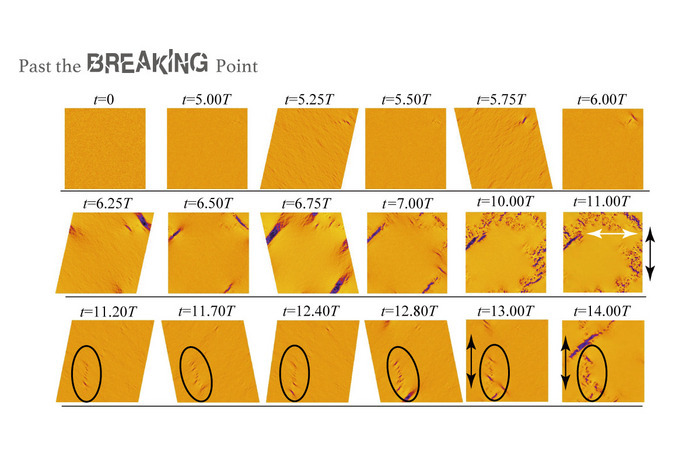
Researchers at The University of Tokyo simulated fractures in amorphous materials due to both cyclic fatigue and constant stress using course-grained dynamics, and demonstrated various failure modes, which can help improve reliability of materials  CREDIT Institute of Industrial Science, The University of TokyoDamage to industrial parts is expensive, results in delays, and may be unsafe to plant workers. But now, scientists from Tokyo Japan have simulated fracture initiated in materials that share a particular physical characteristic and are widely used across domestic, industrial, and scientific applications. Their work showed surprising results that may help prevent damage to industrial parts.

If you’ve ever been bored in a meeting and tried playing with a metal paperclip to pass the time, you may have noticed something surprising. Although the paperclip starts flexible and returns to its original shape several times, after enough cycles it may suddenly snap. This is an example of “fatigue,” in which cracks and defects build up as an object is subjected to cyclic loading and unloading of stress. Material fatigue is a significant concern in many industrial applications, especially for machine or airplane parts that experience many cycles of stress, but for which a sudden failure could be catastrophic. As a result, obtaining a better understanding of the underlying process of material fatigue could have significant benefits, especially for non-crystalline materials.

Now, a team of researchers at the Institute of Industrial Science, The University of Tokyo, studied the physical mechanisms of a low-cycle fatigue fracture in the case of amorphous solids, such as glass or plastics, using supercomputer simulations. For crystalline materials, it has been shown that preexisting defects and grain boundaries can initiate a fracture because of fatigue. However, the corresponding mechanism in amorphous materials is not well understood. While it seems intuitive that the stress required for a fracture to occur is much smaller for cyclic stresses compared with constant stress, this was not what the scientists found. “Contrary to the common belief, we showed that the critical strain in disorder materials that correspond with the onset of irreversible deformation is the same for both fatigue and monotonic fractures,” says co-author Yuji Kurotani.

This is because, for ordinary amorphous systems, higher density leads to more elasticity and slower dynamics. This density dependence of mechanical properties couples the shear deformation with density fluctuations. The cyclic shear can then amplify density fluctuations until the sample breaks via cavitation, in which voids are produced. “This situation is like a crowded train,” says co-author Hajime Tanaka. “Dynamic and elastic asymmetries with respect to density changes can lead to a link between shear deformation and density fluctuations.” These authors mention that these results should be confirmed with experiments, which would also help material scientists better understand the initiation of fractures.

  1. UArizona geosciences prof Tierney's maps shed light on our climate future
  2. Harvard Medical School research indicates that compared with human clinicians, image heat maps underperform, require further refinement

Page 9 of 23

  • 4
  • 5
  • 6
  • 7
  • 8
  • 9
  • 10
  • 11
  • 12
  • 13
POPULAR RIGHT NOW
  • AI supercharges the hunt for stronger magnets: Iowa State researchers launch a new era of intelligent materials discovery
    AI supercharges the hunt for stronger magnets: Iowa State researchers launch a new era of intelligent materials discovery
  • IBM's Historic stock collapse raises questions for the future of enterprise supercomputing
    IBM's Historic stock collapse raises questions for the future of enterprise supercomputing
  • Could a novel dark matter theory simultaneously resolve multiple cosmic enigmas? Supercomputer simulations provide a compelling, albeit currently unverified, potential solution
    Could a novel dark matter theory simultaneously resolve multiple cosmic enigmas? Supercomputer simulations provide a compelling, albeit currently unverified, potential solution
  • Melting icebergs may be reshaping Earth’s greatest ocean current
    Melting icebergs may be reshaping Earth’s greatest ocean current
  • Supercomputers replace ‘bathtub’ flood maps with physics-based digital twins of Britain’s coastline
    Supercomputers replace ‘bathtub’ flood maps with physics-based digital twins of Britain’s coastline
  • Supercomputers push neural quantum simulation beyond previous limits
    Supercomputers push neural quantum simulation beyond previous limits
  • Intel’s AI supercomputing revival: Q2 financial surge signals new era for CPU-powered HPC infrastructure
    Intel’s AI supercomputing revival: Q2 financial surge signals new era for CPU-powered HPC infrastructure
  • AI infrastructure financing fears shake semiconductor sector
    AI infrastructure financing fears shake semiconductor sector
  • AWS supercomputing investment reaches historic scale as Amazon’s AI strategy powers record financial results
    AWS supercomputing investment reaches historic scale as Amazon’s AI strategy powers record financial results
  • Catching the wave of the future: Supercomputers unlock the hidden dynamics of Venus
    Catching the wave of the future: Supercomputers unlock the hidden dynamics of Venus
THIS YEAR'S MOST READ
  • Wall Street wants to trade supercomputing power like oil
    Wall Street wants to trade supercomputing power like oil
  • Beamforming the future: BeammWave's 6G push signals the rise of orbital-terrestrial wireless networks
    Joakim Axmon
    Joakim Axmon
  • Cosmic ambition at scale: UK’s supercomputer unlocks a 2.5 petabytes universe
    Cosmic ambition at scale: UK’s supercomputer unlocks a 2.5 petabytes universe
  • Hidden order, revealed at scale: Supercomputing, electron ptychography uncover the inner workings of relaxor ferroelectrics
    Hidden order, revealed at scale: Supercomputing, electron ptychography uncover the inner workings of relaxor ferroelectrics
  • Intel's Q1 results signal supercomputing surge driving Xeon momentum
    Intel's Q1 results signal supercomputing surge driving Xeon momentum
  • When stars fall apart: Supercomputing reveals the hidden physics of black holes
    When stars fall apart: Supercomputing reveals the hidden physics of black holes
  • Multi-layer simulations reveal the hidden supply chain of solar prominences
    Multi-layer simulations reveal the hidden supply chain of solar prominences
  • Japanese scientists decode dolphin speed with supercomputing: Turbulence, vortices, and the hidden physics of propulsion
    Japanese scientists decode dolphin speed with supercomputing: Turbulence, vortices, and the hidden physics of propulsion
  • Cosmic feedback at scale: Supercomputing reveals how quasars regulate the early Universe
    Cosmic feedback at scale: Supercomputing reveals how quasars regulate the early Universe
  • Modeling life at the microscopic scale: A computational breakthrough in oxygen transport
    Modeling life at the microscopic scale: A computational breakthrough in oxygen transport
MOST READ OF ALL-TIME
  • Largest Computational Biology Simulation Mimics The Ribosome
    Details
    112127
    The amino acid (green) slithers into the chemical reaction center, moving through an evolutionarily ancient corridor of the ribosome (purple). The amino acid is delivered to the reaction core by the transfer RNA molecule (yellow).
    The amino acid (green) slithers into the chemical reaction center, moving through an evolutionarily ancient corridor of the ribosome (purple). The amino acid is delivered to the reaction core by the transfer RNA molecule (yellow).
  • Silicon 'neurons' may add a new dimension to chips
    Details
    81040
    Silicon 'neurons' may add a new dimension to chips
  • Linux Networx Accelerators Expected to Drive up to 4x Price/Performance
    Details
    75563
  • Complex Concepts That Really Add Up
    Details
    73693
    Complex Concepts That Really Add Up
  • Blue Sky Studios Donates Animation SuperComputer to Wesleyan
    Details
    68166
    Each rack holds 52 Angstrom Microsystem-brand “blades,” with a memory footprint of 12 or 24 gigabytes each. (Photos by Olivia Bartlett Drake)
    Each rack holds 52 Angstrom Microsystem-brand “blades,” with a memory footprint of 12 or 24 gigabytes each. (Photos by Olivia Bartlett Drake)
  • Humanities, HPC connect at NERSC
    Details
    57973
  • TeraGrid ’09 'Call for Participation'
    Details
    54976
  • Turbulence responsible for black holes' balancing act
    Details
    52339
  • Cray Wins $52 Million SuperComputer Contract
    Details
    50162
  • SDSC Researchers Accurately Predict Protein Docking
    Details
    46115
  • FRONTPAGE
  • LATEST
  • POPULAR
  • REGISTER
  • SOCIAL
  • VIDEO
  • SUBSCRIPTION
  • RSS
  • GUIDELINES
  • PRIVACY
  • TOS
  • ABOUT
  • +1 (816) 799-4488
  • editorial@supercomputingonline.com
© 2001 - 2026 SuperComputingOnline.com, LLC. All rights reserved. This material may not be published, broadcast, rewritten or redistributed without permission.
Sign In
  • FRONT PAGE
  • LATEST
    • MEDIA KIT
    • MOST READ
    • RSS FEED
    • ACADEMIA
    • AEROSPACE
    • APPLICATIONS
    • ASTRONOMY
    • AUTOMOTIVE
    • BIG DATA
    • BIOLOGY
    • CHEMISTRY
    • CLIENTS
    • CLOUD
    • DEFENSE
    • DEVELOPER TOOLS
    • EARTH SCIENCES
    • ECONOMICS
    • ENGINEERING
    • ENTERTAINMENT
    • HEALTH
    • INDUSTRY
    • INTERCONNECTS
    • GAMING
    • GOVERNMENT
    • MANUFACTURING
    • MIDDLEWARE
    • MOVIES
    • NETWORKS
    • OIL & GAS
    • PHYSICS
    • PROCESSORS
    • RETAIL
    • SCIENCE
    • STORAGE
    • SYSTEMS
    • VISUALIZATION
  • VIDEOS
    • ADD YOUR VIDEOS
    • MANAGE VIDEOS
  • COMMUNITY
    • TRADE SHOWS
    • SOCIAL NETWORK VIDEOS
    • SURVEYS
    • APPLICATIONS BROWSER
    • CONVERSATION INBOX
    • SOCIAL ADVERTISER
    • GROUPS
    • MARKETPLACE LISTINGS
    • PAGES
    • LEADERBOARD
    • POINTS LISTING
      • BADGES
    • PRIVACY CONFIRM REQUEST
    • PRIVACY CREATE REQUEST

Hey there! We noticed you’re using an ad blocker.