SUPERCOMPUTING NEWS SUPERCOMPUTING NEWS
    • MEDIA KIT
    • MOST READ
    • RSS FEED
    • ACADEMIA
    • AEROSPACE
    • APPLICATIONS
    • ASTRONOMY
    • AUTOMOTIVE
    • BIG DATA
    • BIOLOGY
    • CHEMISTRY
    • CLIENTS
    • CLOUD
    • DEFENSE
    • DEVELOPER TOOLS
    • EARTH SCIENCES
    • ECONOMICS
    • ENGINEERING
    • ENTERTAINMENT
    • GAMING
    • GOVERNMENT
    • HEALTH
    • OIL & GAS
    • INDUSTRY
    • INTERCONNECTS
    • MANUFACTURING
    • MIDDLEWARE
    • MOVIES
    • NETWORKS
    • PHYSICS
    • PROCESSORS
    • RETAIL
    • SCIENCE
    • STORAGE
    • SYSTEMS
    • VISUALIZATION
    • AcyMailing subscription form

    • ADD YOUR VIDEOS
    • MANAGE VIDEOS
    • CONVERSATION INBOX
    • SOCIAL ADVERTISER
    • SOCIAL NETWORK VIDEOS
    • SURVEYS
    • GROUPS
    • PAGES
    • MARKETPLACE LISTINGS
    • APPLICATIONS BROWSER
    • PRIVACY CONFIRM REQUEST
    • PRIVACY CREATE REQUEST
    • LEADERBOARD
    • POINTS LISTING
      • BADGES
    • TRADE SHOWS
Sign In
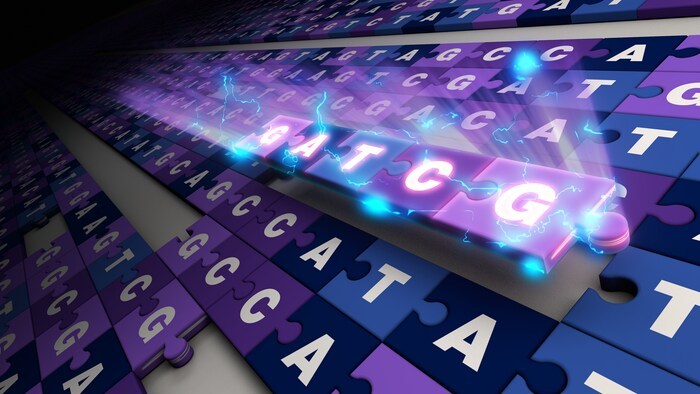
National Institutes of Health researchers have developed and released an innovative software tool to assemble truly complete (i.e., gapless) genome sequences from a variety of species.Ernesto del Aguila, NHGRI
Tyler O'Neal, Staff Editor ACADEMIA February 16, 2023, 2:00 pm

Verkko software assembles complete genome sequences more affordable

National Institutes of Health researchers have developed and released an innovative software tool to assemble truly complete (i.e., gapless) genome sequences from a variety of species. This software, called Verkko, which means “network” in Finnish, makes the process of assembling complete genome sequences more affordable and accessible.

Verkko grew from assembling the first gapless human genome sequence, which was finished last year by the Telomere-to-Telomere (T2T) consortium, a collaborative project funded by the National Human Genome Research Institute (NHGRI), part of NIH.

“We took everything we learned in the T2T project and automated the process,” said NHGRI associate investigator Sergey Koren, Ph.D., who led the creation of Verkko and is the senior author of the paper. “Now with Verkko, we can essentially push a button and automatically get a complete genome sequence.”

The T2T consortium used new DNA sequencing technologies and analytical methods to generate and assemble the remaining 8-10% of the human genome sequence. However, the researchers assembled those fragments manually — a process that took this massive and highly skilled team several years to complete. Verkko can finish the same task in a couple of days.

Assembling a genome sequence is like putting together a jigsaw puzzle, and different DNA sequencing technologies generate different types of genomic puzzle pieces. Some are small and highly detailed, while others are much bigger though the image is blurry. Verkko compares and assembles both types of pieces to generate a complete and accurate picture.

Verkko starts by putting together the small, detailed pieces, creating many partially assembled but disconnected segments of sequence. Then, Verkko compares the assembled regions with the larger, less precise pieces. These larger pieces serve as a framework to order the more detailed regions. The final product is an accurate and complete genome sequence.

The researchers tested Verkko with human and non-human genome sequencing data. The software quickly and precisely assembled the sequences of whole chromosomes, which was once a painstaking feat.

As Verkko leads to more complete human genome sequences, researchers can better assess human genomic diversity. With only one gapless human genome sequence, scientists currently lack knowledge about the diversity of many portions of the genome, such as regions of highly repetitive DNA, across the human population.

Verkko will also accelerate efforts to generate gapless genome sequences of species commonly used in research, such as mice, fruit flies, and zebrafish, improving their usefulness to scientists. Additionally, generating gapless genome sequences from a variety of plants, animals and other organisms will aid in comparative genomics, the study of the differences and similarities among the genomes of diverse species.

“Verkko can democratize generating gapless genome sequences,” said Adam Phillippy, Ph.D., an NHGRI senior investigator who worked on the T2T project and the development of Verkko. “This new software will make assembling complete genome sequences as affordable and routine as possible.”
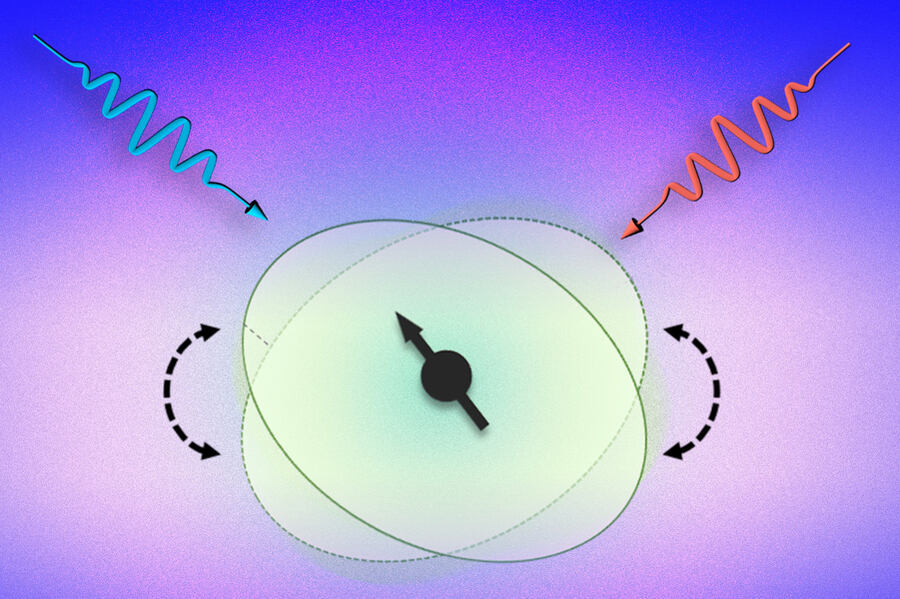
Caption:Diagram illustrates the way two laser beams of slightly different wavelengths can affect the electric fields surrounding an atomic nucleus, pushing against this field in a way that nudges the spin of the nucleus in a particular direction, as indicated by the arrow. Credits:Credit: Courtesy of the researchers

MIT engineers discover a new way to control atomic nuclei as qubits

Tyler O'Neal, Staff Editor ACADEMIA February 15, 2023, 2:00 am

Using lasers, researchers can directly control a property of nuclei called spin, that can encode quantum information.

In principle, quantum-based devices such as computers and sensors could vastly outperform conventional digital technologies for carrying out many complex tasks. But developing such devices in practice has been a challenging problem despite great investments by tech companies as well as academic and government labs.

Today’s biggest quantum supercomputers still only have a few hundred “qubits,” the quantum equivalents of digital bits.

Now, researchers at MIT have proposed a new approach to making qubits and controlling them to read and write data. The method, which is theoretical at this stage, is based on measuring and controlling the spins of atomic nuclei, using beams of light from two lasers of slightly different colors. The findings are described in a paper published Tuesday in the journal Physical Review X, written by MIT doctoral student Haowei Xu, professors Ju Li and Paola Cappellaro, and four others.

Nuclear spins have long been recognized as potential building blocks for quantum-based information processing and communications systems, and so have photons, the elementary particles that are discreet packets, or “quanta,” of electromagnetic radiation. But coaxing these two quantum objects to work together was difficult because atomic nuclei and photons barely interact, and their natural frequencies differ by six to nine orders of magnitude.

In the new process developed by the MIT team, the difference in the frequency of an incoming laser beam matches the transition frequencies of the nuclear spin, nudging the nuclear spin to flip a certain way.

“We have found a novel, powerful way to interface nuclear spins with optical photons from lasers,” says Cappellaro, a professor of nuclear science and engineering. “This novel coupling mechanism enables their control and measurement, which now makes using nuclear spins as qubits a much more promising endeavor.”

The process is completely tunable, the researchers say. For example, one of the lasers could be tuned to match the frequencies of existing telecom systems, thus turning the nuclear spins into quantum repeaters to enable long-distance- quantum communication.

Previous attempts to use light to affect nuclear spins were indirect, coupling instead to electron spins surrounding that nucleus, which in turn would affect the nucleus through magnetic interactions. But this requires the existence of nearby unpaired electron spins and leads to additional noise on the nuclear spins. For the new approach, the researchers took advantage of the fact that many nuclei have an electric quadrupole, which leads to an electric nuclear quadrupolar interaction with the environment. This interaction can be affected by light to change the state of the nucleus itself.

“Nuclear spin is usually pretty weakly interacting,” says Li. “But by using the fact that some nuclei have an electric quadrupole, we can induce this second-order, nonlinear optical effect that directly couples to the nuclear spin, without any intermediate electron spins. This allows us to directly manipulate the nuclear spin.”

Among other things, this can allow the precise identification and even mapping of isotopes of materials, while Raman spectroscopy, a well-established method based on analogous physics, can identify the chemistry and structure of the material, but not isotopes. This capability could have many applications, the researchers say.

As for quantum memory, typical devices presently being used or considered for quantum supercomputing have coherence times — meaning the amount of time that stored information can be reliably kept intact — that tend to be measured in tiny fractions of a second. But with the nuclear spin system, the quantum coherence times are measured in hours.

Since optical photons are used for long-distance communications through fiber-optic networks, the ability to directly couple these photons to quantum memory or sensing devices could provide significant benefits in new communications systems, the team says.  In addition, the effect could be used to provide an efficient way of translating one set of wavelengths to another. “We are thinking of using nuclear spins for the transduction of microwave photons and optical photons,” Xu says, adding that this can provide greater fidelity for such translation than other methods.

So far, the work is theoretical, so the next step is to implement the concept in actual laboratory devices, probably first of all in a spectroscopic system. “This may be a good candidate for the proof-of-principle experiment,” Xu says. After that, they will tackle quantum devices such as memory or transduction effects, he says.

This work “offers new opportunities in quantum technologies, including quantum control and quantum memory,” says Yao Wang, an assistant professor of physics at Clemson University, who was not associated with this work. He adds that “very impressively, this work also provided very quantitative predictions of the expected observations in these application scenarios with accurate first-principles methods. I look forward to the experimental realization of this technique, which I am sure would attract a lot of researchers in the field of quantum science and nuclear technology.”

The team also included Changhao Li, Guoqing Wang, Hua Wang, Hao Tang, and Ariel Barr, all at MIT.

iStock
iStock

University of Gothenburg develops AI-based decisions online to support doctors’ hard judgments on cardiac arrest

Tyler O'Neal, Staff Editor ACADEMIA February 14, 2023, 4:30 pm

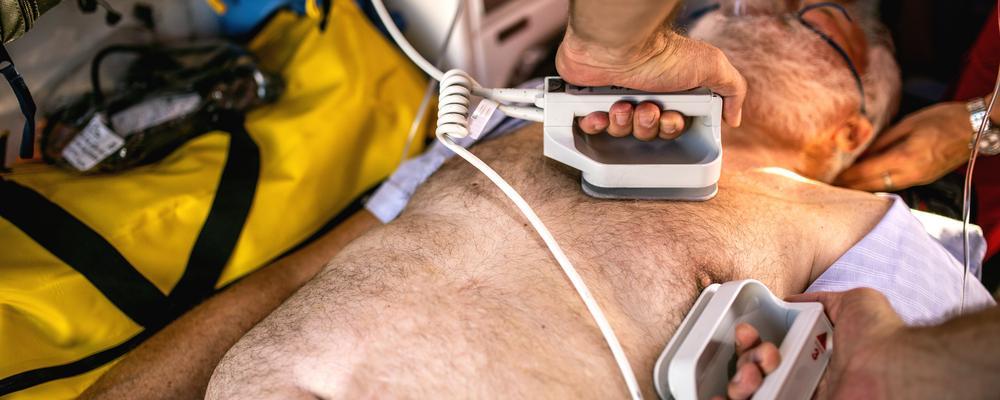
When patients receive care after cardiac arrest, doctors can now by entering patient data in a web-based app find out how thousands of similar patients have fared. Researchers at the University of Gothenburg in Sweden have developed three such systems of decision support for cardiac arrest that may, in the future, make a major difference to doctors’ work.

One of these decision support tools (SCARS-1), now published, is downloadable free of charge from the Gothenburg Cardiac Arrest Machine Learning Studies website. However, results from the algorithm need to be interpreted by people with the right skills. AI-based decision support is expanding strongly in many areas of health care, and extensive discussions are underway on how care services and patients alike can benefit the most from it. 

The app accesses data from the Swedish Cardiopulmonary Resuscitation Register on tens of thousands of patient cases. The University of Gothenburg researchers have used an advanced form of machine learning to teach clinical prediction models to recognize various factors that have affected previous outcomes. The algorithms take into account numerous factors relating, for example, to the cardiac arrest, treatment provided, previous ill health, medication, and socioeconomic status.

New evidence-based methods

It will be a few years before official recommendations for cardiac arrest are likely to include AI-based decision support, but doctors are free to use these prediction models and other new, evidence-based methods. The research group working on decision support for cardiac arrest is headed by Araz Rawshani, a researcher at the University’s Sahlgrenska Academy and resident physician in cardiology at Sahlgrenska University Hospital.

“My colleagues and I who tested the tool see great potential in its use in our clinical everyday life. Often the answer from the decision support means that the doctor is strengthened in an opinion he has already arrived at. It helps us not to expose patients to painful care without benefit, while at the same time, it saves on healthcare resources,” Rawshani says. Araz Rawshani, principal investigator at the Institute of medicine, University of Gothenburg, consultant physician at Sahlgrenska University Hospital, and registrar for the Swedish Cardiopulmonary Resuscitation Register. Photo: Johan Wingborg

He emphasizes, however, that the decision support is still at a research stage and that it has not yet been implemented in the hospital's guidelines. However, it can be used to make a survival calculation, in the same way, that, for example, the National Diabetes Registry assists doctors and nurses with a so-called risk engine (read more here).

Highly accurate

To date, the research group has published two decision support tools. One clinical prediction model, known as SCARS-1, is presented in The Lancet’s eBioMedicine journal. This model indicates whether a new patient case resembles other, previous cases where, 30 days after their cardiac arrest, patients had survived or died.

The model’s accuracy is unusually high. Based on the ten most significant factors alone, the model has a sensitivity of 95 percent and a specificity of 89 percent. The “AUC-ROC value” (ROC being the receiver operating characteristic curve for the model and AUC the area under the ROC curve) for this model is 0.97. The highest possible AUC-ROC value is 1.0 and the threshold for a clinically relevant model is 0.7.

One piece of the puzzle

This decision support was developed by Fredrik Hessulf, a doctoral student at Sahlgrenska Academy, University of Gothenburg, and an anesthesiologist at Sahlgrenska University Hospital/Mölndal.

“This decision support is one of several pieces in a big puzzle: the doctor’s overall assessment of a patient. We have many different factors to consider in deciding whether to go ahead with cardiopulmonary resuscitation. It’s a highly demanding treatment that we should give only to patients who will benefit from it and be able, after their hospital stay, to lead a life of value to themselves,” Hessulf says.

This form of support is based on 393 factors affecting patients’ chances of surviving their cardiac arrest for 30 days after the event. The model’s high accuracy may be explained by the huge number of patient cases (roughly 55,000) on which the algorithm is based and the fact that ten of the nearly 400 factors have been found to impact heavily on survival. By far the most important factor was whether the heart regained a viable cardiac rhythm again after the patient’s admission to the emergency department.

Risk of new cardiac arrest

The second decision support tool published has been presented in the journal Resuscitation. This tool is based on data from patients who survived their out-of-hospital cardiac arrest until they were discharged from the hospital. The predictive models are based on 886 factors in 5098 patient cases from the Swedish Cardiopulmonary Resuscitation Register. This tool is partly aimed at helping doctors identify which patients are at risk of another cardiac arrest or death within a year of discharge from the hospital following their cardiac arrest. It also aims to highlight which factors are important for long-term survival after cardiac arrest — an aspect of the subject area that has not been well studied.

“The accuracy of this tool is reasonably good. It can predict with about 70 percent reliability whether the patient will die, or will have had another cardiac arrest, within a year. Like Fredrik’s tool, this one has the advantage that just a few factors can predict outcome almost as well as the model with several hundred variables,” says Gustaf Hellsén, the research doctor who developed this decision support tool.

“We hope,” he continues, “to succeed in developing this prediction model, to enhance its precision. Today, it can already serve as support for doctors in identifying factors with an important bearing on survival among cardiac arrest patients who are to be discharged from hospital.”

Three decision support tools for different aspects of cardiac arrest

Currently, the SCARS-1 tool (developed by Fredrik Hessulf, addressing survival and neurological function 30 days after cardiac arrest) is available to use as an online app. SCARS-2 (developed by Gustaf Hellsén and designed to support decisions on the risk of new cardiac arrest after discharge) will be launched shortly. During 2023, the publication of SCARS-3 (for in-hospital cardiac arrest) is also planned.
Doctors and other health professionals can read more about these decision support tools and download the applications at http://gocares.se.

  1. Caltech engineers discover that Leonardo da Vinci's understanding of gravity was centuries ahead of his time
  2. University of North Florida wins Congressional appropriation for improved IT infrastructure

Page 49 of 123

  • 44
  • 45
  • 46
  • 47
  • 48
  • 49
  • 50
  • 51
  • 52
  • 53
POPULAR RIGHT NOW
  • Supercomputers uncover a new class of cosmic explosions hidden in plain sight
    Supercomputers uncover a new class of cosmic explosions hidden in plain sight
  • AI supercharges the hunt for stronger magnets: Iowa State researchers launch a new era of intelligent materials discovery
    AI supercharges the hunt for stronger magnets: Iowa State researchers launch a new era of intelligent materials discovery
  • IBM's Historic stock collapse raises questions for the future of enterprise supercomputing
    IBM's Historic stock collapse raises questions for the future of enterprise supercomputing
  • Could a novel dark matter theory simultaneously resolve multiple cosmic enigmas? Supercomputer simulations provide a compelling, albeit currently unverified, potential solution
    Could a novel dark matter theory simultaneously resolve multiple cosmic enigmas? Supercomputer simulations provide a compelling, albeit currently unverified, potential solution
  • Melting icebergs may be reshaping Earth’s greatest ocean current
    Melting icebergs may be reshaping Earth’s greatest ocean current
  • Supercomputers replace ‘bathtub’ flood maps with physics-based digital twins of Britain’s coastline
    Supercomputers replace ‘bathtub’ flood maps with physics-based digital twins of Britain’s coastline
  • Supercomputers push neural quantum simulation beyond previous limits
    Supercomputers push neural quantum simulation beyond previous limits
  • Intel’s AI supercomputing revival: Q2 financial surge signals new era for CPU-powered HPC infrastructure
    Intel’s AI supercomputing revival: Q2 financial surge signals new era for CPU-powered HPC infrastructure
  • AI infrastructure financing fears shake semiconductor sector
    AI infrastructure financing fears shake semiconductor sector
  • AWS supercomputing investment reaches historic scale as Amazon’s AI strategy powers record financial results
    AWS supercomputing investment reaches historic scale as Amazon’s AI strategy powers record financial results
THIS YEAR'S MOST READ
  • Wall Street wants to trade supercomputing power like oil
    Wall Street wants to trade supercomputing power like oil
  • Cosmic ambition at scale: UK’s supercomputer unlocks a 2.5 petabytes universe
    Cosmic ambition at scale: UK’s supercomputer unlocks a 2.5 petabytes universe
  • Hidden order, revealed at scale: Supercomputing, electron ptychography uncover the inner workings of relaxor ferroelectrics
    Hidden order, revealed at scale: Supercomputing, electron ptychography uncover the inner workings of relaxor ferroelectrics
  • Beamforming the future: BeammWave's 6G push signals the rise of orbital-terrestrial wireless networks
    Joakim Axmon
    Joakim Axmon
  • Intel's Q1 results signal supercomputing surge driving Xeon momentum
    Intel's Q1 results signal supercomputing surge driving Xeon momentum
  • When stars fall apart: Supercomputing reveals the hidden physics of black holes
    When stars fall apart: Supercomputing reveals the hidden physics of black holes
  • Multi-layer simulations reveal the hidden supply chain of solar prominences
    Multi-layer simulations reveal the hidden supply chain of solar prominences
  • Japanese scientists decode dolphin speed with supercomputing: Turbulence, vortices, and the hidden physics of propulsion
    Japanese scientists decode dolphin speed with supercomputing: Turbulence, vortices, and the hidden physics of propulsion
  • Cosmic feedback at scale: Supercomputing reveals how quasars regulate the early Universe
    Cosmic feedback at scale: Supercomputing reveals how quasars regulate the early Universe
  • Modeling life at the microscopic scale: A computational breakthrough in oxygen transport
    Modeling life at the microscopic scale: A computational breakthrough in oxygen transport
MOST READ OF ALL-TIME
  • Largest Computational Biology Simulation Mimics The Ribosome
    Details
    112108
    The amino acid (green) slithers into the chemical reaction center, moving through an evolutionarily ancient corridor of the ribosome (purple). The amino acid is delivered to the reaction core by the transfer RNA molecule (yellow).
    The amino acid (green) slithers into the chemical reaction center, moving through an evolutionarily ancient corridor of the ribosome (purple). The amino acid is delivered to the reaction core by the transfer RNA molecule (yellow).
  • Silicon 'neurons' may add a new dimension to chips
    Details
    80995
    Silicon 'neurons' may add a new dimension to chips
  • Linux Networx Accelerators Expected to Drive up to 4x Price/Performance
    Details
    75539
  • Complex Concepts That Really Add Up
    Details
    73640
    Complex Concepts That Really Add Up
  • Blue Sky Studios Donates Animation SuperComputer to Wesleyan
    Details
    68141
    Each rack holds 52 Angstrom Microsystem-brand “blades,” with a memory footprint of 12 or 24 gigabytes each. (Photos by Olivia Bartlett Drake)
    Each rack holds 52 Angstrom Microsystem-brand “blades,” with a memory footprint of 12 or 24 gigabytes each. (Photos by Olivia Bartlett Drake)
  • Humanities, HPC connect at NERSC
    Details
    57948
  • TeraGrid ’09 'Call for Participation'
    Details
    54952
  • Turbulence responsible for black holes' balancing act
    Details
    52313
  • Cray Wins $52 Million SuperComputer Contract
    Details
    50141
  • SDSC Researchers Accurately Predict Protein Docking
    Details
    46082
  • FRONTPAGE
  • LATEST
  • POPULAR
  • REGISTER
  • SOCIAL
  • VIDEO
  • SUBSCRIPTION
  • RSS
  • GUIDELINES
  • PRIVACY
  • TOS
  • ABOUT
  • +1 (816) 799-4488
  • editorial@supercomputingonline.com
© 2001 - 2026 SuperComputingOnline.com, LLC. All rights reserved. This material may not be published, broadcast, rewritten or redistributed without permission.
Sign In
  • FRONT PAGE
  • LATEST
    • MEDIA KIT
    • MOST READ
    • RSS FEED
    • ACADEMIA
    • AEROSPACE
    • APPLICATIONS
    • ASTRONOMY
    • AUTOMOTIVE
    • BIG DATA
    • BIOLOGY
    • CHEMISTRY
    • CLIENTS
    • CLOUD
    • DEFENSE
    • DEVELOPER TOOLS
    • EARTH SCIENCES
    • ECONOMICS
    • ENGINEERING
    • ENTERTAINMENT
    • HEALTH
    • INDUSTRY
    • INTERCONNECTS
    • GAMING
    • GOVERNMENT
    • MANUFACTURING
    • MIDDLEWARE
    • MOVIES
    • NETWORKS
    • OIL & GAS
    • PHYSICS
    • PROCESSORS
    • RETAIL
    • SCIENCE
    • STORAGE
    • SYSTEMS
    • VISUALIZATION
  • VIDEOS
    • ADD YOUR VIDEOS
    • MANAGE VIDEOS
  • COMMUNITY
    • TRADE SHOWS
    • SOCIAL NETWORK VIDEOS
    • SURVEYS
    • APPLICATIONS BROWSER
    • CONVERSATION INBOX
    • SOCIAL ADVERTISER
    • GROUPS
    • MARKETPLACE LISTINGS
    • PAGES
    • LEADERBOARD
    • POINTS LISTING
      • BADGES
    • PRIVACY CONFIRM REQUEST
    • PRIVACY CREATE REQUEST

Hey there! We noticed you’re using an ad blocker.