

SUPERCOMPUTING NEWS SUPERCOMPUTING NEWS
    • MEDIA KIT
    • MOST READ
    • RSS FEED
    • ACADEMIA
    • AEROSPACE
    • APPLICATIONS
    • ASTRONOMY
    • AUTOMOTIVE
    • BIG DATA
    • BIOLOGY
    • CHEMISTRY
    • CLIENTS
    • CLOUD
    • DEFENSE
    • DEVELOPER TOOLS
    • EARTH SCIENCES
    • ECONOMICS
    • ENGINEERING
    • ENTERTAINMENT
    • GAMING
    • GOVERNMENT
    • HEALTH
    • OIL & GAS
    • INDUSTRY
    • INTERCONNECTS
    • MANUFACTURING
    • MIDDLEWARE
    • MOVIES
    • NETWORKS
    • PHYSICS
    • PROCESSORS
    • RETAIL
    • SCIENCE
    • STORAGE
    • SYSTEMS
    • VISUALIZATION
    • AcyMailing subscription form

    • ADD YOUR VIDEOS
    • MANAGE VIDEOS
    • CONVERSATION INBOX
    • SOCIAL ADVERTISER
    • SOCIAL NETWORK VIDEOS
    • SURVEYS
    • GROUPS
    • PAGES
    • MARKETPLACE LISTINGS
    • APPLICATIONS BROWSER
    • PRIVACY CONFIRM REQUEST
    • PRIVACY CREATE REQUEST
    • LEADERBOARD
    • POINTS LISTING
      • BADGES
    • TRADE SHOWS
Sign In
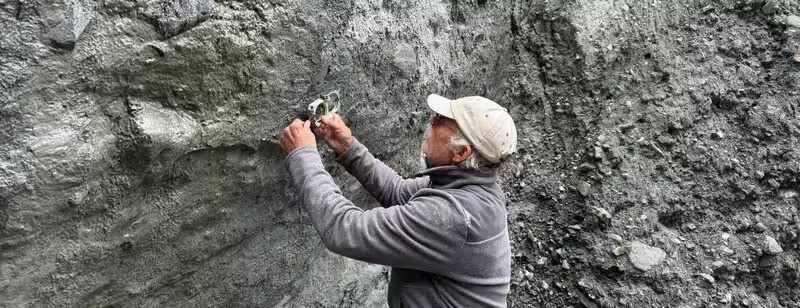
Geologist Tim Little measuring curved scratches on the Alpine Fault. (Nic Barth/UCR)
Tyler O'Neal, Staff Editor ACADEMIA December 16, 2024, 7:00 am

UC Riverside explores earthquake forecasting techniques

To improve earthquake forecasting and gain insights into potential seismic activities, scientists have introduced a groundbreaking method that analyzes fault dynamics and enhances the accuracy of earthquake predictions. This innovative technique, detailed in a paper published in the journal Geology, explores the intricate details of past earthquake events, providing valuable information about the origins of quakes, their propagation patterns, and the geographical areas likely to experience significant seismic impacts.

At the core of this approach are advanced supercomputer modeling techniques that allow for a thorough analysis of fault activities, which ultimately helps in creating more precise earthquake scenarios for significant fault lines. By closely examining the subtle curved scratches left on fault surfaces after an earthquake—similar to the markings on a drag race track—researchers can determine the direction in which the earthquakes originated and how they moved toward specific locations.

The lead author of this groundbreaking study, UC Riverside geologist Nic Barth, explains the importance of these previously unnoticed curved scratch marks. Supercomputer modeling identified the shape of these curves relative to the earthquake's direction; the research establishes a solid foundation for determining the locations of prehistoric earthquakes. This understanding provides a pathway for forecasting future seismic events and improving hazard assessment strategies globally.

One of this study's key findings is its ability to reveal critical information about the origins and trajectories of earthquakes. This knowledge is vital for predicting potential initiation points of future seismic events and understanding their likely paths. Such insights are significant for earthquake-prone areas like California, where accurate forecasts can significantly reduce the impact of earthquakes.

The study also highlights the need to understand earthquake propagation and its implications. For example, researchers examine a large earthquake that starts near the Salton Sea on the San Andreas fault and propagates northward toward Los Angeles, demonstrating how different earthquake origins and directions can affect energy dispersion and impact intensity.

Furthermore, this research extends its focus to international fault lines, notably New Zealand's Alpine Fault, known for its seismic activities. By analyzing historical earthquake patterns and modeling potential scenarios, the study showcases the predictive power of this new technique in forecasting seismic behavior and informing preparedness measures in earthquake-prone regions worldwide.

In a time characterized by increased seismic risks and an emphasis on disaster readiness, employing advanced supercomputer modeling techniques to analyze earthquake dynamics offers a promising path forward in earthquake science. As researchers globally adopt this innovative approach to uncover the complex history of faults and refine seismic predictions, the potential to enhance earthquake preparedness and response mechanisms grows, providing hope for communities at risk from seismic events.

Overall, this new horizon of knowledge promises to transform our understanding of earthquake science, offering a powerful tool to improve our comprehension of seismic behavior and strengthen global resilience against the unpredictable forces of nature.
Unveiling the potential of machine learning in earthquake forecasting

Unveiling the potential of machine learning in earthquake forecasting

Tyler O'Neal, Staff Editor ACADEMIA August 30, 2024, 2:13 pm

In an era marked by the continual pursuit of scientific advancement, researchers at the University of Alaska Fairbanks have unveiled a groundbreaking method that holds the promise of providing months' worth of warning before major earthquakes strike. This innovative approach spearheaded by research assistant professor Társilo Girona of the UAF Geophysical Institute, showcases the transformative power of machine learning in the realm of earthquake prediction.

Girona, a distinguished geophysicist and data scientist delves into the precursory activity of volcanic eruptions and earthquakes. The core of their detection method lies within a sophisticated application of machine learning, a cutting-edge statistical technique that has the potential to identify critical precursors to large-magnitude earthquakes by analyzing datasets derived from earthquake catalogs.

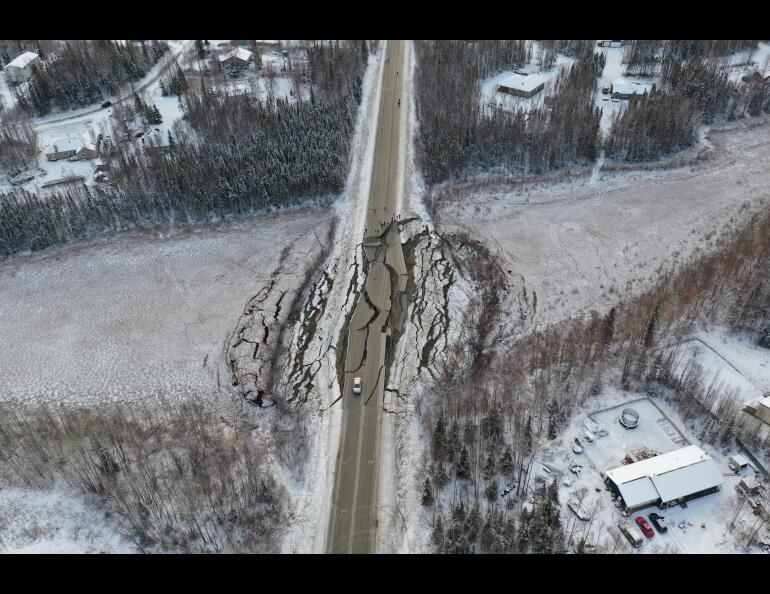
Through the development of a computer algorithm adept at discerning abnormal seismic activity, Girona focused their inquiry on two seismic events of significant magnitude: the 2018 Anchorage earthquake and the 2019 Ridgecrest earthquake sequence in California. Remarkably, their findings unveiled a compelling pattern of abnormal low-magnitude regional seismicity occurring approximately three months before each major earthquake, covering substantial areas of Southcentral Alaska and Southern California.

Their study underscores that the unrest preceding major earthquakes is predominantly captured by seismic activity with a magnitude below 1.5, a pivotal insight that sheds light on a potential geologic cause for this precursory activity: an increase in pore fluid pressure within faults. This rise in pore fluid pressure, altering the mechanical properties of faults, can lead to variations in the regional stress field, which the researchers propose may control the abnormal, low-magnitude seismicity observed before major earthquakes.

Girona emphasizes the profound impact of machine learning on earthquake research, portraying it as an invaluable tool that can glean vital insights from the vast datasets generated by modern seismic networks. By leveraging advancements in machine learning and supercomputing, researchers can unearth meaningful patterns that might serve as early indicators of impending seismic events, thereby heralding a transformative role in advancing our understanding of earthquake dynamics.

While the promise of this method is undeniable, Girona highlights the need for cautious validation and testing in near-real-time scenarios to address potential challenges in earthquake forecasting. They stress the importance of training the algorithm with historical seismicity data specific to the region of interest before its deployment, as producing reliable earthquake forecasts carries ethical and practical considerations that must be navigated with utmost care.

As we stand on the brink of a new chapter in earthquake forecasting, propelled by the fusion of machine learning and seismic research, the potential for preemptive warnings of major seismic events offers hope for saving lives and mitigating economic losses. The intricate dance between technological advancements and ethical considerations underscores the complexity of this endeavor, weaving a narrative that balances the pursuit of knowledge with the imperative of safeguarding communities against the unpredictable forces of nature.

In the acuity of this scientific revelation lies a beacon of possibility, illuminating a path where the fusion of human ingenuity and technological prowess offers a glimpse into a future where the once-unfathomable realms of earthquake forecasting may yet be rendered less mysterious and more manageable.

Satellite Φsat-2: Elevating Earth observation with the power of AI

Satellite Φsat-2: Elevating Earth observation with the power of AI

Tyler O'Neal, Staff Editor ACADEMIA August 19, 2024, 11:00 am

In a significant advancement for Earth observation, ESA's groundbreaking cubesat, Φsat-2, has ushered in a new era of using artificial intelligence (AI) to revolutionize how we observe our planet from space. This exciting milestone signals a future where technology and compassion work together to protect our world and its natural wonders with unparalleled efficiency and precision.

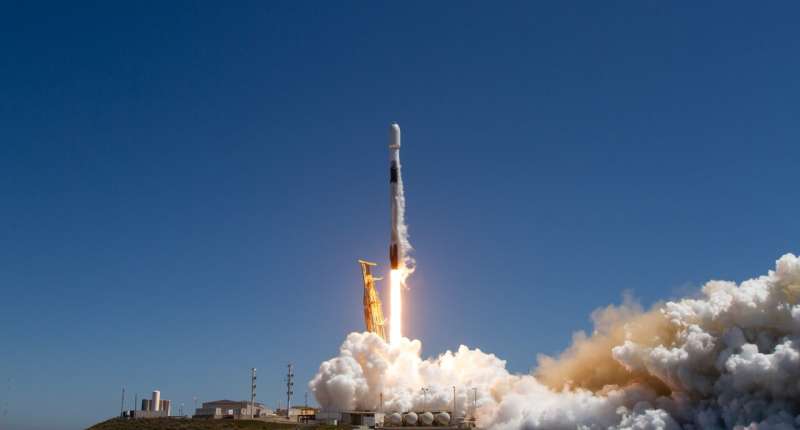
On August 16th, Φsat-2 was launched aboard a SpaceX Falcon 9 rocket, lifting off from the Vandenberg Space Force Base in California. As part of the Transporter-11 rideshare mission, this small satellite represents the forefront of innovation, poised to redefine Earth observation with the transformative power of AI.

Equipped with a state-of-the-art multispectral camera and a powerful AI computer, Φsat-2 aims to demonstrate how advanced AI technologies can push the boundaries of Earth observation. This achievement is particularly crucial as it promises to provide actionable insights for disaster response efforts, maritime monitoring, environmental protection, and more, enhancing our ability to safeguard our planet's ecological balance.

Simonetta Cheli, ESA’s Director of Earth Observation Programmes, expressed great enthusiasm, stating, "We are thrilled today to launch Φsat-2, which will demonstrate the transformative power of artificial intelligence in Earth observation. This mission heralds a new era of actionable insights from space, promising smarter and more efficient monitoring of our planet."

The uniqueness of Φsat-2 lies in its ability to process imagery and data on board in real-time, surpassing the conventional approach of transmitting large amounts of raw data to Earth. With this innovation, only the most essential information is sent, improving data transmission efficiency and expediting decision-making processes. From disaster response to maritime vessel detection, these advanced AI capabilities are set to reshape how we safeguard and monitor our planet's ecosystems.

As Φsat-2 orbits Earth at an altitude of 510 km, it captures the planet's beautiful imagery in seven bands of the visible to near-infrared spectrum. Through powerful collaboration and cutting-edge technology, the satellite features a suite of AI apps that set a new standard in space-based AI technology.

The transformative impact of these onboard AI apps is evident. For example, the cloud detection app, developed by KP Labs, sifts through cloud-obscured images, ensuring only the most usable imagery is transmitted to Earth, providing users with increased flexibility and operational efficiency. Additionally, the maritime vessel detection app, developed by CEiiA, showcases the satellite's critical role in safeguarding marine ecosystems and promoting maritime security.

Furthermore, with the introduction of new apps, such as the wildfire detection system developed by Thales Alenia Space and the marine anomaly detection by IRT Saint Exupery Technical Research, Φsat-2 continues to expand its capabilities, offering crucial real-time information that has the potential to safeguard our natural heritage and mitigate ecological threats.

As we look to the stars, the launch of Φsat-2 serves as a beacon of hope and progress, sparking our collective imagination and pursuit of a sustainable future. Through the fusion of AI and space technology, this pioneering endeavor embodies the inherent human spirit—our relentless pursuit of knowledge, compassion, and stewardship of our planet.

In the grand symphony of our universe, let us draw inspiration from ESA's Φsat-2, a testament to humanity's unwavering commitment to protect and cherish the delicate tapestry of our planet, bridging the realms of technology and altruism to elevate the noble cause of Earth observation.

  1. ESA's Φsat-2 satellite highlights the power of AI in earth observation
  2. NASA's Near Space Network enables the PACE Climate Mission to establish communication with Earth

Page 6 of 123

  • 1
  • 2
  • 3
  • 4
  • 5
  • 6
  • 7
  • 8
  • 9
  • 10
POPULAR RIGHT NOW
  • Supercomputers uncover a new class of cosmic explosions hidden in plain sight
    Supercomputers uncover a new class of cosmic explosions hidden in plain sight
  • AI supercharges the hunt for stronger magnets: Iowa State researchers launch a new era of intelligent materials discovery
    AI supercharges the hunt for stronger magnets: Iowa State researchers launch a new era of intelligent materials discovery
  • IBM's Historic stock collapse raises questions for the future of enterprise supercomputing
    IBM's Historic stock collapse raises questions for the future of enterprise supercomputing
  • Could a novel dark matter theory simultaneously resolve multiple cosmic enigmas? Supercomputer simulations provide a compelling, albeit currently unverified, potential solution
    Could a novel dark matter theory simultaneously resolve multiple cosmic enigmas? Supercomputer simulations provide a compelling, albeit currently unverified, potential solution
  • Melting icebergs may be reshaping Earth’s greatest ocean current
    Melting icebergs may be reshaping Earth’s greatest ocean current
  • Supercomputers replace ‘bathtub’ flood maps with physics-based digital twins of Britain’s coastline
    Supercomputers replace ‘bathtub’ flood maps with physics-based digital twins of Britain’s coastline
  • Supercomputers push neural quantum simulation beyond previous limits
    Supercomputers push neural quantum simulation beyond previous limits
  • Intel’s AI supercomputing revival: Q2 financial surge signals new era for CPU-powered HPC infrastructure
    Intel’s AI supercomputing revival: Q2 financial surge signals new era for CPU-powered HPC infrastructure
  • AI infrastructure financing fears shake semiconductor sector
    AI infrastructure financing fears shake semiconductor sector
  • AWS supercomputing investment reaches historic scale as Amazon’s AI strategy powers record financial results
    AWS supercomputing investment reaches historic scale as Amazon’s AI strategy powers record financial results
THIS YEAR'S MOST READ
  • Wall Street wants to trade supercomputing power like oil
    Wall Street wants to trade supercomputing power like oil
  • Cosmic ambition at scale: UK’s supercomputer unlocks a 2.5 petabytes universe
    Cosmic ambition at scale: UK’s supercomputer unlocks a 2.5 petabytes universe
  • Hidden order, revealed at scale: Supercomputing, electron ptychography uncover the inner workings of relaxor ferroelectrics
    Hidden order, revealed at scale: Supercomputing, electron ptychography uncover the inner workings of relaxor ferroelectrics
  • Beamforming the future: BeammWave's 6G push signals the rise of orbital-terrestrial wireless networks
    Joakim Axmon
    Joakim Axmon
  • Intel's Q1 results signal supercomputing surge driving Xeon momentum
    Intel's Q1 results signal supercomputing surge driving Xeon momentum
  • When stars fall apart: Supercomputing reveals the hidden physics of black holes
    When stars fall apart: Supercomputing reveals the hidden physics of black holes
  • Multi-layer simulations reveal the hidden supply chain of solar prominences
    Multi-layer simulations reveal the hidden supply chain of solar prominences
  • Japanese scientists decode dolphin speed with supercomputing: Turbulence, vortices, and the hidden physics of propulsion
    Japanese scientists decode dolphin speed with supercomputing: Turbulence, vortices, and the hidden physics of propulsion
  • Cosmic feedback at scale: Supercomputing reveals how quasars regulate the early Universe
    Cosmic feedback at scale: Supercomputing reveals how quasars regulate the early Universe
  • Modeling life at the microscopic scale: A computational breakthrough in oxygen transport
    Modeling life at the microscopic scale: A computational breakthrough in oxygen transport
MOST READ OF ALL-TIME
  • Largest Computational Biology Simulation Mimics The Ribosome
    Details
    112107
    The amino acid (green) slithers into the chemical reaction center, moving through an evolutionarily ancient corridor of the ribosome (purple). The amino acid is delivered to the reaction core by the transfer RNA molecule (yellow).
    The amino acid (green) slithers into the chemical reaction center, moving through an evolutionarily ancient corridor of the ribosome (purple). The amino acid is delivered to the reaction core by the transfer RNA molecule (yellow).
  • Silicon 'neurons' may add a new dimension to chips
    Details
    80990
    Silicon 'neurons' may add a new dimension to chips
  • Linux Networx Accelerators Expected to Drive up to 4x Price/Performance
    Details
    75537
  • Complex Concepts That Really Add Up
    Details
    73635
    Complex Concepts That Really Add Up
  • Blue Sky Studios Donates Animation SuperComputer to Wesleyan
    Details
    68140
    Each rack holds 52 Angstrom Microsystem-brand “blades,” with a memory footprint of 12 or 24 gigabytes each. (Photos by Olivia Bartlett Drake)
    Each rack holds 52 Angstrom Microsystem-brand “blades,” with a memory footprint of 12 or 24 gigabytes each. (Photos by Olivia Bartlett Drake)
  • Humanities, HPC connect at NERSC
    Details
    57945
  • TeraGrid ’09 'Call for Participation'
    Details
    54951
  • Turbulence responsible for black holes' balancing act
    Details
    52310
  • Cray Wins $52 Million SuperComputer Contract
    Details
    50139
  • SDSC Researchers Accurately Predict Protein Docking
    Details
    46078
  • FRONTPAGE
  • LATEST
  • POPULAR
  • REGISTER
  • SOCIAL
  • VIDEO
  • SUBSCRIPTION
  • RSS
  • GUIDELINES
  • PRIVACY
  • TOS
  • ABOUT
  • +1 (816) 799-4488
  • editorial@supercomputingonline.com
© 2001 - 2026 SuperComputingOnline.com, LLC. All rights reserved. This material may not be published, broadcast, rewritten or redistributed without permission.
Sign In
  • FRONT PAGE
  • LATEST
    • MEDIA KIT
    • MOST READ
    • RSS FEED
    • ACADEMIA
    • AEROSPACE
    • APPLICATIONS
    • ASTRONOMY
    • AUTOMOTIVE
    • BIG DATA
    • BIOLOGY
    • CHEMISTRY
    • CLIENTS
    • CLOUD
    • DEFENSE
    • DEVELOPER TOOLS
    • EARTH SCIENCES
    • ECONOMICS
    • ENGINEERING
    • ENTERTAINMENT
    • HEALTH
    • INDUSTRY
    • INTERCONNECTS
    • GAMING
    • GOVERNMENT
    • MANUFACTURING
    • MIDDLEWARE
    • MOVIES
    • NETWORKS
    • OIL & GAS
    • PHYSICS
    • PROCESSORS
    • RETAIL
    • SCIENCE
    • STORAGE
    • SYSTEMS
    • VISUALIZATION
  • VIDEOS
    • ADD YOUR VIDEOS
    • MANAGE VIDEOS
  • COMMUNITY
    • TRADE SHOWS
    • SOCIAL NETWORK VIDEOS
    • SURVEYS
    • APPLICATIONS BROWSER
    • CONVERSATION INBOX
    • SOCIAL ADVERTISER
    • GROUPS
    • MARKETPLACE LISTINGS
    • PAGES
    • LEADERBOARD
    • POINTS LISTING
      • BADGES
    • PRIVACY CONFIRM REQUEST
    • PRIVACY CREATE REQUEST

Hey there! We noticed you’re using an ad blocker.