


SUPERCOMPUTING NEWS SUPERCOMPUTING NEWS
    • MEDIA KIT
    • MOST READ
    • RSS FEED
    • ACADEMIA
    • AEROSPACE
    • APPLICATIONS
    • ASTRONOMY
    • AUTOMOTIVE
    • BIG DATA
    • BIOLOGY
    • CHEMISTRY
    • CLIENTS
    • CLOUD
    • DEFENSE
    • DEVELOPER TOOLS
    • EARTH SCIENCES
    • ECONOMICS
    • ENGINEERING
    • ENTERTAINMENT
    • GAMING
    • GOVERNMENT
    • HEALTH
    • OIL & GAS
    • INDUSTRY
    • INTERCONNECTS
    • MANUFACTURING
    • MIDDLEWARE
    • MOVIES
    • NETWORKS
    • PHYSICS
    • PROCESSORS
    • RETAIL
    • SCIENCE
    • STORAGE
    • SYSTEMS
    • VISUALIZATION
    • AcyMailing subscription form

    • ADD YOUR VIDEOS
    • MANAGE VIDEOS
    • CONVERSATION INBOX
    • SOCIAL ADVERTISER
    • SOCIAL NETWORK VIDEOS
    • SURVEYS
    • GROUPS
    • PAGES
    • MARKETPLACE LISTINGS
    • APPLICATIONS BROWSER
    • PRIVACY CONFIRM REQUEST
    • PRIVACY CREATE REQUEST
    • LEADERBOARD
    • POINTS LISTING
      • BADGES
    • TRADE SHOWS
Sign In
Is computing in 2040 a ticking time bomb for safety, truth, ownership, and accountability?
Tyler O'Neal, Staff Editor ACADEMIA January 24, 2024, 7:00 am

Is computing in 2040 a ticking time bomb for safety, truth, ownership, and accountability?

As technology continues to advance rapidly, there are growing concerns about the potential risks and challenges that computing technologies could pose in the future. A groundbreaking study conducted by cyber security researchers at Lancaster University has offered some alarming insights into these risks and challenges in 2040.

Led by Dr. Charles Weir from the School of Computing and Communications, the team used a Delphi study technique to gather the opinions of 12 esteemed experts in the field. These experts, including chief technology officers, consultant futurists, and academic researchers, were interviewed to forecast how particular technologies may shape our world over the next 15 years.

One of the key concerns highlighted by the experts was the exponential growth of Artificial Intelligence (AI). While acknowledging its tremendous benefits, many experts voiced apprehensions about the potential corner-cutting in the development of safe AI. They highlighted that nation-states driven by competitive advantage might compromise safety measures, potentially leading to incidents involving multiple deaths.

Dr. Charles Weir, the lead researcher of the study, stated, "The possible magnitude of some of the risks forecasted by experts was staggering. While technological advances offer great benefits, we cannot turn a blind eye to the risks. By identifying and understanding potential risks in advance, we can take proactive steps to avoid major problems."

Another significant concern raised by the experts involved the ease with which misinformation can spread in a technologically advanced world. As technology advances, it becomes increasingly difficult for individuals to distinguish truth from fiction, posing significant challenges for democracies. Misleading content propagated by bad actors can undermine trust and destabilize societies.

"We are already witnessing the perilous impact of misinformation on social media networks," explained Dr. Weir. "The experts foresee that technological progress will only amplify these issues, making it much easier for deceptive information to permeate our lives by 2040."

The study also examined other technologies that are anticipated to have varying impacts by 2040. Quantum supercomputing, despite its potential, was forecasted to have a limited impact within the given timeframe. Similarly, most experts dismissed the notion of Blockchain as a significant source of change.

Looking ahead, the experts confidently projected several key developments related to computing:

  • By 2040, increased competition between nation-states and big tech companies will likely result in corners being cut in the development of safe AI.
  • Quantum computing is not expected to have a substantial impact by 2040, pointing towards a longer timeframe for its integration.
  • Ownership of public web assets will be identified and traded through digital tokens by 2040, potentially posing challenges related to accountability and cybersecurity.
  • Distinguishing truth from fiction will become increasingly difficult as widely accessible AI technology can generate questionable and misleading content.
  • Due to the decentralized nature and complexity of systems, differentiating accidents from criminal incidents will become more challenging by 2040.

In light of these concerning projections, the experts offered potential solutions to mitigate the risks. They suggested that governments should introduce AI purchasing safety principles and enact new laws to regulate AI safety. Additionally, universities could play a vital role by offering courses that combine technical skills with legislation, ensuring professionals are equipped to navigate the complexities of supercomputing.

These thought-provoking forecasts will undoubtedly aid policymakers and technology professionals in making strategic decisions concerning the development and deployment of novel computing technologies. The findings, published in the scholarly journal IEEE Computer under the title "Interlinked Computing in 2040: Safety, Truth, Ownership, and Accountability," emphasize the urgent need for proactive measures to address potential risks associated with supercomputing soon.

As society eagerly embraces the promises of supercomputing, it is crucial to approach these advancements with caution and accountability. Only by fully understanding and preparing for the potential pitfalls can we ensure that the future we create with supercomputing truly benefits humanity.
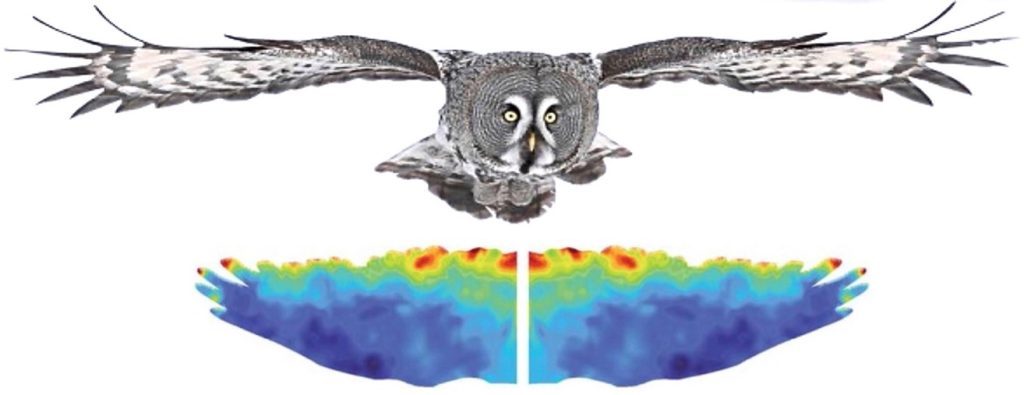

Uncovering the secrets behind the silent flight of owls: a triumph of computational fluid dynamics

Uncovering the secrets behind the silent flight of owls: a triumph of computational fluid dynamics

Tyler O'Neal, Staff Editor ACADEMIA January 23, 2024, 2:00 pm

Owls have always fascinated us with their ability to fly silently. Their wings make no noise, allowing them to hunt their prey undetected. Yet, we've never fully understood how they manage to fly without making a sound. That is, until now, thanks to the groundbreaking research conducted by a team of scientists at Chiba University.

Using computational fluid dynamic simulations, the researchers shed light on the enigmatic world of silent owl flight. Led by Professor Hao Liu from the Faculty of Engineering and the Center for Aerial Intelligent Vehicles, they embarked on a mission to understand the intricate details of this astounding phenomenon.

The team started by studying micro-fringes found on owl wings, which led them to question their impact on sound and aerodynamic performance. With advanced simulation techniques, the team meticulously analyzed the effects of these micro-fringes using the principles of computational fluid dynamics.

The results of their simulations were astonishing. The team discovered that the micro-fringes on owl wings effectively suppress noise while maintaining aerodynamic performance comparable to wings without such fringes. Through the interplay of two complementary mechanisms, these fringes enhance airflow and reduce fluctuations, resulting in a reduction of noise production.

Professor Liu explained that their findings demonstrate the intricate interactions between the micro-fringes and various wing features, validating their potential use in reducing noise in practical applications such as drones, wind turbines, propellers, and even flying cars. This research paves the way for the development of advanced biomimetic designs that could revolutionize the field of low-noise fluid machinery.

The implications of this study extend far beyond the realm of silent owl flight. It shows that by harnessing the secrets unveiled through these simulations, we can develop sustainable technology that prioritizes energy and resource-saving manufacturing.

Professor Liu's research aligns with the B3 strategy, a fusion of biomechanics, biomimetics, and bioinspiration. Through this approach, he aims to uncover the fundamental principles underlying the diversity, optimality, and robustness of biological movements. By learning from nature, we can create bio-inspired engineering solutions that drive significant advancements in various fields.

In conclusion, the silent wings of owls exemplify the exquisite craftsmanship of evolution. Through computational fluid dynamics, we can unlock even greater potential. Professor Liu and his team's work represents a triumph of scientific exploration and technological innovation. It reminds us that by studying the marvels of the natural world, we can unveil the secrets to overcoming our greatest challenges.

images/kidney-magnified-body_1_67321.jpg#joomlaImage://local-images/kidney-magnified-body_1_67321.jpg?width=&height=

Scientists use modeling to identify mutations that cause inherited kidney disease

Tyler O'Neal, Staff Editor ACADEMIA January 22, 2024, 1:30 pm

Scientists from Wake Forest University School of Medicine and Charles University in Prague, Czech Republic, have made a groundbreaking discovery in the field of inherited kidney disease. They have successfully identified specific genetic mutations that cause this debilitating condition, using modeling. This discovery brings new hope to thousands of people affected by this disease and paves the way for more targeted treatments in the future.

Hereditary kidney disease is caused by genetic abnormalities, which lead to chronic kidney disease or the need for dialysis or kidney transplantation. Identifying the root cause of this condition is critical to finding effective treatments. The team, led by Dr. Anthony J. Bleyer, spent 20 years studying families with inherited kidney disease, collecting DNA samples from over 500 families. While the genetic cause had already been identified in most cases, some families remained unresolved.

By collaborating with Dr. Stanislav Kmoch from Charles University, the researchers discovered a mutation in the APOA4 gene, which encodes a protein involved in lipid transport, as the cause of kidney disease in these families. This finding was unexpected, as APOA4 is primarily expressed in the intestinal epithelium.

To understand how these mutations cause the disease, the team employed supercomputer modeling to analyze the abnormal protein deposits found in the middle of the kidney. The modeling, carried out by scientists led by Dr. Nelson Leung from the Mayo Clinic, revealed that the mutations make the protein unstable and prone to aggregation. Unlike the normal protein, which is properly filtered and eliminated, the mutant protein accumulates in the medulla of the kidney over time, leading to the progression of chronic kidney disease.

The discovery of this genetic cause of inherited kidney disease is significant. Dr. Bleyer and his team have not only identified a new genetic cause but also shed light on the intricate molecular processes driving its progression. This understanding opens up possibilities for developing targeted interventions to halt or slow down the disease's progression.

The researchers are optimistic about the potential of dietary interventions as a means to lower the production of the abnormal protein, potentially preventing the progression of kidney disease. However, further research and clinical trials are needed to solidify these findings and unlock new treatment options for patients.

This breakthrough provides hope for families grappling with the consequences of inherited kidney disease. Dr. Bleyer emphasized their commitment to helping these families and encouraged those with unidentified causes of inherited kidney disease to reach out to the research team.

Thanks to the power of modeling and a dedicated team of researchers, the path toward more effective treatments for inherited kidney disease has never been clearer. This breakthrough not only brings hope but also showcases the immense potential of advanced technologies in unraveling the mysteries of human health.

  1. Machine learning models teach themselves, but have limits
  2. Unleashing the power of supercomputer simulations to shed light on the mysteries of supermassive black holes

Page 10 of 123

  • 5
  • 6
  • 7
  • 8
  • 9
  • 10
  • 11
  • 12
  • 13
  • 14
POPULAR RIGHT NOW
  • Supercomputers uncover a new class of cosmic explosions hidden in plain sight
    Supercomputers uncover a new class of cosmic explosions hidden in plain sight
  • AI supercharges the hunt for stronger magnets: Iowa State researchers launch a new era of intelligent materials discovery
    AI supercharges the hunt for stronger magnets: Iowa State researchers launch a new era of intelligent materials discovery
  • IBM's Historic stock collapse raises questions for the future of enterprise supercomputing
    IBM's Historic stock collapse raises questions for the future of enterprise supercomputing
  • Could a novel dark matter theory simultaneously resolve multiple cosmic enigmas? Supercomputer simulations provide a compelling, albeit currently unverified, potential solution
    Could a novel dark matter theory simultaneously resolve multiple cosmic enigmas? Supercomputer simulations provide a compelling, albeit currently unverified, potential solution
  • Melting icebergs may be reshaping Earth’s greatest ocean current
    Melting icebergs may be reshaping Earth’s greatest ocean current
  • Supercomputers replace ‘bathtub’ flood maps with physics-based digital twins of Britain’s coastline
    Supercomputers replace ‘bathtub’ flood maps with physics-based digital twins of Britain’s coastline
  • Supercomputers push neural quantum simulation beyond previous limits
    Supercomputers push neural quantum simulation beyond previous limits
  • Intel’s AI supercomputing revival: Q2 financial surge signals new era for CPU-powered HPC infrastructure
    Intel’s AI supercomputing revival: Q2 financial surge signals new era for CPU-powered HPC infrastructure
  • AI infrastructure financing fears shake semiconductor sector
    AI infrastructure financing fears shake semiconductor sector
  • AWS supercomputing investment reaches historic scale as Amazon’s AI strategy powers record financial results
    AWS supercomputing investment reaches historic scale as Amazon’s AI strategy powers record financial results
THIS YEAR'S MOST READ
  • Wall Street wants to trade supercomputing power like oil
    Wall Street wants to trade supercomputing power like oil
  • Cosmic ambition at scale: UK’s supercomputer unlocks a 2.5 petabytes universe
    Cosmic ambition at scale: UK’s supercomputer unlocks a 2.5 petabytes universe
  • Hidden order, revealed at scale: Supercomputing, electron ptychography uncover the inner workings of relaxor ferroelectrics
    Hidden order, revealed at scale: Supercomputing, electron ptychography uncover the inner workings of relaxor ferroelectrics
  • Beamforming the future: BeammWave's 6G push signals the rise of orbital-terrestrial wireless networks
    Joakim Axmon
    Joakim Axmon
  • Intel's Q1 results signal supercomputing surge driving Xeon momentum
    Intel's Q1 results signal supercomputing surge driving Xeon momentum
  • When stars fall apart: Supercomputing reveals the hidden physics of black holes
    When stars fall apart: Supercomputing reveals the hidden physics of black holes
  • Multi-layer simulations reveal the hidden supply chain of solar prominences
    Multi-layer simulations reveal the hidden supply chain of solar prominences
  • Japanese scientists decode dolphin speed with supercomputing: Turbulence, vortices, and the hidden physics of propulsion
    Japanese scientists decode dolphin speed with supercomputing: Turbulence, vortices, and the hidden physics of propulsion
  • Cosmic feedback at scale: Supercomputing reveals how quasars regulate the early Universe
    Cosmic feedback at scale: Supercomputing reveals how quasars regulate the early Universe
  • Modeling life at the microscopic scale: A computational breakthrough in oxygen transport
    Modeling life at the microscopic scale: A computational breakthrough in oxygen transport
MOST READ OF ALL-TIME
  • Largest Computational Biology Simulation Mimics The Ribosome
    Details
    112107
    The amino acid (green) slithers into the chemical reaction center, moving through an evolutionarily ancient corridor of the ribosome (purple). The amino acid is delivered to the reaction core by the transfer RNA molecule (yellow).
    The amino acid (green) slithers into the chemical reaction center, moving through an evolutionarily ancient corridor of the ribosome (purple). The amino acid is delivered to the reaction core by the transfer RNA molecule (yellow).
  • Silicon 'neurons' may add a new dimension to chips
    Details
    80990
    Silicon 'neurons' may add a new dimension to chips
  • Linux Networx Accelerators Expected to Drive up to 4x Price/Performance
    Details
    75537
  • Complex Concepts That Really Add Up
    Details
    73635
    Complex Concepts That Really Add Up
  • Blue Sky Studios Donates Animation SuperComputer to Wesleyan
    Details
    68140
    Each rack holds 52 Angstrom Microsystem-brand “blades,” with a memory footprint of 12 or 24 gigabytes each. (Photos by Olivia Bartlett Drake)
    Each rack holds 52 Angstrom Microsystem-brand “blades,” with a memory footprint of 12 or 24 gigabytes each. (Photos by Olivia Bartlett Drake)
  • Humanities, HPC connect at NERSC
    Details
    57945
  • TeraGrid ’09 'Call for Participation'
    Details
    54951
  • Turbulence responsible for black holes' balancing act
    Details
    52310
  • Cray Wins $52 Million SuperComputer Contract
    Details
    50139
  • SDSC Researchers Accurately Predict Protein Docking
    Details
    46078
  • FRONTPAGE
  • LATEST
  • POPULAR
  • REGISTER
  • SOCIAL
  • VIDEO
  • SUBSCRIPTION
  • RSS
  • GUIDELINES
  • PRIVACY
  • TOS
  • ABOUT
  • +1 (816) 799-4488
  • editorial@supercomputingonline.com
© 2001 - 2026 SuperComputingOnline.com, LLC. All rights reserved. This material may not be published, broadcast, rewritten or redistributed without permission.
Sign In
  • FRONT PAGE
  • LATEST
    • MEDIA KIT
    • MOST READ
    • RSS FEED
    • ACADEMIA
    • AEROSPACE
    • APPLICATIONS
    • ASTRONOMY
    • AUTOMOTIVE
    • BIG DATA
    • BIOLOGY
    • CHEMISTRY
    • CLIENTS
    • CLOUD
    • DEFENSE
    • DEVELOPER TOOLS
    • EARTH SCIENCES
    • ECONOMICS
    • ENGINEERING
    • ENTERTAINMENT
    • HEALTH
    • INDUSTRY
    • INTERCONNECTS
    • GAMING
    • GOVERNMENT
    • MANUFACTURING
    • MIDDLEWARE
    • MOVIES
    • NETWORKS
    • OIL & GAS
    • PHYSICS
    • PROCESSORS
    • RETAIL
    • SCIENCE
    • STORAGE
    • SYSTEMS
    • VISUALIZATION
  • VIDEOS
    • ADD YOUR VIDEOS
    • MANAGE VIDEOS
  • COMMUNITY
    • TRADE SHOWS
    • SOCIAL NETWORK VIDEOS
    • SURVEYS
    • APPLICATIONS BROWSER
    • CONVERSATION INBOX
    • SOCIAL ADVERTISER
    • GROUPS
    • MARKETPLACE LISTINGS
    • PAGES
    • LEADERBOARD
    • POINTS LISTING
      • BADGES
    • PRIVACY CONFIRM REQUEST
    • PRIVACY CREATE REQUEST

Hey there! We noticed you’re using an ad blocker.