

SUPERCOMPUTING NEWS SUPERCOMPUTING NEWS
    • MEDIA KIT
    • MOST READ
    • RSS FEED
    • ACADEMIA
    • AEROSPACE
    • APPLICATIONS
    • ASTRONOMY
    • AUTOMOTIVE
    • BIG DATA
    • BIOLOGY
    • CHEMISTRY
    • CLIENTS
    • CLOUD
    • DEFENSE
    • DEVELOPER TOOLS
    • EARTH SCIENCES
    • ECONOMICS
    • ENGINEERING
    • ENTERTAINMENT
    • GAMING
    • GOVERNMENT
    • HEALTH
    • OIL & GAS
    • INDUSTRY
    • INTERCONNECTS
    • MANUFACTURING
    • MIDDLEWARE
    • MOVIES
    • NETWORKS
    • PHYSICS
    • PROCESSORS
    • RETAIL
    • SCIENCE
    • STORAGE
    • SYSTEMS
    • VISUALIZATION
    • AcyMailing subscription form

    • ADD YOUR VIDEOS
    • MANAGE VIDEOS
    • CONVERSATION INBOX
    • SOCIAL ADVERTISER
    • SOCIAL NETWORK VIDEOS
    • SURVEYS
    • GROUPS
    • PAGES
    • MARKETPLACE LISTINGS
    • APPLICATIONS BROWSER
    • PRIVACY CONFIRM REQUEST
    • PRIVACY CREATE REQUEST
    • LEADERBOARD
    • POINTS LISTING
      • BADGES
    • TRADE SHOWS
Sign In
The unusual phenomenon of protein lassoing: Myth or fact?
Tyler O'Neal, Staff Editor ACADEMIA March 14, 2025, 8:55 pm

The unusual phenomenon of protein lassoing: Myth or fact?

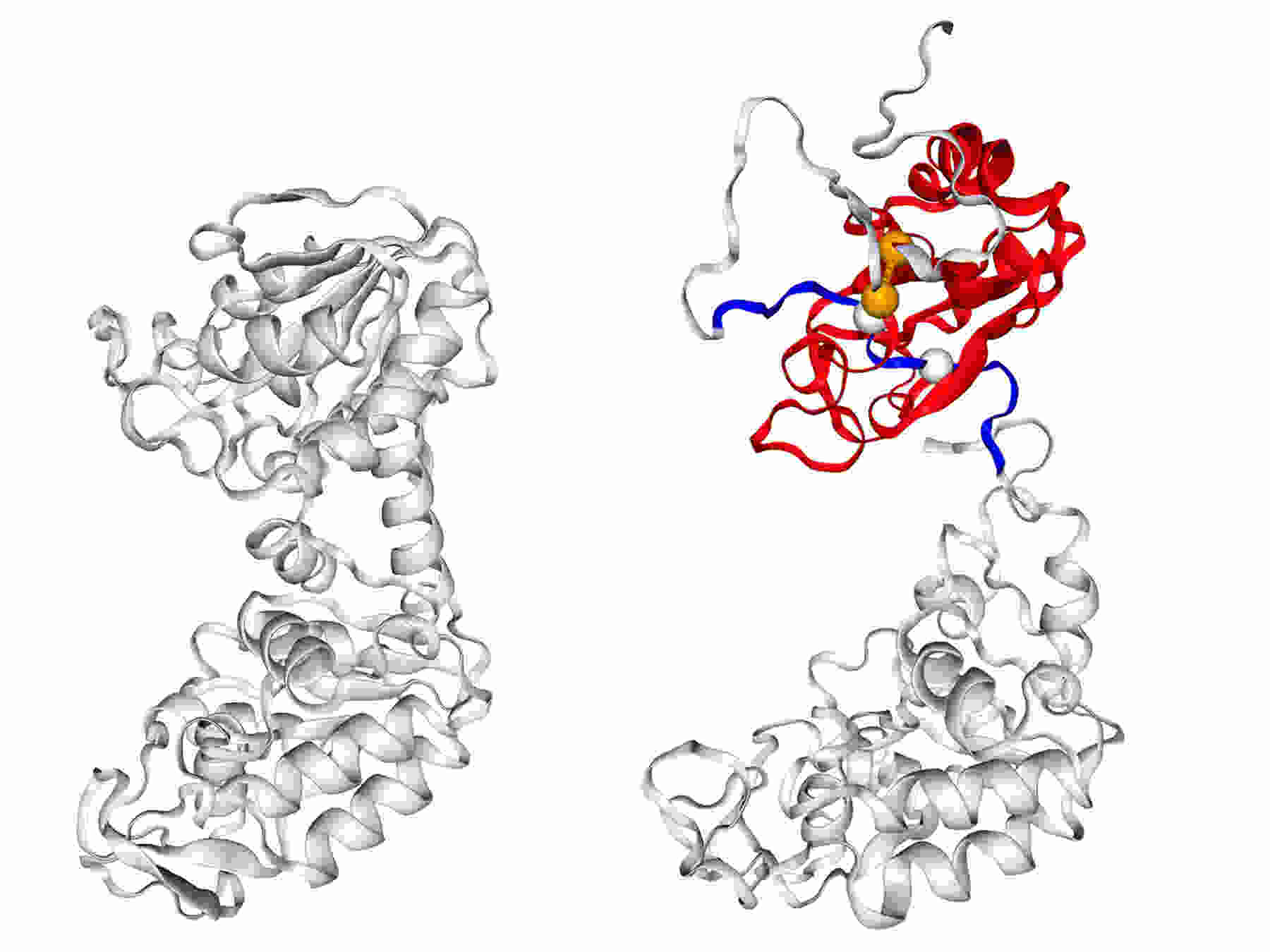
Proteins, the building blocks of life, are essential molecules that must fold into intricate three-dimensional structures to carry out their biological functions. However, what happens when this folding process goes awry? A recent study led by chemists at Penn State has proposed a potential explanation for why some proteins refold in unexpected patterns. But is this discovery genuinely groundbreaking, or are we being lassoed into believing a scientific mystery that may not hold up to scrutiny?

The research, which focused on the protein phosphoglycerate kinase (PGK), suggests that misfolding, known as non-covalent lasso entanglement, could be responsible for the unusual refolding behavior observed in certain proteins. According to the team led by Professor Ed O'Brien, this misfolding mechanism creates a barrier to the typical folding process, requiring high energy or extensive unfolding to correct the protein's structure. This, in turn, leads to the unexpected refolding patterns documented since the 1990s.

But how reliable are these findings? The research, published in the journal Science Advances, used a combination of supercomputer simulations and experimental data to support its claims. However, one must question the validity and reproducibility of these results. Can we genuinely trust simulations to model complex biological processes accurately, or are they oversimplifying the intricate dynamics of protein folding?

Moreover, the notion of proteins accidentally lassoing themselves raises skepticism. Is it plausible that molecules as fundamental as proteins could entangle themselves in such a manner, leading to significant deviations from traditional folding kinetics? While the researchers provide structural evidence from their simulations and experiments, are these misfolded states the cause of the observed stretched-exponential refolding kinetics, or could other factors be at play?

To add another layer of complexity, the study involved a multidisciplinary team, including statistics and data analysis experts. While collaboration between different fields can bring fresh insights, it also raises questions about potential biases or preconceived notions that may have influenced the interpretation of the results.

As we delve deeper into the world of protein folding, it is crucial to approach these findings with a critical eye. While the discovery of protein lassoing may offer a new perspective on misfolding mechanisms, it is essential to remain cautious of sensationalized claims that may not stand the test of meticulous scientific scrutiny.

In conclusion, the concept of proteins accidentally lassoing themselves to explain unusual refolding behavior is a fascinating yet contentious topic that demands further investigation and validation. As the scientific community continues to unravel the mysteries of protein structure and function, let us remember to question, challenge, and explore diverse perspectives to understand the complexities of the biological world truly.


AI's potential for wildfire detection: A critical examination

AI's potential for wildfire detection: A critical examination

Tyler O'Neal, Staff Editor ACADEMIA March 8, 2025, 9:00 am

The recent claim that artificial intelligence (AI) has "great potential" for detecting wildfires, as suggested by a new study focused on the Amazon Rainforest, deserves closer scrutiny. The study, published in the International Journal of Remote Sensing and conducted by researchers from the Universidade Federal do Amazonas, highlights using artificial neural networks and satellite imaging technology to identify areas affected by wildfires. While the study boasts a 93% success rate in training its model, questions arise about the practical implications and limitations of relying on AI for wildfire detection.

According to the research team, the Amazon Rainforest experienced a staggering 98,639 wildfires in 2023 alone, with over half originating in this ecosystem. The proposal to integrate AI technology, specifically a Convolutional Neural Network (CNN), into existing monitoring systems aims to enhance early warning systems and improve response strategies. The researchers argue that this approach could significantly improve wildfire detection and management in the region and beyond.

However, skepticism arises regarding this AI-driven solution's scalability and real-world implementation. The study's use of a relatively small dataset of 200 images to train the CNN raises concerns about the model's generalizability to diverse environmental conditions and wildfire scenarios. While achieving 93% accuracy during the training phase is commendable, the model's ability to effectively identify wildfires in practical, real-time conditions remains uncertain.

Furthermore, the authors suggest that expanding the dataset for training the CNN will enhance its robustness. While this recommendation is logical, the practical challenges of collecting and labeling a significantly larger dataset to reflect the complexity and variability of wildfires in different regions cannot be overlooked. The study's indication of potential applications for the CNN beyond wildfire detection, such as monitoring deforestation, raises questions about the technology's adaptability and reliability in addressing multifaceted environmental challenges.

The study emphasizes combining the temporal coverage of existing monitoring systems with the AI model's spatial precision. However, concerns persist regarding the reliance on AI as a standalone solution. Issues such as false positives, algorithmic biases, and the need for continuous validation and refinement based on evolving data must be addressed.

As with any emerging technology, it is critical to consider diverse perspectives to assess its viability and ethical implications. While AI shows promise in wildfire detection, carefully evaluating its operational feasibility, scalability, and long-term sustainability is essential for effective and responsible implementation.

In conclusion, although the study presents intriguing possibilities for leveraging AI in wildfire detection, a skeptical lens underscores the necessity for rigorous testing, validation, and interdisciplinary collaboration to navigate the complexities of deploying AI technology in environmental conservation and disaster management. Continued research and dialogue among experts from various fields will be crucial in determining AI's true potential and limitations in addressing the urgent challenges of wildfire detection and ecological preservation.

Unveiling the future of mosquito repellents: Machine learning leads the way

Unveiling the future of mosquito repellents: Machine learning leads the way

Tyler O'Neal, Staff Editor ACADEMIA March 5, 2025, 9:00 am

In an innovative blend of technology and entomology, researchers at the University of California, Riverside, are utilizing machine learning to enhance the effectiveness of mosquito repellents.

The Mosquito Menace

Mosquitoes are more than just a nuisance; they carry deadly diseases like malaria and dengue fever. Traditional repellents like DEET, while effective, have drawbacks—they can be expensive, require frequent reapplication, and may not provide a pleasant user experience. Furthermore, the widespread use of pyrethroid-based spatial repellents is facing challenges due to increasing resistance in mosquito populations.

Enter Machine Learning

Professor Anandasankar Ray and his team are at the forefront of this innovation, having developed a machine-learning-based cheminformatics approach. This cutting-edge method has screened over 10 million compounds to identify potential new mosquito repellents and insecticides. Importantly, they have discovered effective and pleasantly scented repellent molecules derived from ordinary food and flavoring sources.

A Four-Pronged Strategy

The research team concentrates on four key areas:

1. Improved Topical Repellents: Developing formulations that provide long-lasting protection (12-24 hours) with a desirable scent.
2. Spatial Repellents: Creating solutions to protect areas like backyards and homes from mosquito intrusion.
3. Long-Lasting Pyrethroid Analogs: Designing new molecules that are effective against resistant mosquito strains and suitable for use in bed nets and clothing.
4. Enhanced Spatial Pyrethroid Formulations: Increasing the efficacy of repellents against mosquitoes that exhibit knockdown resistance.

The Road Ahead

With a $2.5 million five-year grant from the National Institutes of Health, Ray’s team is set further to explore the identification of novel spatial mosquito repellents and understand their mechanisms. They aim to provide safe, affordable, and highly effective mosquito control solutions that could significantly reduce human exposure to disease vectors, thereby improving the quality of life for at-risk populations.

As machine learning reveals new possibilities, the vision of a world less burdened by mosquito-borne diseases becomes increasingly achievable.

  1. Caltech's landmark breakthrough in quantum networking: A true revolution or just theoretical hype
  2. Breakthrough or hype? Questions arise over 'low-cost' computer claims

Page 2 of 123

  • 1
  • 2
  • 3
  • 4
  • 5
  • 6
  • 7
  • 8
  • 9
  • 10
POPULAR RIGHT NOW
  • Supercomputers uncover a new class of cosmic explosions hidden in plain sight
    Supercomputers uncover a new class of cosmic explosions hidden in plain sight
  • AI supercharges the hunt for stronger magnets: Iowa State researchers launch a new era of intelligent materials discovery
    AI supercharges the hunt for stronger magnets: Iowa State researchers launch a new era of intelligent materials discovery
  • IBM's Historic stock collapse raises questions for the future of enterprise supercomputing
    IBM's Historic stock collapse raises questions for the future of enterprise supercomputing
  • Could a novel dark matter theory simultaneously resolve multiple cosmic enigmas? Supercomputer simulations provide a compelling, albeit currently unverified, potential solution
    Could a novel dark matter theory simultaneously resolve multiple cosmic enigmas? Supercomputer simulations provide a compelling, albeit currently unverified, potential solution
  • Melting icebergs may be reshaping Earth’s greatest ocean current
    Melting icebergs may be reshaping Earth’s greatest ocean current
  • Supercomputers replace ‘bathtub’ flood maps with physics-based digital twins of Britain’s coastline
    Supercomputers replace ‘bathtub’ flood maps with physics-based digital twins of Britain’s coastline
  • Supercomputers push neural quantum simulation beyond previous limits
    Supercomputers push neural quantum simulation beyond previous limits
  • Intel’s AI supercomputing revival: Q2 financial surge signals new era for CPU-powered HPC infrastructure
    Intel’s AI supercomputing revival: Q2 financial surge signals new era for CPU-powered HPC infrastructure
  • AI infrastructure financing fears shake semiconductor sector
    AI infrastructure financing fears shake semiconductor sector
  • AWS supercomputing investment reaches historic scale as Amazon’s AI strategy powers record financial results
    AWS supercomputing investment reaches historic scale as Amazon’s AI strategy powers record financial results
THIS YEAR'S MOST READ
  • Wall Street wants to trade supercomputing power like oil
    Wall Street wants to trade supercomputing power like oil
  • Cosmic ambition at scale: UK’s supercomputer unlocks a 2.5 petabytes universe
    Cosmic ambition at scale: UK’s supercomputer unlocks a 2.5 petabytes universe
  • Hidden order, revealed at scale: Supercomputing, electron ptychography uncover the inner workings of relaxor ferroelectrics
    Hidden order, revealed at scale: Supercomputing, electron ptychography uncover the inner workings of relaxor ferroelectrics
  • Beamforming the future: BeammWave's 6G push signals the rise of orbital-terrestrial wireless networks
    Joakim Axmon
    Joakim Axmon
  • Intel's Q1 results signal supercomputing surge driving Xeon momentum
    Intel's Q1 results signal supercomputing surge driving Xeon momentum
  • When stars fall apart: Supercomputing reveals the hidden physics of black holes
    When stars fall apart: Supercomputing reveals the hidden physics of black holes
  • Multi-layer simulations reveal the hidden supply chain of solar prominences
    Multi-layer simulations reveal the hidden supply chain of solar prominences
  • Japanese scientists decode dolphin speed with supercomputing: Turbulence, vortices, and the hidden physics of propulsion
    Japanese scientists decode dolphin speed with supercomputing: Turbulence, vortices, and the hidden physics of propulsion
  • Cosmic feedback at scale: Supercomputing reveals how quasars regulate the early Universe
    Cosmic feedback at scale: Supercomputing reveals how quasars regulate the early Universe
  • Modeling life at the microscopic scale: A computational breakthrough in oxygen transport
    Modeling life at the microscopic scale: A computational breakthrough in oxygen transport
MOST READ OF ALL-TIME
  • Largest Computational Biology Simulation Mimics The Ribosome
    Details
    112107
    The amino acid (green) slithers into the chemical reaction center, moving through an evolutionarily ancient corridor of the ribosome (purple). The amino acid is delivered to the reaction core by the transfer RNA molecule (yellow).
    The amino acid (green) slithers into the chemical reaction center, moving through an evolutionarily ancient corridor of the ribosome (purple). The amino acid is delivered to the reaction core by the transfer RNA molecule (yellow).
  • Silicon 'neurons' may add a new dimension to chips
    Details
    80990
    Silicon 'neurons' may add a new dimension to chips
  • Linux Networx Accelerators Expected to Drive up to 4x Price/Performance
    Details
    75537
  • Complex Concepts That Really Add Up
    Details
    73635
    Complex Concepts That Really Add Up
  • Blue Sky Studios Donates Animation SuperComputer to Wesleyan
    Details
    68140
    Each rack holds 52 Angstrom Microsystem-brand “blades,” with a memory footprint of 12 or 24 gigabytes each. (Photos by Olivia Bartlett Drake)
    Each rack holds 52 Angstrom Microsystem-brand “blades,” with a memory footprint of 12 or 24 gigabytes each. (Photos by Olivia Bartlett Drake)
  • Humanities, HPC connect at NERSC
    Details
    57945
  • TeraGrid ’09 'Call for Participation'
    Details
    54951
  • Turbulence responsible for black holes' balancing act
    Details
    52310
  • Cray Wins $52 Million SuperComputer Contract
    Details
    50139
  • SDSC Researchers Accurately Predict Protein Docking
    Details
    46078
  • FRONTPAGE
  • LATEST
  • POPULAR
  • REGISTER
  • SOCIAL
  • VIDEO
  • SUBSCRIPTION
  • RSS
  • GUIDELINES
  • PRIVACY
  • TOS
  • ABOUT
  • +1 (816) 799-4488
  • editorial@supercomputingonline.com
© 2001 - 2026 SuperComputingOnline.com, LLC. All rights reserved. This material may not be published, broadcast, rewritten or redistributed without permission.
Sign In
  • FRONT PAGE
  • LATEST
    • MEDIA KIT
    • MOST READ
    • RSS FEED
    • ACADEMIA
    • AEROSPACE
    • APPLICATIONS
    • ASTRONOMY
    • AUTOMOTIVE
    • BIG DATA
    • BIOLOGY
    • CHEMISTRY
    • CLIENTS
    • CLOUD
    • DEFENSE
    • DEVELOPER TOOLS
    • EARTH SCIENCES
    • ECONOMICS
    • ENGINEERING
    • ENTERTAINMENT
    • HEALTH
    • INDUSTRY
    • INTERCONNECTS
    • GAMING
    • GOVERNMENT
    • MANUFACTURING
    • MIDDLEWARE
    • MOVIES
    • NETWORKS
    • OIL & GAS
    • PHYSICS
    • PROCESSORS
    • RETAIL
    • SCIENCE
    • STORAGE
    • SYSTEMS
    • VISUALIZATION
  • VIDEOS
    • ADD YOUR VIDEOS
    • MANAGE VIDEOS
  • COMMUNITY
    • TRADE SHOWS
    • SOCIAL NETWORK VIDEOS
    • SURVEYS
    • APPLICATIONS BROWSER
    • CONVERSATION INBOX
    • SOCIAL ADVERTISER
    • GROUPS
    • MARKETPLACE LISTINGS
    • PAGES
    • LEADERBOARD
    • POINTS LISTING
      • BADGES
    • PRIVACY CONFIRM REQUEST
    • PRIVACY CREATE REQUEST

Hey there! We noticed you’re using an ad blocker.