


SUPERCOMPUTING NEWS SUPERCOMPUTING NEWS
    • MEDIA KIT
    • MOST READ
    • RSS FEED
    • ACADEMIA
    • AEROSPACE
    • APPLICATIONS
    • ASTRONOMY
    • AUTOMOTIVE
    • BIG DATA
    • BIOLOGY
    • CHEMISTRY
    • CLIENTS
    • CLOUD
    • DEFENSE
    • DEVELOPER TOOLS
    • EARTH SCIENCES
    • ECONOMICS
    • ENGINEERING
    • ENTERTAINMENT
    • GAMING
    • GOVERNMENT
    • HEALTH
    • OIL & GAS
    • INDUSTRY
    • INTERCONNECTS
    • MANUFACTURING
    • MIDDLEWARE
    • MOVIES
    • NETWORKS
    • PHYSICS
    • PROCESSORS
    • RETAIL
    • SCIENCE
    • STORAGE
    • SYSTEMS
    • VISUALIZATION
    • AcyMailing subscription form

    • ADD YOUR VIDEOS
    • MANAGE VIDEOS
    • CONVERSATION INBOX
    • SOCIAL ADVERTISER
    • SOCIAL NETWORK VIDEOS
    • SURVEYS
    • GROUPS
    • PAGES
    • MARKETPLACE LISTINGS
    • APPLICATIONS BROWSER
    • PRIVACY CONFIRM REQUEST
    • PRIVACY CREATE REQUEST
    • LEADERBOARD
    • POINTS LISTING
      • BADGES
    • TRADE SHOWS
Sign In
Professor Dr Vitor Azevedo
Tyler O'Neal, Staff Editor ACADEMIA February 6, 2024, 1:00 pm

Promises & pitfalls: Machine learning in financial markets

The application of machine learning (ML) in the financial market has been touted as a game-changer for stock return predictions. A recent study conducted by researchers from Kaiserslautern and Munich, published in the "Journal of Asset Management," explores the potential of ML methods to enhance stock return forecasting. While the findings showcase remarkable accuracy and improved returns, experts urge caution, highlighting the need for a skeptical evaluation of this emerging technology.

ML methods, a branch of artificial intelligence (AI), offer the promise of aggregating numerous factors and market anomalies to improve stock return predictions. Traditional methods often fall short, particularly in global stock investments. The researchers embarked on a quest to determine if ML could provide a solution, and their study presents fascinating insights.

Professor Dr. Vitor Azevedo from the University Kaiserslautern-Landau, co-author of the study, explains the significance of capital market anomalies in stock forecasts. Over 400 of these phenomena, identified by renowned financial journals, have been deemed predictive of stock returns. For instance, the well-known "Price-Earnings Ratio" (PER) and the "Short-Term Reversal" effect have shown potential in guiding investment decisions. However, understanding which anomalies are relevant, how they interact, and their combined impact poses a complex challenge.

In this undertaking, the researchers examined various ML approaches and analyzed a staggering 1.9 billion stock-month-anomaly observations spanning nearly four decades across 68 countries. Their findings are impressive, suggesting that ML models outperform traditional methods. Predicting stock returns with astonishing accuracy, these ML models recorded an average monthly return of up to 2.71 percent, far surpassing the meager 1 percent achieved by traditional approaches.

The implications of this research are tantalizing, offering financial managers the prospect of developing new stock price models and potentially increasing profitability. However, experts caution that there are several factors that demand careful consideration.

One critical aspect lies in the preparation of data, emphasizing the importance of correctly incorporating outliers and missing values, especially when working with international data. Ethical and regulatory concerns are also raised, as the deployment of AI techniques in financial markets warrants extensive review.

While these findings highlight the potential of ML in the financial sector, skepticism is vital. The complexity of stock predictions and the volatile nature of financial markets mean that applying ML methods alone may oversimplify a multifaceted problem. Critics argue that there is a risk of relying too heavily on machine learning algorithms and overlooking crucial factors that cannot be captured by computational models alone, such as economic trends, geopolitical events, and human behavior.

It is crucial to strike a balance between technological innovation and traditional financial expertise. Combining ML methods with the experience and insights of financial analysts can create a stronger foundation for informed decision-making. Additionally, stakeholders must remain vigilant regarding potential biases embedded in ML algorithms and transparency in their implementation.

The study, titled "Stock market anomalies and machine learning across the globe," urges the financial industry to approach the integration of ML cautiously. While its potential cannot be ignored, rigorous evaluation, validation, and an ongoing dialogue among experts are vital to harness the benefits of this emerging technology while mitigating its inherent risks.
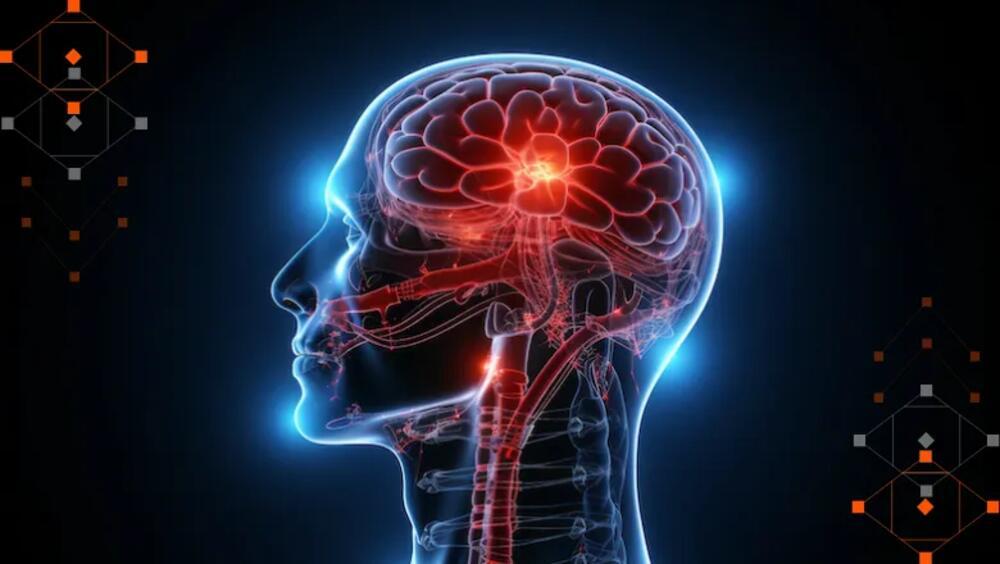

AI deep learning model revolutionizes brain cancer treatment, predicts patients' survival

AI deep learning model revolutionizes brain cancer treatment, predicts patients' survival

Tyler O'Neal, Staff Editor ACADEMIA February 1, 2024, 7:00 am

Cutting-edge technology brings hope to brain cancer patients by accurately predicting outcomes and empowering personalized treatment plans.

In a groundbreaking breakthrough, researchers from King's College London have developed an artificial intelligence (AI) deep learning model that can predict the survival of adult patients with brain cancer. This innovative technology has the potential to revolutionize the treatment of glioblastoma, a difficult-to-treat cancer with a low survival rate.

The deep learning model created by the research team allows clinicians to reliably and accurately predict patient outcomes, providing valuable insights for planning the next stage of treatment. By utilizing AI, doctors can refer patients to potentially life-saving treatments more quickly and efficiently. This is a significant advancement, as currently, patients undergo routine scans to determine the effectiveness of chemotherapy, exposing them to harmful side effects and ineffective treatments.

Glioblastoma patients typically survive for only eight months after receiving radiotherapy, which is usually followed by a typical course of routine chemotherapy. However, with the use of AI, doctors can now use a single routine MRI scan to obtain instantaneous and accurate predictions about a patient's likelihood of survival. This empowers doctors to identify patients who would not benefit from chemotherapy, enabling them to explore alternative treatments or enroll patients in clinical trials for experimental therapies.

Dr. Thomas Booth, Reader in Neuroimaging at the School of Biomedical Engineering & Imaging Sciences, shared his excitement about the study, stating, "We would be delighted if the cancer research community now uses our artificial intelligence tool to see improved outcomes for patients who won't benefit from the usual course of chemotherapy."

The study utilized a vast dataset of brain scans from thousands of patients with brain cancer to train the AI deep learning model. Dr. Booth further explained, "Feedback from all patients and clinicians at the start of the study meant that we wanted to address the unmet need of improving outcomes for the large proportion of patients undergoing modified treatment - as well as the minority of patients who can tolerate the 'optimal' treatment."

This remarkable innovation has garnered attention from neuro-oncology centers across the UK, with 11 centers collaborating on the study. Dr. Helen Bulbeck, Director of Services and Policy at brainstrust, a brain tumor charity, emphasized the significance of this research for patients, saying, "This exciting and fundamental research empowers patients and their caregivers to make choices about their clinical pathway and regain control at a time when so much control has been lost."

Dr. Michele Afif, CEO at The Brain Tumour Charity, also highlighted the importance of AI in improving care for brain tumor patients, stating, "The use of AI to evaluate and predict response to radiotherapy at an early point in a patient's treatment for glioblastoma is a hugely important step in tackling this notoriously difficult-to-treat disease."

The potential impact of this AI deep learning model extends beyond survival predictions. Patients will now have access to informed discussions about treatment options, early consideration of alternatives like clinical trials, and the ability to plan their time to live their best possible day, every day.

As the medical field continues to embrace AI and deep learning models, this pioneering research offers hope and inspiration to patients battling brain cancer. It signifies the relentless pursuit of cutting-edge technology to bring about tangible improvements in patient outcomes. Ultimately, this breakthrough brings us one step closer to a future where accurate predictions and personalized treatments transform the landscape of cancer care.

An image that portrays a dwarf star with plate number TOI-1136, created by an artist, demonstrates how exoplanets in its close orbit are affected by radiation and solar flares, which in turn impact their atmospheres. According to researchers at UCI, the magnetic variability around the star creates noise, making it more challenging to measure the masses of the exoplanets. The illustration was created by Rae Holcomb and Paul Robertson from UCI.

UC Irvine-led team sheds light on distant solar system, unlocking secrets of planet formation

Tyler O'Neal, Staff Editor ACADEMIA January 30, 2024, 11:00 am

Supercomputer models and diverse perspectives are driving astronomical discoveries forward.

In a celestial feat that has left the scientific community in awe, a team of researchers led by the University of California, Irvine has unraveled the mysteries of planet formation and evolution in a distant solar system. Through the combined power of supercomputer models and diverse perspectives, this groundbreaking study has provided unparalleled insights into the characteristics and behaviors of exoplanets.

At the heart of this discovery lies TOI-1136, a dwarf star located more than 270 light years away from our planet. Compiling meticulous measurements obtained from a range of observatories, the team has shed light on the properties of the six confirmed exoplanets orbiting TOI-1136, as well as a potential seventh planet yet to be fully confirmed.

The research highlights the remarkable precision achieved by the team through their use of the TESS-Keck Survey. By combining transit timing variation (TTV) data from the Transiting Exoplanet Survey Satellite with radial velocity analysis of the star, the team was able to determine planetary mass readings of unprecedented accuracy.

Lead author Corey Beard, a UCI Ph.D. candidate in physics, describes the extraordinary effort behind this achievement. "It took a lot of trial and error, but we were really happy with our results after developing one of the most complicated planetary system models in exoplanet literature to date," Beard said.

One of the key factors that drives the team's enthusiasm for further research is the presence of multiple exoplanets in the TOI-1136 system. Co-author Paul Robertson, UCI associate professor of physics and astronomy, highlights the advantage of studying systems with multiple planets: "We can control for the effects of planet evolution that depend on the host star, and that helps us focus on individual physical mechanisms that led to these planets having the properties that they do."

The significance of examining exoplanets within the same system cannot be overstated. Unlike comparing planets in separate solar systems, which introduces numerous variables based on the diverse nature of their host stars and locations, studying exoplanets within the same system allows scientists to explore the effects of similar histories and draw meaningful comparisons.

TOI-1136's youthfulness adds another layer of fascination to this system. At just 700 million years old, the star is considered young, with heightened activity such as magnetism, sunspots, and solar flares. These dynamic processes have a significant impact on the evolution of the planets in the system, shaping their atmospheres and influencing their potential habitability.

The confirmed exoplanets in the TOI-1136 system, classified as "sub-Neptunes" by experts, offer a new and intriguing perspective on planetary diversity. Rae Holcomb, a UCI Ph.D. candidate in physics and co-author of the study, remarks, "They're weird planets to us because we don't have anything exactly like them in our solar system. But the more we study other planet systems, it seems like they may be the most common type of planet in the galaxy."

An additional enigmatic aspect of this solar system is the potential presence of a seventh planet, yet to be conclusively identified. Scientists have detected evidence of resonant forces among the exoplanets, indicating a harmonious relationship in their orbits. This resonance can either destabilize or enhance the stability of the system, offering valuable insights into the dynamics of planetary interactions.

While this study has brought us closer to understanding the intricacies of planet formation and evolution, there is still much more to explore. The team expresses their eagerness to delve into the composition of planetary atmospheres, a field that could be revolutionized by the advanced spectroscopy capabilities of NASA's James Webb Space Telescope.

The collaborative effort among researchers from institutions worldwide, including Spain's Astrophysics Institute of the Canary Islands, Sweden's Chalmers University of Technology, and Japan's Ritsumeikan University, demonstrates the power of diverse perspectives in unraveling astronomical mysteries. By combining their expertise and resources, these scientists have made enormous strides toward unlocking the secrets of the universe.

As we venture into the vast depths of space, armed with supercomputer models and an inclusive mindset, we are reminded of the profound impact our collective knowledge and determination can have on uncovering the mysteries that surround us. With every discovery, we forge new pathways of understanding, inspiring generations to come in the eternal quest for knowledge and exploration.

  1. Is computing in 2040 a ticking time bomb for safety, truth, ownership, and accountability?
  2. Uncovering the secrets behind the silent flight of owls: a triumph of computational fluid dynamics

Page 9 of 123

  • 4
  • 5
  • 6
  • 7
  • 8
  • 9
  • 10
  • 11
  • 12
  • 13
POPULAR RIGHT NOW
  • Supercomputers uncover a new class of cosmic explosions hidden in plain sight
    Supercomputers uncover a new class of cosmic explosions hidden in plain sight
  • AI supercharges the hunt for stronger magnets: Iowa State researchers launch a new era of intelligent materials discovery
    AI supercharges the hunt for stronger magnets: Iowa State researchers launch a new era of intelligent materials discovery
  • IBM's Historic stock collapse raises questions for the future of enterprise supercomputing
    IBM's Historic stock collapse raises questions for the future of enterprise supercomputing
  • Could a novel dark matter theory simultaneously resolve multiple cosmic enigmas? Supercomputer simulations provide a compelling, albeit currently unverified, potential solution
    Could a novel dark matter theory simultaneously resolve multiple cosmic enigmas? Supercomputer simulations provide a compelling, albeit currently unverified, potential solution
  • Melting icebergs may be reshaping Earth’s greatest ocean current
    Melting icebergs may be reshaping Earth’s greatest ocean current
  • Supercomputers replace ‘bathtub’ flood maps with physics-based digital twins of Britain’s coastline
    Supercomputers replace ‘bathtub’ flood maps with physics-based digital twins of Britain’s coastline
  • Supercomputers push neural quantum simulation beyond previous limits
    Supercomputers push neural quantum simulation beyond previous limits
  • Intel’s AI supercomputing revival: Q2 financial surge signals new era for CPU-powered HPC infrastructure
    Intel’s AI supercomputing revival: Q2 financial surge signals new era for CPU-powered HPC infrastructure
  • AI infrastructure financing fears shake semiconductor sector
    AI infrastructure financing fears shake semiconductor sector
  • AWS supercomputing investment reaches historic scale as Amazon’s AI strategy powers record financial results
    AWS supercomputing investment reaches historic scale as Amazon’s AI strategy powers record financial results
THIS YEAR'S MOST READ
  • Wall Street wants to trade supercomputing power like oil
    Wall Street wants to trade supercomputing power like oil
  • Cosmic ambition at scale: UK’s supercomputer unlocks a 2.5 petabytes universe
    Cosmic ambition at scale: UK’s supercomputer unlocks a 2.5 petabytes universe
  • Hidden order, revealed at scale: Supercomputing, electron ptychography uncover the inner workings of relaxor ferroelectrics
    Hidden order, revealed at scale: Supercomputing, electron ptychography uncover the inner workings of relaxor ferroelectrics
  • Beamforming the future: BeammWave's 6G push signals the rise of orbital-terrestrial wireless networks
    Joakim Axmon
    Joakim Axmon
  • Intel's Q1 results signal supercomputing surge driving Xeon momentum
    Intel's Q1 results signal supercomputing surge driving Xeon momentum
  • When stars fall apart: Supercomputing reveals the hidden physics of black holes
    When stars fall apart: Supercomputing reveals the hidden physics of black holes
  • Multi-layer simulations reveal the hidden supply chain of solar prominences
    Multi-layer simulations reveal the hidden supply chain of solar prominences
  • Japanese scientists decode dolphin speed with supercomputing: Turbulence, vortices, and the hidden physics of propulsion
    Japanese scientists decode dolphin speed with supercomputing: Turbulence, vortices, and the hidden physics of propulsion
  • Cosmic feedback at scale: Supercomputing reveals how quasars regulate the early Universe
    Cosmic feedback at scale: Supercomputing reveals how quasars regulate the early Universe
  • Modeling life at the microscopic scale: A computational breakthrough in oxygen transport
    Modeling life at the microscopic scale: A computational breakthrough in oxygen transport
MOST READ OF ALL-TIME
  • Largest Computational Biology Simulation Mimics The Ribosome
    Details
    112107
    The amino acid (green) slithers into the chemical reaction center, moving through an evolutionarily ancient corridor of the ribosome (purple). The amino acid is delivered to the reaction core by the transfer RNA molecule (yellow).
    The amino acid (green) slithers into the chemical reaction center, moving through an evolutionarily ancient corridor of the ribosome (purple). The amino acid is delivered to the reaction core by the transfer RNA molecule (yellow).
  • Silicon 'neurons' may add a new dimension to chips
    Details
    80990
    Silicon 'neurons' may add a new dimension to chips
  • Linux Networx Accelerators Expected to Drive up to 4x Price/Performance
    Details
    75537
  • Complex Concepts That Really Add Up
    Details
    73635
    Complex Concepts That Really Add Up
  • Blue Sky Studios Donates Animation SuperComputer to Wesleyan
    Details
    68140
    Each rack holds 52 Angstrom Microsystem-brand “blades,” with a memory footprint of 12 or 24 gigabytes each. (Photos by Olivia Bartlett Drake)
    Each rack holds 52 Angstrom Microsystem-brand “blades,” with a memory footprint of 12 or 24 gigabytes each. (Photos by Olivia Bartlett Drake)
  • Humanities, HPC connect at NERSC
    Details
    57945
  • TeraGrid ’09 'Call for Participation'
    Details
    54951
  • Turbulence responsible for black holes' balancing act
    Details
    52310
  • Cray Wins $52 Million SuperComputer Contract
    Details
    50139
  • SDSC Researchers Accurately Predict Protein Docking
    Details
    46078
  • FRONTPAGE
  • LATEST
  • POPULAR
  • REGISTER
  • SOCIAL
  • VIDEO
  • SUBSCRIPTION
  • RSS
  • GUIDELINES
  • PRIVACY
  • TOS
  • ABOUT
  • +1 (816) 799-4488
  • editorial@supercomputingonline.com
© 2001 - 2026 SuperComputingOnline.com, LLC. All rights reserved. This material may not be published, broadcast, rewritten or redistributed without permission.
Sign In
  • FRONT PAGE
  • LATEST
    • MEDIA KIT
    • MOST READ
    • RSS FEED
    • ACADEMIA
    • AEROSPACE
    • APPLICATIONS
    • ASTRONOMY
    • AUTOMOTIVE
    • BIG DATA
    • BIOLOGY
    • CHEMISTRY
    • CLIENTS
    • CLOUD
    • DEFENSE
    • DEVELOPER TOOLS
    • EARTH SCIENCES
    • ECONOMICS
    • ENGINEERING
    • ENTERTAINMENT
    • HEALTH
    • INDUSTRY
    • INTERCONNECTS
    • GAMING
    • GOVERNMENT
    • MANUFACTURING
    • MIDDLEWARE
    • MOVIES
    • NETWORKS
    • OIL & GAS
    • PHYSICS
    • PROCESSORS
    • RETAIL
    • SCIENCE
    • STORAGE
    • SYSTEMS
    • VISUALIZATION
  • VIDEOS
    • ADD YOUR VIDEOS
    • MANAGE VIDEOS
  • COMMUNITY
    • TRADE SHOWS
    • SOCIAL NETWORK VIDEOS
    • SURVEYS
    • APPLICATIONS BROWSER
    • CONVERSATION INBOX
    • SOCIAL ADVERTISER
    • GROUPS
    • MARKETPLACE LISTINGS
    • PAGES
    • LEADERBOARD
    • POINTS LISTING
      • BADGES
    • PRIVACY CONFIRM REQUEST
    • PRIVACY CREATE REQUEST

Hey there! We noticed you’re using an ad blocker.