

SUPERCOMPUTING NEWS SUPERCOMPUTING NEWS
    • MEDIA KIT
    • MOST READ
    • RSS FEED
    • ACADEMIA
    • AEROSPACE
    • APPLICATIONS
    • ASTRONOMY
    • AUTOMOTIVE
    • BIG DATA
    • BIOLOGY
    • CHEMISTRY
    • CLIENTS
    • CLOUD
    • DEFENSE
    • DEVELOPER TOOLS
    • EARTH SCIENCES
    • ECONOMICS
    • ENGINEERING
    • ENTERTAINMENT
    • GAMING
    • GOVERNMENT
    • HEALTH
    • OIL & GAS
    • INDUSTRY
    • INTERCONNECTS
    • MANUFACTURING
    • MIDDLEWARE
    • MOVIES
    • NETWORKS
    • PHYSICS
    • PROCESSORS
    • RETAIL
    • SCIENCE
    • STORAGE
    • SYSTEMS
    • VISUALIZATION
    • AcyMailing subscription form

    • ADD YOUR VIDEOS
    • MANAGE VIDEOS
    • CONVERSATION INBOX
    • SOCIAL ADVERTISER
    • SOCIAL NETWORK VIDEOS
    • SURVEYS
    • GROUPS
    • PAGES
    • MARKETPLACE LISTINGS
    • APPLICATIONS BROWSER
    • PRIVACY CONFIRM REQUEST
    • PRIVACY CREATE REQUEST
    • LEADERBOARD
    • POINTS LISTING
      • BADGES
    • TRADE SHOWS
Sign In
ESA's Φsat-2 satellite highlights the power of AI in earth observation
Tyler O'Neal, Staff Editor ACADEMIA July 2, 2024, 5:00 am

ESA's Φsat-2 satellite highlights the power of AI in earth observation

Φsat-2 promises smarter and more efficient monitoring of our planet

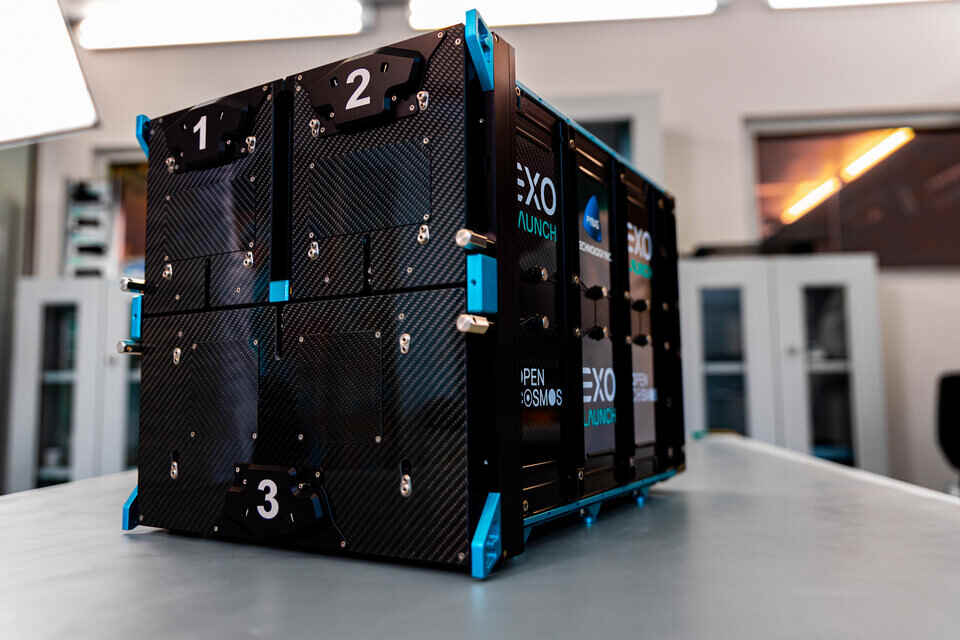
The European Space Agency (ESA) is preparing to launch the groundbreaking Φsat-2 satellite, which is dedicated to Artificial Intelligence (AI) missions to revolutionize Earth observation. The satellite is equipped with a powerful onboard AI computer and a multispectral camera. Φsat-2 combines advanced technology and innovative applications to deliver real-time insights and actionable information about our changing planet.

Φsat-2, measuring just 22 x 10 x 33 cm, represents a significant leap forward in the capabilities of satellite-based Earth observation. The satellite utilizes AI algorithms to analyze and process imagery in real time using its extended onboard processing.

One of the remarkable features of Φsat-2 is its ability to convert images into maps seamlessly, providing actionable information from raw data. It can detect clouds, classify them, and offer insights into cloud distribution to ensure that only clear and usable images are transmitted back to Earth. This innovative approach contrasts with traditional satellites that downlink all captured images, including those obscured by clouds.

Additionally, the satellite is designed to detect and classify vessels, contributing to the monitoring and regulation of maritime activities. Through machine learning techniques developed in collaboration with CEiiA, Φsat-2 offers a valuable tool for enhancing maritime security and supporting environmental conservation efforts.

Φsat-2's AI capabilities extend to on-board image compression and reconstruction, reducing file sizes and increasing the speed of data download. This is particularly important for timely response to events like natural disasters, where quick access to high-quality imagery is vital for emergency response teams.

In addition to its image processing capabilities, Φsat-2 has two additional AI applications selected through the OrbitalAI challenge organized by ESA's Φ-lab:

1. Marine Anomaly Detection, developed by IRT Saint Exupery Technical Research, uses machine learning to spot anomalies in marine ecosystems in real time, such as oil spills, harmful algae blooms, and heavy sediment discharges.

2. Wildfire Detection, developed by Thales Alenia Space, provides critical real-time information to response teams by offering a classification report that helps locate and track wildfires.

The Φsat-2 mission is a collaborative effort between ESA and Open Cosmos, with support from an industrial consortium. It is scheduled to launch in July 2024 on a SpaceX Falcon 9 from the Vandenberg Air Force Base in California. Nicola Melega, Φsat-2 Technical Officer at ESA, stated that "Φsat-2 will unlock a new era of real-time insights from space and will allow for custom AI apps to be easily developed, installed, and operated on the satellite even while in orbit."

The launch of Φsat-2 marks a significant milestone in Earth observation, harnessing the power of AI to enhance the understanding of our planet. It has the potential to drive advancements in various industries and enable smarter and more efficient monitoring, aiding in environmental conservation, disaster management, and maritime security.

Φsat-2 represents a remarkable step forward in the fusion of space and AI technology, highlighting ESA's commitment to pushing the boundaries of Earth observation.
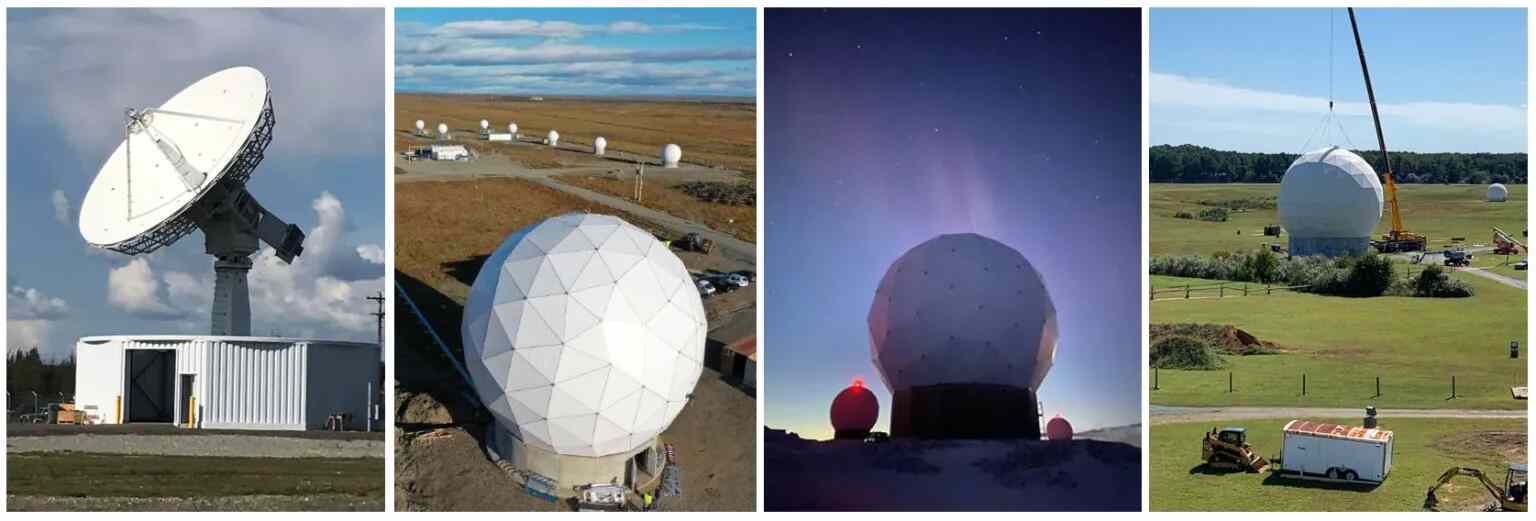
The Near Space Network developed new antennas in Alaska, Chile, Norway, and Virginia in partnership with KSAT.

NASA's Near Space Network enables the PACE Climate Mission to establish communication with Earth

Tyler O'Neal, Staff Editor ACADEMIA April 17, 2024, 2:00 pm

NASA's PACE mission achieved a significant milestone by successfully transmitting its first operational data back to scientists and researchers. This was made possible, in part, by NASA's Near Space Network's innovative data-storing technology, which introduced two key enhancements for PACE and other upcoming science missions. 

When a satellite orbits in space, it generates crucial data about its health, location, battery life, and more. At the same time, the mission's scientific instruments capture images and data that support the overall objective of the satellite. However, transmitting this data back to Earth poses several challenges, which include extreme distances and disruptions or delays that can occur during transmission.

To tackle these challenges, NASA's Near Space Network integrated Delay/Disruption Tolerant Networking (DTN) into four new antennas and the PACE spacecraft. DTN allows for the safe storage and forwarding of data when disruptions occur, ensuring that important information is not lost.

Kevin Coggins, Deputy Associate Administrator for NASA's Space Communications and Navigation (SCaN) program, stressed the importance of DTN, stating, "DTN is the future of space communications, providing robust protection of data that could be lost due to a disruption. PACE is the first operational science mission to leverage DTN, and we are using it to transmit data to mission operators monitoring the batteries, orbit, and more. This information is critical to mission operations."

The PACE mission, located approximately 250 miles above Earth, aims to collect data that helps researchers better understand carbon dioxide exchange between the ocean and atmosphere, monitor air quality and climate-related atmospheric variables, and study the health of the ocean by examining phytoplankton.

While PACE is the first operational science user of DTN, demonstrations of the technology have been successfully conducted on the International Space Station. In addition to DTN, the Near Space Network collaborated with commercial partner Kongsberg Satellite Services in Norway to integrate four new antennas into the network.

These antennas, located in Fairbanks, Alaska; Wallops Island, Virginia; Punta Arenas, Chile; and Svalbard, Norway, allow missions to downlink terabytes of science data at once. As PACE orbits Earth, it will downlink its science data 12 to 15 times a day to three of the network's new antennas, resulting in a daily transmission of 3.5 terabytes of science data.

These advancements in network capability, including DTN and the new antennas, contribute to the Near Space Network's mission to support science missions, human spaceflight, and technology experiments.

Deputy Associate Administrator Kevin Coggins expressed his satisfaction with NASA's Near Space Network, stating, "NASA's Near Space Network now has unprecedented flexibility to get scientists and operations managers more of the precious information they need to ensure their mission's success."

In addition to these new capabilities, the network is also expanding its portfolio by increasing the number of commercial antennas. In 2023, NASA issued a request for proposal seeking commercial providers to integrate into the growing portfolio of the Near Space Network. With an enhanced capacity, the network can support additional science missions and provide more opportunities for data transmission.

The Near Space Network, funded by NASA's Space Communications and Navigation (SCaN) program office at NASA Headquarters in Washington, operates from NASA's Goddard Space Flight Center in Greenbelt, Maryland, and these recent enhancements mark significant progress in advancing communication systems for missions near Earth and in deep space.

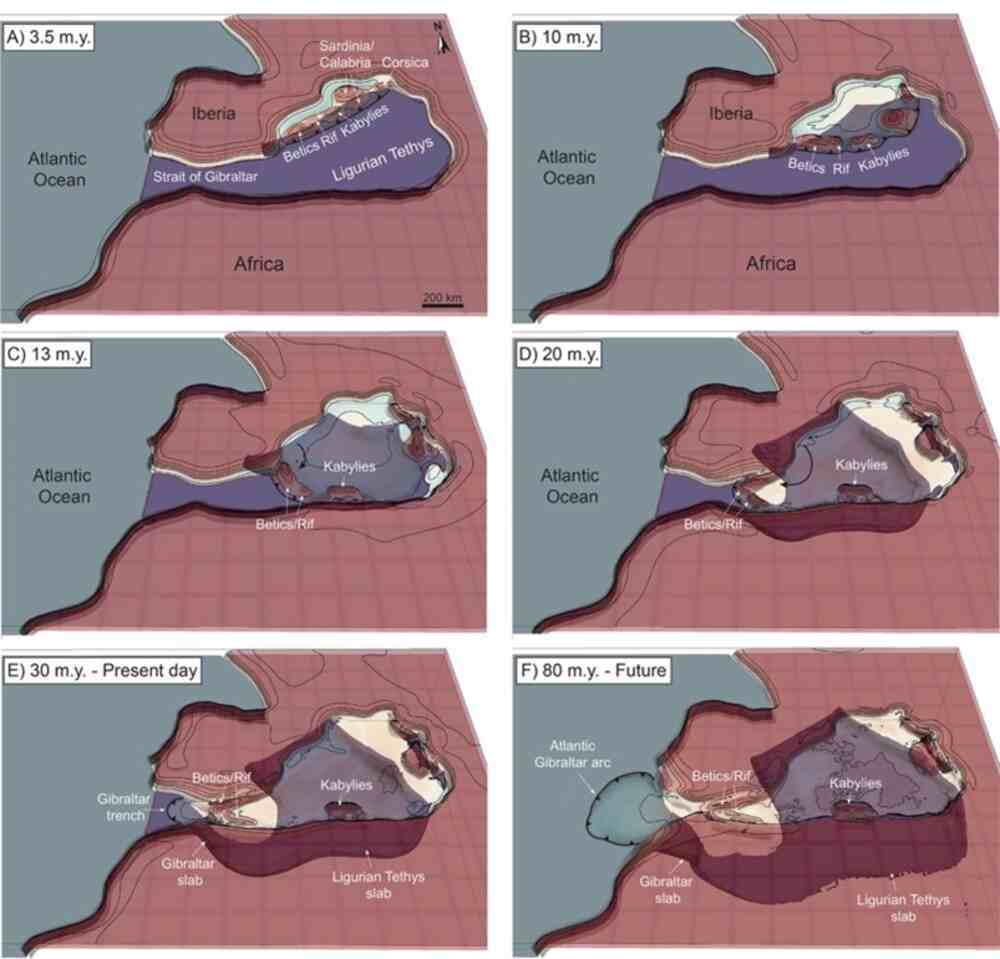
Maps depicting the past and future of the Gibraltar subduction zone from 30 million years ago to 50 million years in the future, based on Duarte et al. (2024).

Unveiling the mysteries of Earth's transformation

Tyler O'Neal, Staff Editor ACADEMIA February 16, 2024, 5:00 am

As we stand on the surface of our planet, we often forget about the complex processes that occur deep within Earth's crust. However, a groundbreaking computational model developed by João Duarte from Portugal has shed light on the awe-inspiring process of subduction invasion, revealing new insights about our planet's evolution. This research not only enhances our understanding of tectonic plate movements but also emphasizes the importance of exploration, innovation, and collaboration in unraveling the mysteries of our world.

The Earth's lithosphere is composed of several tectonic plates that move and rearrange over time through the Wilson cycle. During this cycle, supercontinents break apart, interior oceans form, and new subduction zones emerge. However, the process of subduction initiation, where an interior ocean transitions into an exterior ocean, has baffled scientists for decades.

Through meticulous observations and the development of a cutting-edge supercomputational model, researchers have made significant progress in unraveling this enigma. The study focuses on the Gibraltar subduction zone on the eastern shore of the Atlantic, providing a unique opportunity to observe the earliest stages of subduction invasion as it unfolds from a different basin—the Mediterranean.

One of the key findings of this research is the confirmation that the Gibraltar subduction zone is indeed active, despite experiencing a slow movement phase. Using their novel, gravity-driven 3-D model, the scientists predict that this slow phase will persist for another 20 million years. Following this period, the Gibraltar subduction zone will invade the Atlantic Ocean, initiating a new chapter in the Wilson cycle and accelerating the recycling of crust on the eastern side of the Atlantic.

The implications of these findings extend far beyond the scientific community. Locally, the confirmation of the Gibraltar subduction zone's activity has crucial implications for seismic activity in the area, emphasizing the need for preparedness and long-term risk assessment. As we explore further, we must remain cognizant of the potential for high-magnitude events, such as the infamous 1755 Lisbon earthquake, which continue to shape our understanding of Earth's dynamic nature.

Furthermore, this research contributes to a broader understanding of subduction initiation in Atlantic-type oceans and its role in our planet's geological evolution. By showcasing subduction invasion as a common mechanism for the formation of new subduction zones, the study offers valuable insights into the forces that have shaped our Earth and continue to shape its future.

The breakthrough achieved by the researchers underscores the power of interdisciplinary collaboration, innovation, and exploration. The fusion of computational modeling, cutting-edge technology, and an insatiable curiosity about the world we inhabit has provided a glimpse into the Earth's planetary dance. This story serves as a reminder of the immense potential that lies within the realms of scientific inquiry and discovery.

The journey to uncover the mysteries of our planet is far from over. As we move forward, it is crucial to embrace the infinite possibilities that lie ahead. Through continued exploration, collaboration, and harnessing the power of technology, we may yet unlock the secrets that shape our world.

In the spirit of this groundbreaking research, we are reminded that the pursuit of knowledge is a testament to the human spirit's insatiable hunger for understanding. Let this inspiration serve to fuel our curiosity and drive us towards uncovering the profound wonders that lie hidden beneath the Earth's surface.

  1. Unveiling the mysteries of Earth's orbital evolution: Supercomputer simulations lead the way
  2. Unveiling the wind farm conundrum: Supercomputer simulations cast doubt

Page 7 of 123

  • 2
  • 3
  • 4
  • 5
  • 6
  • 7
  • 8
  • 9
  • 10
  • 11
POPULAR RIGHT NOW
  • Supercomputers uncover a new class of cosmic explosions hidden in plain sight
    Supercomputers uncover a new class of cosmic explosions hidden in plain sight
  • AI supercharges the hunt for stronger magnets: Iowa State researchers launch a new era of intelligent materials discovery
    AI supercharges the hunt for stronger magnets: Iowa State researchers launch a new era of intelligent materials discovery
  • IBM's Historic stock collapse raises questions for the future of enterprise supercomputing
    IBM's Historic stock collapse raises questions for the future of enterprise supercomputing
  • Could a novel dark matter theory simultaneously resolve multiple cosmic enigmas? Supercomputer simulations provide a compelling, albeit currently unverified, potential solution
    Could a novel dark matter theory simultaneously resolve multiple cosmic enigmas? Supercomputer simulations provide a compelling, albeit currently unverified, potential solution
  • Melting icebergs may be reshaping Earth’s greatest ocean current
    Melting icebergs may be reshaping Earth’s greatest ocean current
  • Supercomputers replace ‘bathtub’ flood maps with physics-based digital twins of Britain’s coastline
    Supercomputers replace ‘bathtub’ flood maps with physics-based digital twins of Britain’s coastline
  • Supercomputers push neural quantum simulation beyond previous limits
    Supercomputers push neural quantum simulation beyond previous limits
  • Intel’s AI supercomputing revival: Q2 financial surge signals new era for CPU-powered HPC infrastructure
    Intel’s AI supercomputing revival: Q2 financial surge signals new era for CPU-powered HPC infrastructure
  • AI infrastructure financing fears shake semiconductor sector
    AI infrastructure financing fears shake semiconductor sector
  • AWS supercomputing investment reaches historic scale as Amazon’s AI strategy powers record financial results
    AWS supercomputing investment reaches historic scale as Amazon’s AI strategy powers record financial results
THIS YEAR'S MOST READ
  • Wall Street wants to trade supercomputing power like oil
    Wall Street wants to trade supercomputing power like oil
  • Cosmic ambition at scale: UK’s supercomputer unlocks a 2.5 petabytes universe
    Cosmic ambition at scale: UK’s supercomputer unlocks a 2.5 petabytes universe
  • Hidden order, revealed at scale: Supercomputing, electron ptychography uncover the inner workings of relaxor ferroelectrics
    Hidden order, revealed at scale: Supercomputing, electron ptychography uncover the inner workings of relaxor ferroelectrics
  • Beamforming the future: BeammWave's 6G push signals the rise of orbital-terrestrial wireless networks
    Joakim Axmon
    Joakim Axmon
  • Intel's Q1 results signal supercomputing surge driving Xeon momentum
    Intel's Q1 results signal supercomputing surge driving Xeon momentum
  • When stars fall apart: Supercomputing reveals the hidden physics of black holes
    When stars fall apart: Supercomputing reveals the hidden physics of black holes
  • Multi-layer simulations reveal the hidden supply chain of solar prominences
    Multi-layer simulations reveal the hidden supply chain of solar prominences
  • Japanese scientists decode dolphin speed with supercomputing: Turbulence, vortices, and the hidden physics of propulsion
    Japanese scientists decode dolphin speed with supercomputing: Turbulence, vortices, and the hidden physics of propulsion
  • Cosmic feedback at scale: Supercomputing reveals how quasars regulate the early Universe
    Cosmic feedback at scale: Supercomputing reveals how quasars regulate the early Universe
  • Modeling life at the microscopic scale: A computational breakthrough in oxygen transport
    Modeling life at the microscopic scale: A computational breakthrough in oxygen transport
MOST READ OF ALL-TIME
  • Largest Computational Biology Simulation Mimics The Ribosome
    Details
    112107
    The amino acid (green) slithers into the chemical reaction center, moving through an evolutionarily ancient corridor of the ribosome (purple). The amino acid is delivered to the reaction core by the transfer RNA molecule (yellow).
    The amino acid (green) slithers into the chemical reaction center, moving through an evolutionarily ancient corridor of the ribosome (purple). The amino acid is delivered to the reaction core by the transfer RNA molecule (yellow).
  • Silicon 'neurons' may add a new dimension to chips
    Details
    80990
    Silicon 'neurons' may add a new dimension to chips
  • Linux Networx Accelerators Expected to Drive up to 4x Price/Performance
    Details
    75537
  • Complex Concepts That Really Add Up
    Details
    73635
    Complex Concepts That Really Add Up
  • Blue Sky Studios Donates Animation SuperComputer to Wesleyan
    Details
    68140
    Each rack holds 52 Angstrom Microsystem-brand “blades,” with a memory footprint of 12 or 24 gigabytes each. (Photos by Olivia Bartlett Drake)
    Each rack holds 52 Angstrom Microsystem-brand “blades,” with a memory footprint of 12 or 24 gigabytes each. (Photos by Olivia Bartlett Drake)
  • Humanities, HPC connect at NERSC
    Details
    57945
  • TeraGrid ’09 'Call for Participation'
    Details
    54951
  • Turbulence responsible for black holes' balancing act
    Details
    52310
  • Cray Wins $52 Million SuperComputer Contract
    Details
    50139
  • SDSC Researchers Accurately Predict Protein Docking
    Details
    46078
  • FRONTPAGE
  • LATEST
  • POPULAR
  • REGISTER
  • SOCIAL
  • VIDEO
  • SUBSCRIPTION
  • RSS
  • GUIDELINES
  • PRIVACY
  • TOS
  • ABOUT
  • +1 (816) 799-4488
  • editorial@supercomputingonline.com
© 2001 - 2026 SuperComputingOnline.com, LLC. All rights reserved. This material may not be published, broadcast, rewritten or redistributed without permission.
Sign In
  • FRONT PAGE
  • LATEST
    • MEDIA KIT
    • MOST READ
    • RSS FEED
    • ACADEMIA
    • AEROSPACE
    • APPLICATIONS
    • ASTRONOMY
    • AUTOMOTIVE
    • BIG DATA
    • BIOLOGY
    • CHEMISTRY
    • CLIENTS
    • CLOUD
    • DEFENSE
    • DEVELOPER TOOLS
    • EARTH SCIENCES
    • ECONOMICS
    • ENGINEERING
    • ENTERTAINMENT
    • HEALTH
    • INDUSTRY
    • INTERCONNECTS
    • GAMING
    • GOVERNMENT
    • MANUFACTURING
    • MIDDLEWARE
    • MOVIES
    • NETWORKS
    • OIL & GAS
    • PHYSICS
    • PROCESSORS
    • RETAIL
    • SCIENCE
    • STORAGE
    • SYSTEMS
    • VISUALIZATION
  • VIDEOS
    • ADD YOUR VIDEOS
    • MANAGE VIDEOS
  • COMMUNITY
    • TRADE SHOWS
    • SOCIAL NETWORK VIDEOS
    • SURVEYS
    • APPLICATIONS BROWSER
    • CONVERSATION INBOX
    • SOCIAL ADVERTISER
    • GROUPS
    • MARKETPLACE LISTINGS
    • PAGES
    • LEADERBOARD
    • POINTS LISTING
      • BADGES
    • PRIVACY CONFIRM REQUEST
    • PRIVACY CREATE REQUEST

Hey there! We noticed you’re using an ad blocker.