Liverpool opens new facility to support innovation

The Digital Innovation Facility, a new multi-million facility to support the growth of academic-industry collaborations in emerging digital technologies, officially opens at the University of Liverpool New facility to support emerging digital technologies

The University of Liverpool’s Digital Innovation Facility (DIF), a £12.7 million Centre of Excellence in emerging digital technologies, was officially opened by the Mayor of the Liverpool City Region, Steve Rotheram, alongside tech entrepreneur and visiting Professor at the University of Liverpool, Sir Robin Saxby.

Located on the University city center campus, the DIF provides a purpose-built environment to support collaborations and partnerships between academics, industry, and organizations in the research areas of computer and data science, robotics, and engineering where the University has world-class research capabilities.

The 1500 M2 facility includes state-of-the-art laboratories featuring cutting-edge equipment and highly skilled support to facilitate enhanced access for businesses and organizations that wish to collaborate with University experts across multiple technology areas including visualization, robotics, artificial intelligence, data science, simulation, and modeling. 

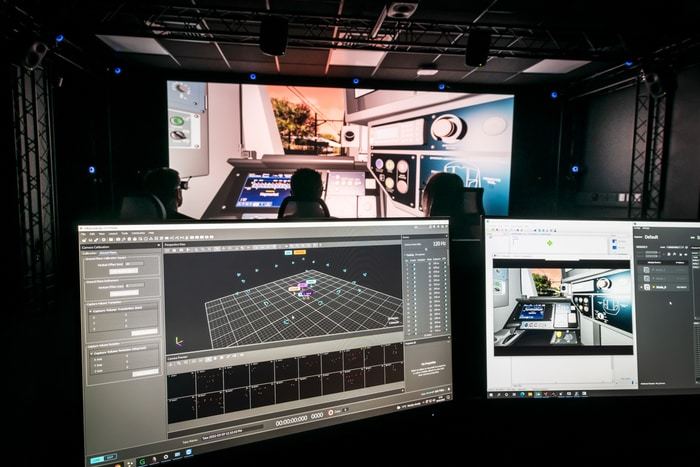
Specialist labs in the DIF include a Mixed Reality Lab containing the latest in VR technology and equipment, an Extreme Environment Lab that simulates real-world hazardous conditions for testing robotics and autonomous systems, and an Immersive Laboratory that focuses on developing sensory technologies in areas of smell and touch for future “Tactile Internet” applications.

The DIF is co-funded by the University of Liverpool and Liverpool City Region Combined Authority’s Local Growth Fund.

The University is a hub for digital research and innovation and Digital is one of its key research themes. In the 2021 Research Excellence Framework, the University’s Engineering research was rated as 6th in the UK for outstanding (4*) impact, and Computer Science and Informatics research were rated as 5th in the UK for world-leading 4* research outputs and 100% of its research environment rated as world-leading (4*) or internationally excellent (3*).

Steve Rotheram, Mayor of the Liverpool City Region, said: “The pandemic accelerated the move towards a more digital world and proved just how important connectivity and technology will increasingly be in all our lives.

“For me, it’s a no-brainer for us to invest in projects that marry intelligent businesses with local research excellence and help develop this into practical and lucrative new applications. Our region is home to world-class clusters of research, development, and innovation. I truly believe that we have all the assets, capabilities – and the political will – to make our region the country’s innovation engine. The Digital Innovation Facility is a perfect example of that in a microcosm.

“It isn’t just a means of generating economic growth for our region either – but a duty we have to our residents to help deliver well-paid jobs and improved public services. This is a £12.7m investment that will help us do just that.”

Professor Dame Janet Beer, Vice-Chancellor of the University of Liverpool said: “The Digital Innovation Facility is an incredible asset, and we know it will have a significant positive impact on the city region and the North of England as a whole. The recent Research Excellence Framework highlighted our strengths and expertise in the areas of computer science, robotics, and engineering and this facility will help businesses and industries access this expertise to lead the way in digital technologies, resulting in further collaborations, inward investment, and economic growth."

Sir Robin Saxby, technology entrepreneur and visiting Professor at the University of Liverpool, said: “I am delighted to be here with local leaders at the opening of the Digital Innovation Facility at the University of Liverpool.  This world-leading facility and team will play a key role in the region’s research and innovation capabilities, facilitating industry and academic collaboration in digital technologies with huge potential and opportunities across many sectors including data analysis, AI, robotics, health care, and climate change. Liverpool's global reach and connectivity will also stimulate what happens here.“

Dr. Andy Levers, Director of the DIF and Executive Director of the Institute for Digital Engineering and Autonomous Systems, said: “Through the DIF we have created a dedicated hub to facilitate access to our world-leading facilities, expertise, and support so that business, industry and other organizations can benefit from the exciting advances in computing, robotics, artificial intelligence, and virtual engineering and maximize the possibilities and impact of these emerging technologies.”

The DIF is a key addition to the science and technology facilities in Liverpool’s Knowledge Quarter.

Planets of binary stars as possible homes for alien life

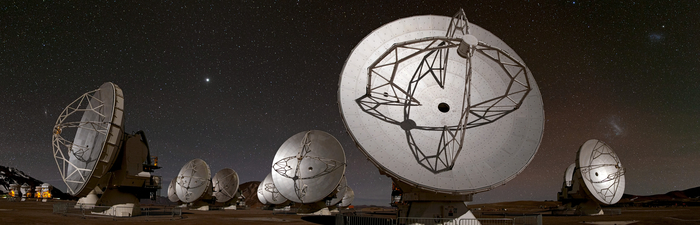
Nearly half of Sun-size stars are binary. According to University of Copenhagen research, planetary systems around binary stars may be very different from those around single stars. This points to new targets in the search for extraterrestrial life forms. ALMA's world at night  CREDIT ESO/B. Tafreshi (twanight.org)

Since the only known planet with life, the Earth, orbits the Sun, planetary systems around stars of similar size are obvious targets for astronomers trying to locate extraterrestrial life. Nearly every second star in that category is a binary star. A new result from research at the University of Copenhagen indicates that planetary systems are formed in a very different way around binary stars than around single stars such as the Sun.

“The result is exciting since the search for extraterrestrial life will be equipped with several new, extremely powerful instruments within the coming years. This enhances the significance of understanding how planets are formed around different types of stars. Such results may pinpoint places which would be especially interesting to probe for the existence of life,” says Professor Jes Kristian Jørgensen, Niels Bohr Institute, University of Copenhagen, heading the project.

Bursts shape the planetary system

The discovery has been made based on observations made by the ALMA telescopes in Chile of a young binary star about 1,000 lightyears from Earth. The binary star system, NGC 1333-IRAS2A, is surrounded by a disc consisting of gas and dust. The observations can only provide researchers with a snapshot from a point in the evolution of the binary star system. However, the team has complemented the observations with supercomputer simulations reaching both backward and forwards in time.

{media id=282,layout=solo}

“The observations allow us to zoom in on the stars and study how dust and gas move towards the disc. The simulations will tell us which physics are at play, and how the stars have evolved up till the snapshot we observe, and their future evolution,” explains Postdoc Rajika L. Kuruwita, Niels Bohr Institute.

Notably, the movement of gas and dust does not follow a continuous pattern. At some points in time – typically for relatively short periods of ten to one hundred years every thousand years – the movement becomes very strong. The binary star becomes ten to one hundred times brighter until it returns to its regular state.

Presumably, the cyclic pattern can be explained by the duality of the binary star. The two stars encircle each other, and at given intervals, their joint gravity will affect the surrounding gas and dust disc in a way that causes huge amounts of material to fall towards the star.

“The falling material will trigger significant heating. The heat will make the star much brighter than usual,” says Rajika L. Kuruwita, adding:

“These bursts will tear the gas and dust disc apart. While the disc will build up again, the bursts may still influence the structure of the later planetary system.”

Comets carry building blocks for life

The observed stellar system is still too young for planets to have formed. The team hopes to obtain more observational time at ALMA, allowing us to investigate the formation of planetary systems.

Not only planets but also comets will be in focus:

“Comets are likely to play a key role in creating possibilities for life to evolve. Comets often have a high content of ice with the presence of organic molecules. It can well be imagined that the organic molecules are preserved in comets during epochs where a planet is barren and that later comet impacts will introduce the molecules to the planet’s surface,” says Jes Kristian Jørgensen.

Understanding the role of the bursts is important in this context:

“The heating caused by the bursts will trigger evaporation of dust grains and the ice surrounding them.  This may alter the chemical composition of the material from which planets are formed.”

Thus, chemistry is a part of the research scope:

“The wavelengths covered by ALMA allow us to see quite complex organic molecules, so molecules with 9-12 atoms and containing carbon. Such molecules can be building blocks for more complex molecules which are key to life as we know it. For example, amino acids which have been found in comets.”

Powerful tools join the search for life in space

ALMA (Atacama Large Millimeter/submillimeter Array) is not a single instrument but 66 telescopes operating in coordination. This allows for a much better resolution than could have been obtained by a single telescope.

Very soon the new James Webb Space Telescope (JWST) will join the search for extraterrestrial life. Near the end of the decade, JWST will be complemented by the ELT (European Large Telescope) and the extremely powerful SKA (Square Kilometer Array) both planned to begin observing in 2027. The ELT will with its 39-meter mirror be the biggest optical telescope in the world and will be poised to observe the atmospheric conditions of exoplanets (planets outside the Solar System, ed.). SKA will consist of thousands of telescopes in South Africa and Australia working in coordination and will have longer wavelengths than ALMA.

”The SKA will allow for observing large organic molecules directly. The James Webb Space Telescope operates in the infrared which is especially well suited for observing molecules in ice. Finally, we continue to have ALMA which is especially well suited for observing molecules in gas form. Combining the different sources will provide a wealth of exciting results,” Jes Kristian Jørgensen concludes.

Jiménez-Osés lab's simulations show additional insights into the SARS-CoV-2 spike protein glycan shield

Never as these past two years manifested the importance of collaborative research in virology and immunology. Readiness of action when such striking pandemic events occur relies on decades of basic knowledge accumulated in time and constant technology development, which rely on stable scientific policies on a global scale. An unprecedented wealth of information has been gathered on SARS-CoV-2 in a very short period mainly focused on the cellular entry process and mechanism of antibody recognition where mainly protein-protein interactions occur. However, the SARS-CoV-2 spike protein is decorated by chains of carbohydrates (sugars) whose identity and flexibility have essential implications for antibody escaping, cellular proteins recognition and so for….

The groups of Dr. Abrescia and Dr. Jiménez-Osés at CIC bioGUNE in Spain, have combined high-resolution cryo-electron microscopy and supercomputer simulations to understand the correlation between sugar identity and flexibility in SARS-CoV-2 spike glycoprotein and published the results in Front Microbiol. on 15th of April 2022Right: glycans showing very conserved geometries around crucial glycosidic bonds near to the protein. Left: Sugars located at the so-called S2 domain which is proximal to the viral membrane  CREDIT Nicola Abrescia, Gonzalo Jiménez Osés. Modified from Frontiers in Microbiology

Rapid and free access to high-end Krios microscopes at eBIC-Diamond LS (UK) by the Abrescia Lab has allowed a 3D reconstruction of the spike protein at 4.1 Å resolution with a minimal number of contributing particles (~23,000) in which the density for the decorating glycans is as clear as other maps at a higher resolution for which hundreds of thousands of particles were necessary.  The most ordered sugars are located in the so-called S2 domain which is proximal to the viral membrane (Fig. 1 left). Chemical variations of those glycans discovered by mass spectrometry were modeled on representative glycosylated amino acids by the Jiménez-Osés lab and showed no significant influence on either protein shielding or glycan flexibility. Mathematical methods were used to compare the cryo-EM density and the time-resolved full-atom supercomputer models. The best fits between the two techniques are characterized by glycans showing very conserved geometries around crucial glycosidic bonds near the protein (Fig. 1 right). Being able to predict glycan behavior is relevant because this S2 location on the spike is also the one mostly conserved across the other human coronavirus and the ideal target for a pan-ligand capable to neutralize the virus after cell entry. This study – also a result of collaborations with Jimenez-Barbero, Millet, and Connell labs - shows that experimental and computational tools combined can provide valuable insights into the conformational preferences of inherently flexible and complex glycoconjugates, advancing the discovery of new drugs able to evade the glycan shield of infectious viral proteins.