Chinese scientists show why meridional heat transport is underestimated

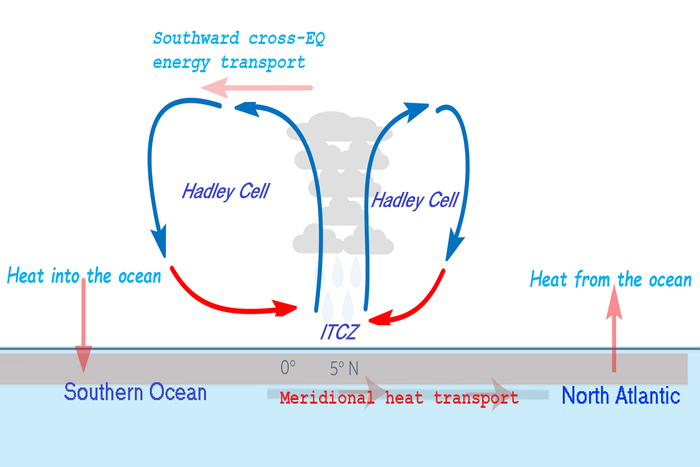
The Atlantic Meridional Overturning Circulation (AMOC) is a phenomenon responsible for transporting ocean heat northward through the Atlantic Ocean. This process significantly influences the Arctic and North Atlantic oceanic climate and the Eurasian continental climate. The corresponding cross-equatorial northward heat transport also determines the location of the Intertropical Convergence Zone (ITCZ), affecting the global energy and rainfall distribution. Changes in ocean net surface heat flux play an important role in modulating the variability of the AMOC and hence the regional and global climate. However, the spread of simulated surface heat fluxes is still large and AMOC underestimation is common, due to poorly represented dynamical processes involving multi-scale interactions within the model simulations. Schematic diagram of the energy flow over the Atlantic.  CREDIT Ning Cao, Chunlei Liu

Recently publishing their work in Advances of Atmospheric Sciences, Prof. Chunlei Liu, South China Sea Institute of Marine Meteorology, Guangdong Ocean University located in Zhanjiang, China, and collaborators from the University of Reading, UK and the University of Cambridge, UK have presented new findings on why heat loss over the North Atlantic is underestimated in state-of-the-art atmospheric climate model supercomputer simulations.

In their study, the DEEPC (Diagnosing Earth's Energy Pathways in the Climate system) dataset is used as the “truth” for comparison. DEEPC dataset is constructed using the energy conservation method mainly by Professor Liu and Professor Allan from the University of Reading. This dataset has been widely used by climatologists within the research community as it provides reasonable agreement regarding inferred oceanic heat transport with the in-situ RAPID (Rapid Climate Change-Meridional Overturning Circulation and Heat flux array) observations in both variability and quantity.

“The heat loss from the AMIP6 ensemble mean north of 26°N in the Atlantic is about 10 watts per square meter less than DEEPC, and the inferred meridional heat transport is about 0.3 petawatts (1 petawatt = 1015 watts) lower than the 1.22 petawatts from RAPID and DEEPC.” said co-author Dr. Ning Cao. “These findings can help the research community more accurately interpret the historical simulations and projections produced by contemporary models.”

After further investigation, the team found that low model horizontal resolution produced discrepancies between simulations. They showed that by increasing the resolution, it is possible to improve surface heat flux simulations north of 26°N and the inferred heat transport at 26°N in the Atlantic.

"Although there are problems in simulations, the climate model still plays an important role in climate change research.” said Professor Liu. "Further work is needed to improve model simulations of surface fluxes, and research to reduce observational flux uncertainty is also ongoing through collaboration with the University of Reading and UK Met Office."

Ahn wins $150K from Air Force for semiconductor research

 The Air Force Research Laboratory’s Minority Leaders Research Collaborative Program (ML-RCP) has awarded a two-year, $150,000 award to Ethan Ahn, an assistant professor of the UTSA Electrical and Computer Engineering Department. Ahn, UTSA’s inaugural recipient of the ML-RCP award, will use the money to fund his research to develop a new class of semiconducting materials for high-temperature applications and to develop the next generation of minority researchers. Ethan Ahn, assistant professor of the UTSA Electrical and Computer Engineering Department, was awarded a two-year $150,000 award from the Air Force Research Laboratory's Minority Leaders Research Collaborative Program (ML-RCP).

The Air Force Research Laboratory ML-RCP fosters partnerships with academia while engaging students from diverse backgrounds in research that supports the nation’s air, space, and cyberspace technology needs. The funding will be particularly impactful at UTSA, a Hispanic Serving Institution (HSI) where 57% of the student population identifies as Hispanic.

“I’m very proud to be the first UTSA recipient of this award,” said Ahn, who is based in the Margie and Bill Klesse College of Engineering and Integrated Design. “And I’m proud of UTSA and the opportunities this will create for students.”

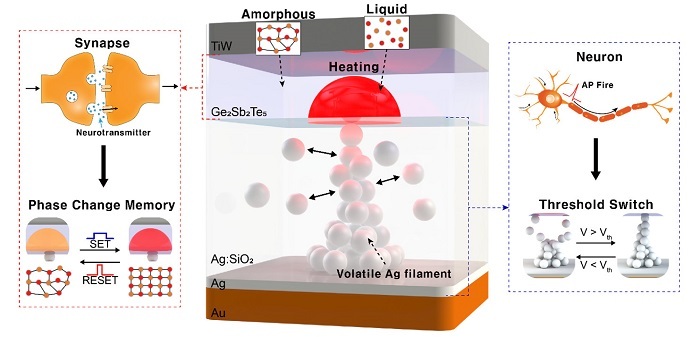
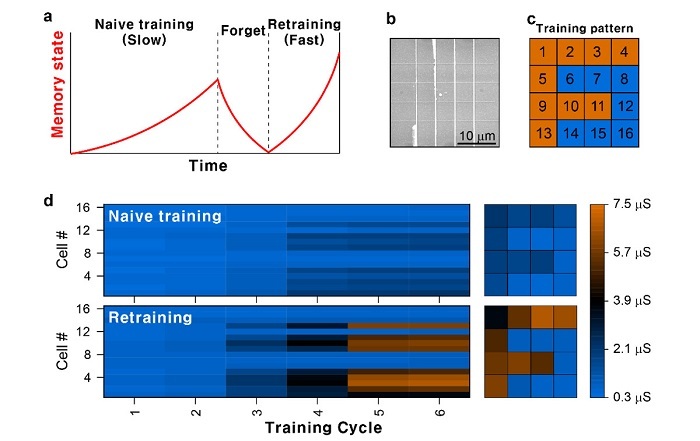
Ahn’s project, “Phase change alloys and memory devices for high-temperature applications,” is focused on enhancing the makeup of semiconducting materials to withstand high temperature and speed applications, such as those used in automobiles and other important sectors of the industry, as well as the military. His work also aims to help mitigate the nationwide semiconductor chip shortage. 

But above all else, he aspires to support minority student researchers through his work. Ahn, who notes two mentors along his journey, wants to serve as an inspiration as well to underrepresented UTSA students interested in establishing careers in the field.

He credits Supriyo Datta, his undergraduate research advisor at Purdue University, for leading him toward the study of nanoelectronics. Ahn’s calling to become a professor was inspired by his doctoral thesis advisor at Stanford University, Philip Wong.

Ahn plans to focus on engaging underrepresented undergraduate, master’s degree-seeking, and doctoral students in his work. The ML-RCP award opens the opportunity for future collaborations with UTSA that will advance this goal.

“That’s the whole point,” Ahn said. “This will help generate the next generation of tech force of minority students.”

According to the Air Force Research Laboratory, the ML-RCP is the single largest Department of the Air Force endeavor with Historically Black Colleges and Universities and Minority-Serving Institutions. UTSA’s recent classification as a Tier One research university and its designation as an HSI places it in a unique position to advance diversity in STEM.

Mann builds models of wildfires in an unprecedented time to insight

With wildfires becoming more robust and more frequent, there is a need to predict when and how the next wildfire might occur.

By examining statistical data on California’s wildfires dating back more than 60 years, Michael Mann, an associate professor of geography at George Washington University, has created a model that can forecast the likelihood of wildfires throughout the state from now until the year 2050. Predictions are based on climate variations, indicators of tree and plant growth, population density, and potential ignition sources within each one-kilometer area. Michael Mann

According to Mann, California makes a great test case for the use of this model because the ecosystems that exist within its borders are representative of what is found in the rest of the country. However, Mann says there has been a shift in the modeling in the last five years.

“Basically, none of the models can ‘keep up’ with wildfire risks caused by the megadrought. It’s truly unprecedented in the historical record we use for modeling. There are all kinds of consequences that ripple through everything from insurance to carbon credits and more.”