

SUPERCOMPUTING NEWS SUPERCOMPUTING NEWS
    • MEDIA KIT
    • MOST READ
    • RSS FEED
    • ACADEMIA
    • AEROSPACE
    • APPLICATIONS
    • ASTRONOMY
    • AUTOMOTIVE
    • BIG DATA
    • BIOLOGY
    • CHEMISTRY
    • CLIENTS
    • CLOUD
    • DEFENSE
    • DEVELOPER TOOLS
    • EARTH SCIENCES
    • ECONOMICS
    • ENGINEERING
    • ENTERTAINMENT
    • GAMING
    • GOVERNMENT
    • HEALTH
    • OIL & GAS
    • INDUSTRY
    • INTERCONNECTS
    • MANUFACTURING
    • MIDDLEWARE
    • MOVIES
    • NETWORKS
    • PHYSICS
    • PROCESSORS
    • RETAIL
    • SCIENCE
    • STORAGE
    • SYSTEMS
    • VISUALIZATION
    • AcyMailing subscription form

    • ADD YOUR VIDEOS
    • MANAGE VIDEOS
    • CONVERSATION INBOX
    • SOCIAL ADVERTISER
    • SOCIAL NETWORK VIDEOS
    • SURVEYS
    • GROUPS
    • PAGES
    • MARKETPLACE LISTINGS
    • APPLICATIONS BROWSER
    • PRIVACY CONFIRM REQUEST
    • PRIVACY CREATE REQUEST
    • LEADERBOARD
    • POINTS LISTING
      • BADGES
    • TRADE SHOWS
Sign In
Tyler O'Neal, Staff Editor ACADEMIA April 20, 2022, 8:00 am

UCR astrophysicist shows why Venus rotates, slowly, despite sun’s powerful grip

The planet’s atmosphere explains the gravity of the situation

If not for the soupy, fast-moving atmosphere on Venus, Earth’s sister planet would likely not rotate. Instead, Venus would be locked in place, always facing the sun the way the same side of the moon always faces Earth. Bright Venus seen near the crescent moon.  CREDIT NASA/Bill Dunford
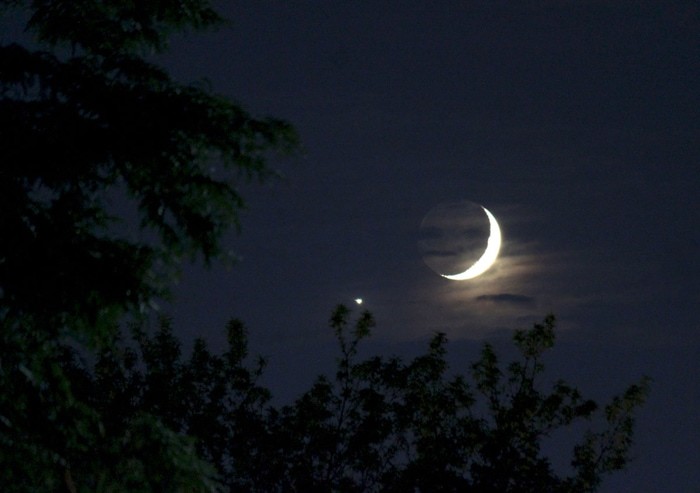
The gravity of a large object in space can keep a smaller object from spinning, a phenomenon called tidal locking. Because it prevents this locking, a UC Riverside scientist argues the atmosphere needs to be a more prominent factor in studies of Venus as well as other planets.

“We think of the atmosphere as a thin, almost separate layer on top of a planet that has minimal interaction with the solid planet,” said Stephen Kane, UCR astrophysicist, and lead researcher. “Venus’ powerful atmosphere teaches us that it’s a much more integrated part of the planet that affects absolutely everything, even how fast the planet rotates.”

Venus takes 243 Earth days to rotate one time, but its atmosphere circulates the planet every four days. Extremely fast winds cause the atmosphere to drag along the surface of the planet as it circulates, slowing its rotation while also loosening the grip of the sun’s gravity.  

Slow rotation in turn has dramatic consequences for the sweltering Venusian climate, with average temperatures of up to 900 degrees Fahrenheit — hot enough to melt lead. 

“It’s incredibly alien, a wildly different experience than being on Earth,” Kane said. “Standing on the surface of Venus would be like standing at the bottom of a very hot ocean. You couldn’t breathe on it.”low-res_d_transit_lineup_full-_d6bc0_2bafc.jpg

One reason for the heat is that nearly all of the sun’s energy absorbed by the planet is soaked up by Venus’ atmosphere, never reaching the surface. This means that a rover with solar panels like the one NASA sent to Mars wouldn’t work. 

The Venusian atmosphere also blocks the sun’s energy from leaving the planet, preventing cooling or liquid water on its surface, a state known as a runaway greenhouse effect. 

It is unclear whether being partially tidally locked contributes to this runaway greenhouse state, a condition that ultimately renders a planet uninhabitable by life as we know it. 

Not only is it important to gain clarity on this question to understand Venus, but it is also important for studying the exoplanets likely to be targeted for future NASA missions. 

Most of the planets likely to be observed with the recently launched James Webb Space Telescope are very close to their stars, even closer than Venus is to the sun. Therefore, they’re also likely to be tidally locked. 

Since humans may never be able to visit exoplanets in person, making sure supercomputer models account for the effects of tidal locking is critical. “Venus is our opportunity to get these models correct, so we can properly understand the surface environments of planets around other stars,” Kane said. 

“We aren’t doing a good job of considering this right now. We’re mostly using Earth-type models to interpret the properties of exoplanets. Venus is waving both arms around saying, ‘look over here!’”

Gaining clarity about the factors that contributed to a runaway greenhouse state on Venus, Earth’s closest planetary neighbor, can also help improve models of what could one day happen to Earth’s climate. 

“Ultimately, my motivation in studying Venus is to better understand the Earth,” Kane said.
Mayo Clinic uses AI to reduce miss rate of precancerous polyps in colorectal cancer screening

Tyler O'Neal, Staff Editor ACADEMIA April 18, 2022, 2:50 pm

Artificial intelligence reduced by twofold the rate at which precancerous polyps were missed in colorectal cancer screening, reported a team of international researchers led by Mayo Clinic. The study is published in Gastroenterology.

Most colon polyps are harmless, but some overtime develop into colon or rectal cancer, which can be fatal if found in its later stages. Colorectal cancer is the second most deadly cancer in the world, with an estimated 1.9 million cases and 916,000 deaths worldwide in 2020, according to the World Health Organization. A colonoscopy is an exam used to detect changes or abnormalities in the large intestine (colon) and rectum.

Between February 2020 and May 2021, 230 study participants each underwent two back-to-back colonoscopies on the same day at eight hospitals and community clinics in the U.S., U.K., and Italy. One colonoscopy used AI; the other, a standard colonoscopy, did not.

The rate at which precancerous colorectal polyps are missed has been estimated to be 25%. In this study, the miss rate was 15.5% in the group that had the AI colonoscopy first. The miss rate was 32.4 % in the group that had standard colonoscopy first. The AI colonoscopy detected more polyps that were smaller, flatter, and in the proximal and distal colon.

 "Colorectal cancer is almost entirely preventable with proper screening," says senior author Michael B. Wallace, M.D., division chair of gastroenterology and hepatology at Sheikh Shakhbout Medical City in Abu Dhabi, United Arab Emirates, and the Fred C. Andersen Professor of Medicine at Mayo Clinic in Jacksonville, Fla. "Using artificial intelligence to detect colon polyps and potentially save lives is welcome and promising news for patients and their families."

In addition, false-negative rates were 6.8% in the group that had the AI colonoscopy first. It was 29.6% in the group that had standard colonoscopy first. A false-negative result indicates that you do not have a particular condition, when in fact you do.

Thompson shows how changes in vegetation shaped global temperatures over last 10,000 years

Tyler O'Neal, Staff Editor ACADEMIA April 15, 2022, 2:01 pm

Follow the pollen. Records from past plant life tell the real story of global temperatures, according to research from a climate scientist at Washington University in St. Louis, Missouri.

Warmer temperatures brought plants — and then came even warmer temperatures, according to new model simulations published April 15 in Science Advances.

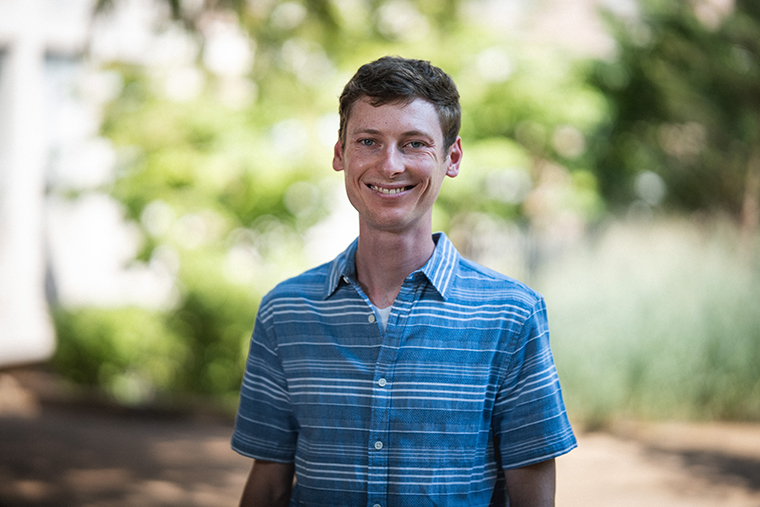
Alexander Thompson, a postdoctoral research associate in earth and planetary sciences in Arts & Sciences, updated simulations from an important climate model to reflect the role of changing vegetation as a key driver of global temperatures over the last 10,000 years. Thompson

Thompson had long been troubled by a problem with models of Earth’s atmospheric temperatures since the last ice age. Too many of these simulations showed temperatures warming consistently over time.

But climate proxy records tell a different story. Many of those sources indicate a marked peak in global temperatures that occurred between 6,000 and 9,000 years ago.

Thompson had a hunch that the models could be overlooking the role of changes in vegetation in favor of impacts from atmospheric carbon dioxide concentrations or ice cover.

“Pollen records suggest a large expansion of vegetation during that time,” Thompson said.

“But previous models only show a limited amount of vegetation growth,” he said. “So, even though some of these other simulations have included dynamic vegetation, it wasn’t nearly enough of a vegetation shift to account for what the pollen records suggest.”

In reality, the changes to vegetative cover were significant.

Early in the Holocene, the current geological epoch, the Sahara Desert in Africa grew greener than today — it was more of a grassland. Other Northern Hemisphere vegetation including the coniferous and deciduous forests in the mid-latitudes and the Arctic also thrived.

Thompson took evidence from pollen records and designed a set of experiments with a climate model known as the Community Earth System Model (CESM), one of the best-regarded models in a wide-ranging class of such models. He ran simulations to account for a range of changes in vegetation that had not been previously considered.

“Expanded vegetation during the Holocene warmed the globe by as much as 1.5 degrees Fahrenheit,” Thompson said. “Our new simulations align closely with paleoclimate proxies. So this is exciting that we can point to Northern Hemisphere vegetation as one potential factor that allows us to resolve the controversial Holocene temperature conundrum.”

Understanding the scale and timing of temperature change throughout the Holocene is important because it is a period of recent history, geologically speaking. The rise of human agriculture and civilization occurred during this time, so many scientists and historians from different disciplines are interested in understanding how early and mid-Holocene climates differed from the present day.

Thompson conducted this research work as a graduate student at the University of Michigan. He is continuing his research in the laboratory of climate scientist Bronwen Konecky at Washington University.

“Overall, our study emphasizes that accounting for vegetation change is critical,” Thompson said. “Projections for future climate change are more likely to produce more trustworthy predictions if they include changes in vegetation.”

  1. Birmingham University’s BlueBEAR predicts pollution from cooking emissions
  2. DAWN discovers a dusty compact object bridging galaxies, quasars at cosmic dawn

Page 69 of 123

  • 64
  • 65
  • 66
  • 67
  • 68
  • 69
  • 70
  • 71
  • 72
  • 73
POPULAR RIGHT NOW
  • Supercomputers uncover a new class of cosmic explosions hidden in plain sight
    Supercomputers uncover a new class of cosmic explosions hidden in plain sight
  • AI supercharges the hunt for stronger magnets: Iowa State researchers launch a new era of intelligent materials discovery
    AI supercharges the hunt for stronger magnets: Iowa State researchers launch a new era of intelligent materials discovery
  • IBM's Historic stock collapse raises questions for the future of enterprise supercomputing
    IBM's Historic stock collapse raises questions for the future of enterprise supercomputing
  • Could a novel dark matter theory simultaneously resolve multiple cosmic enigmas? Supercomputer simulations provide a compelling, albeit currently unverified, potential solution
    Could a novel dark matter theory simultaneously resolve multiple cosmic enigmas? Supercomputer simulations provide a compelling, albeit currently unverified, potential solution
  • Melting icebergs may be reshaping Earth’s greatest ocean current
    Melting icebergs may be reshaping Earth’s greatest ocean current
  • Supercomputers replace ‘bathtub’ flood maps with physics-based digital twins of Britain’s coastline
    Supercomputers replace ‘bathtub’ flood maps with physics-based digital twins of Britain’s coastline
  • Supercomputers push neural quantum simulation beyond previous limits
    Supercomputers push neural quantum simulation beyond previous limits
  • Intel’s AI supercomputing revival: Q2 financial surge signals new era for CPU-powered HPC infrastructure
    Intel’s AI supercomputing revival: Q2 financial surge signals new era for CPU-powered HPC infrastructure
  • AI infrastructure financing fears shake semiconductor sector
    AI infrastructure financing fears shake semiconductor sector
  • AWS supercomputing investment reaches historic scale as Amazon’s AI strategy powers record financial results
    AWS supercomputing investment reaches historic scale as Amazon’s AI strategy powers record financial results
THIS YEAR'S MOST READ
  • Wall Street wants to trade supercomputing power like oil
    Wall Street wants to trade supercomputing power like oil
  • Cosmic ambition at scale: UK’s supercomputer unlocks a 2.5 petabytes universe
    Cosmic ambition at scale: UK’s supercomputer unlocks a 2.5 petabytes universe
  • Hidden order, revealed at scale: Supercomputing, electron ptychography uncover the inner workings of relaxor ferroelectrics
    Hidden order, revealed at scale: Supercomputing, electron ptychography uncover the inner workings of relaxor ferroelectrics
  • Beamforming the future: BeammWave's 6G push signals the rise of orbital-terrestrial wireless networks
    Joakim Axmon
    Joakim Axmon
  • Intel's Q1 results signal supercomputing surge driving Xeon momentum
    Intel's Q1 results signal supercomputing surge driving Xeon momentum
  • When stars fall apart: Supercomputing reveals the hidden physics of black holes
    When stars fall apart: Supercomputing reveals the hidden physics of black holes
  • Multi-layer simulations reveal the hidden supply chain of solar prominences
    Multi-layer simulations reveal the hidden supply chain of solar prominences
  • Japanese scientists decode dolphin speed with supercomputing: Turbulence, vortices, and the hidden physics of propulsion
    Japanese scientists decode dolphin speed with supercomputing: Turbulence, vortices, and the hidden physics of propulsion
  • Cosmic feedback at scale: Supercomputing reveals how quasars regulate the early Universe
    Cosmic feedback at scale: Supercomputing reveals how quasars regulate the early Universe
  • Modeling life at the microscopic scale: A computational breakthrough in oxygen transport
    Modeling life at the microscopic scale: A computational breakthrough in oxygen transport
MOST READ OF ALL-TIME
  • Largest Computational Biology Simulation Mimics The Ribosome
    Details
    112108
    The amino acid (green) slithers into the chemical reaction center, moving through an evolutionarily ancient corridor of the ribosome (purple). The amino acid is delivered to the reaction core by the transfer RNA molecule (yellow).
    The amino acid (green) slithers into the chemical reaction center, moving through an evolutionarily ancient corridor of the ribosome (purple). The amino acid is delivered to the reaction core by the transfer RNA molecule (yellow).
  • Silicon 'neurons' may add a new dimension to chips
    Details
    80995
    Silicon 'neurons' may add a new dimension to chips
  • Linux Networx Accelerators Expected to Drive up to 4x Price/Performance
    Details
    75539
  • Complex Concepts That Really Add Up
    Details
    73640
    Complex Concepts That Really Add Up
  • Blue Sky Studios Donates Animation SuperComputer to Wesleyan
    Details
    68141
    Each rack holds 52 Angstrom Microsystem-brand “blades,” with a memory footprint of 12 or 24 gigabytes each. (Photos by Olivia Bartlett Drake)
    Each rack holds 52 Angstrom Microsystem-brand “blades,” with a memory footprint of 12 or 24 gigabytes each. (Photos by Olivia Bartlett Drake)
  • Humanities, HPC connect at NERSC
    Details
    57948
  • TeraGrid ’09 'Call for Participation'
    Details
    54952
  • Turbulence responsible for black holes' balancing act
    Details
    52313
  • Cray Wins $52 Million SuperComputer Contract
    Details
    50141
  • SDSC Researchers Accurately Predict Protein Docking
    Details
    46082
  • FRONTPAGE
  • LATEST
  • POPULAR
  • REGISTER
  • SOCIAL
  • VIDEO
  • SUBSCRIPTION
  • RSS
  • GUIDELINES
  • PRIVACY
  • TOS
  • ABOUT
  • +1 (816) 799-4488
  • editorial@supercomputingonline.com
© 2001 - 2026 SuperComputingOnline.com, LLC. All rights reserved. This material may not be published, broadcast, rewritten or redistributed without permission.
Sign In
  • FRONT PAGE
  • LATEST
    • MEDIA KIT
    • MOST READ
    • RSS FEED
    • ACADEMIA
    • AEROSPACE
    • APPLICATIONS
    • ASTRONOMY
    • AUTOMOTIVE
    • BIG DATA
    • BIOLOGY
    • CHEMISTRY
    • CLIENTS
    • CLOUD
    • DEFENSE
    • DEVELOPER TOOLS
    • EARTH SCIENCES
    • ECONOMICS
    • ENGINEERING
    • ENTERTAINMENT
    • HEALTH
    • INDUSTRY
    • INTERCONNECTS
    • GAMING
    • GOVERNMENT
    • MANUFACTURING
    • MIDDLEWARE
    • MOVIES
    • NETWORKS
    • OIL & GAS
    • PHYSICS
    • PROCESSORS
    • RETAIL
    • SCIENCE
    • STORAGE
    • SYSTEMS
    • VISUALIZATION
  • VIDEOS
    • ADD YOUR VIDEOS
    • MANAGE VIDEOS
  • COMMUNITY
    • TRADE SHOWS
    • SOCIAL NETWORK VIDEOS
    • SURVEYS
    • APPLICATIONS BROWSER
    • CONVERSATION INBOX
    • SOCIAL ADVERTISER
    • GROUPS
    • MARKETPLACE LISTINGS
    • PAGES
    • LEADERBOARD
    • POINTS LISTING
      • BADGES
    • PRIVACY CONFIRM REQUEST
    • PRIVACY CREATE REQUEST

Hey there! We noticed you’re using an ad blocker.