


SUPERCOMPUTING NEWS SUPERCOMPUTING NEWS
    • MEDIA KIT
    • MOST READ
    • RSS FEED
    • ACADEMIA
    • AEROSPACE
    • APPLICATIONS
    • ASTRONOMY
    • AUTOMOTIVE
    • BIG DATA
    • BIOLOGY
    • CHEMISTRY
    • CLIENTS
    • CLOUD
    • DEFENSE
    • DEVELOPER TOOLS
    • EARTH SCIENCES
    • ECONOMICS
    • ENGINEERING
    • ENTERTAINMENT
    • GAMING
    • GOVERNMENT
    • HEALTH
    • OIL & GAS
    • INDUSTRY
    • INTERCONNECTS
    • MANUFACTURING
    • MIDDLEWARE
    • MOVIES
    • NETWORKS
    • PHYSICS
    • PROCESSORS
    • RETAIL
    • SCIENCE
    • STORAGE
    • SYSTEMS
    • VISUALIZATION
    • AcyMailing subscription form

    • ADD YOUR VIDEOS
    • MANAGE VIDEOS
    • CONVERSATION INBOX
    • SOCIAL ADVERTISER
    • SOCIAL NETWORK VIDEOS
    • SURVEYS
    • GROUPS
    • PAGES
    • MARKETPLACE LISTINGS
    • APPLICATIONS BROWSER
    • PRIVACY CONFIRM REQUEST
    • PRIVACY CREATE REQUEST
    • LEADERBOARD
    • POINTS LISTING
      • BADGES
    • TRADE SHOWS
Sign In
Machine learning models teach themselves, but have limits
Tyler O'Neal, Staff Editor ACADEMIA January 19, 2024, 8:00 am

Machine learning models teach themselves, but have limits

Scientists at Duke University have made impressive strides in the field of machine learning through their development of a technique called yoked learning. By pairing two machine learning models—one that gathers data and another that analyzes it—researchers believe they can improve the effectiveness of machine learning models. This new technique could potentially make it easier for researchers to use machine learning algorithms in the search for new therapeutics or other materials.

The proposed method, dubbed YoDeL, leverages yoked learning to combine a deep neural network model with an active machine learning algorithm acting as the teacher that guides the data acquisition for the deep neural network 'student'. This technique is meant to overcome the limitations of active machine learning when it is applied to more complex deep neural networks. However, skeptical experts in the field warn that even YoDeL has its own limitations, and caution against overly optimistic projections.

While traditional machine learning models use a dataset to make predictions—a method that is often effective—these models come with limitations. They are bound by the datasets used to train them, which may often lack key information, introducing bias that can affect their accuracy. Although active machine learning is highly effective for machine learning models, applying this technique to more complex deep neural networks remains a challenge. These deep learning models require far more data and supercomputing power than is often available, limiting their accuracy and efficacy.

Furthermore, deep neural networks can learn molecular characteristics without human intervention, making them useful for applications in molecular machine learning. But even these models require large datasets to train on, and incorporating active learning into these models is difficult because it requires retraining of the system each time it gathers a new datapoint, which is practically infeasible.

Despite the mixed reviews on YoDeL, its speed, which takes only a few minutes to complete when deep active learning takes hours or even days, makes it worth watching. As Daniel Reker, assistant professor of biomedical engineering says, the YoDeL's ability to harness the strengths of classical machine learning models to enhance the efficacy of deep neural networks is an exciting tool in a field that is always evolving. At the same time, experts call for the thorough examination of YoDeL to accurately evaluate the technique's effectiveness in practical applications.
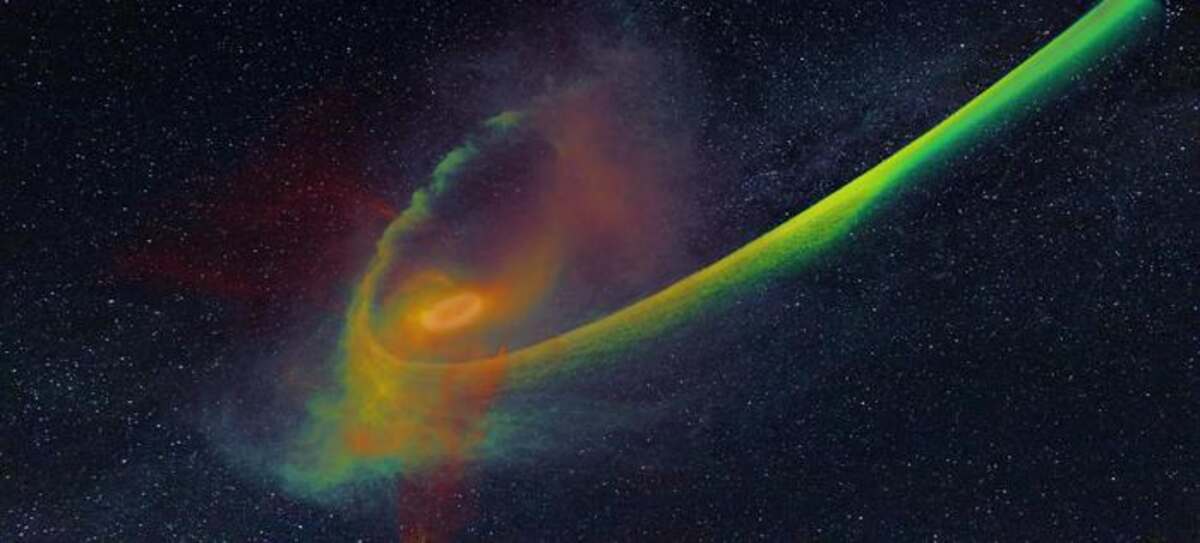
In the image provided, we can see a star that is currently in the process of being disrupted by a supermassive black hole. As the star passes by the black hole, the tidal force of the black hole tears apart the star. This results in half of the star being flung away into space while the other half falls back towards the black hole. The simulation carried out by Steinberg and Stone shows the density of the infalling half in green-blue color, as well as the heat generated by the shocks in white-red color. The original image and research are credited to Elad Steinberg.

Unleashing the power of supercomputer simulations to shed light on the mysteries of supermassive black holes

Tyler O'Neal, Staff Editor ACADEMIA January 17, 2024, 1:00 pm

A new study conducted by Hebrew University provides ground-breaking insights into Tidal Disruption Events

The enigmatic nature of supermassive black holes has fascinated astronomers for years, as they offer a glimpse into the depths of our universe. A recent study conducted by Dr. Elad Steinberg and Dr. Nicholas C. Stone at the Racah Institute of Physics, The Hebrew University, Jerusalem, Israel, has revealed new insights into these cosmic giants through the use of supercomputer simulations.

Supermassive black holes, which can weigh millions to billions of times that of our Sun, remain incomprehensible, despite their central role in shaping galaxies. The immense gravity they generate warps the fabric of spacetime, creating an environment that defies our understanding, and presents a challenge for observational astronomers.

Tidal Disruption Events (TDEs) are dramatic phenomena that occur when unlucky stars get too close to a black hole's event horizon, only to be ripped apart into thin streams of plasma. As this plasma returns towards the black hole, a series of shockwaves heat it, which results in an extraordinary display of luminosity—a flare that exceeds the collective brightness of an entire galaxy for weeks or even months.

Dr. Steinberg and Dr. Stone's study represents a significant advancement in unraveling the mysteries of these cosmic events. Their groundbreaking work meticulously recreates a realistic TDE, capturing the entire sequence from the initial disruption of the star to the pinnacle of the ensuing luminous flare. This achievement is made possible by pioneering radiation-hydrodynamics simulation software developed by Dr. Steinberg at The Hebrew University.

Their research has revealed an unexplored type of shockwave within TDEs, which dissipates energy at a faster rate than previously thought. By shedding light on this aspect, the study resolves a longstanding theoretical debate and confirms that the brightest phases of a TDE flare are powered by shock dissipation.

The implications of these findings are profound. They pave the way for precise measurements of crucial black hole properties, such as mass and spin, and serve as a litmus test for validating Einstein's predictions in extreme gravitational environments. TDE observations hold tremendous potential, enabling scientists to decode the fundamental workings of supermassive black holes and unlock the celestial mysteries that lie at the heart of galaxies.

This remarkable research highlights the transformative power of supercomputer simulations in deciphering the secrets of the universe. Dr. Steinberg and Dr. Stone's simulations represent a significant milestone in our quest to unravel the intricate dynamics of TDEs and comprehend the fundamental workings of supermassive black holes.

As we delve deeper into the mysteries of the cosmos, it is crucial to embrace diverse perspectives and collaborative efforts. The Hebrew University's study exemplifies the power of teamwork and innovation in unraveling the complexities of our universe. By leveraging the computational capabilities of supercomputers, scientists from different backgrounds can synergize their expertise, revolutionizing our understanding of the cosmos.

As we celebrate this remarkable achievement, let us be inspired by the vast possibilities that lie ahead. The journey of exploration continues, with supercomputer simulations serving as our guiding light, illuminating the darkest corners of the cosmos and kindling the sparks of inspiration for future generations of astronomers and researchers.

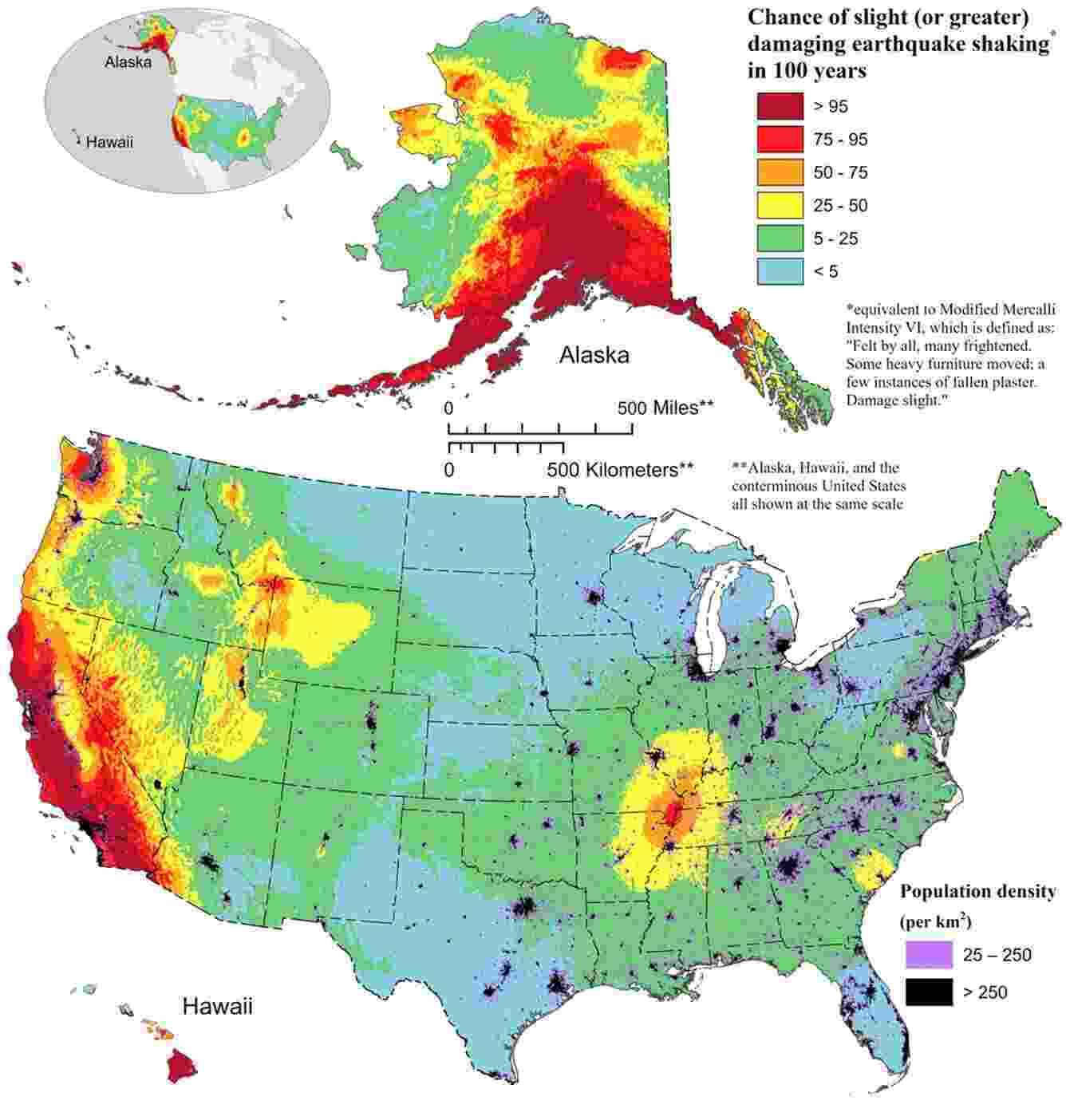
National Seismic Hazard Model (2023). Map displays the likelihood of damaging earthquake shaking in the United States over the next 100 years.

Advanced computational modeling reveals high-risk earthquake zones across the United States

Tyler O'Neal, Staff Editor ACADEMIA January 16, 2024, 7:00 am

USGS Map Employs Cutting-Edge Technology to Identify Areas Prone to Damaging Earthquakes

In Golden, Colorado, the United States Geological Survey (USGS) has unveiled an updated National Seismic Hazard Model (NSHM) that employs advanced computational advancements to identify regions most likely to experience damaging earthquakes. This state-of-the-art map, created through multi-year collaborative efforts involving over 50 scientists and engineers, has the potential to revolutionize earthquake research and significantly enhance public safety across the United States.

The NSHM integrates seismic studies, historical geologic data, and cutting-edge data-collection technologies to provide essential insights into earthquake-prone areas, likely earthquake locations, and projected levels of ground shaking. Equipped with computational advancements, this comprehensive model offers the most detailed and accurate assessment of earthquake risks ever conducted in the country.

Mark Petersen, a USGS geophysicist and the lead author of the study, emphasized the significance of this breakthrough, stating, "This new seismic hazard model represents a touchstone achievement for enhancing public safety." The model serves as a critical tool for engineers and policymakers in identifying vulnerable communities and developing strategies to mitigate the impacts of earthquakes.

One notable aspect of the updated NSHM is its coverage of all 50 states simultaneously, making it the first national seismic hazard model to adopt a unified approach. By incorporating data from federal, state, and local partners, this collaborative effort ensures that comprehensive insights are provided for even the most geologically diverse regions of the United States.

The utilization of advanced computational modeling techniques has significantly enhanced the accuracies of the NSHM. Through years of research, scientists have incorporated critical improvements, including the inclusion of more fault data, better characterization of land surfaces, and the application of state-of-the-art modeling capabilities. These advancements have allowed for a more nuanced understanding of earthquake risks, providing architects, engineers, and policymakers with essential insights for designing and constructing structures that can withstand seismic events.

The updated model has produced key findings that shed light on earthquake risks across the country. According to the NSHM, nearly 75% of the United States has the potential to experience damaging earthquakes and intense ground shaking—placing hundreds of millions of people at risk. The model also reveals that 37 states have seen earthquakes exceeding magnitude 5 in the last two centuries, underlining the historical seismic activity experienced throughout the nation.

Moreover, significant variations have been identified in risk zones. The central and northeastern Atlantic Coastal corridor, including cities such as Washington D.C., Philadelphia, New York, and Boston, face a heightened risk of more damaging earthquakes. Similarly, seismically active regions of California and Alaska are also marked as areas with increased potential for intense shaking. The NSHM also recognizes the evolving hazards in Hawaii, taking into account recent volcanic eruptions and seismic unrest on the islands.

However, it is important to note that the NSHM does not predict earthquakes. Rather, it enhances our understanding of fault behavior and past seismic events, helping scientists assess the likelihood and intensity of future earthquakes.

The full findings of this scientific assessment, published in the journal Earthquake Spectra, provide an in-depth understanding of the methodology and results of the NSHM. The map aims to serve as a crucial resource for policymakers, architects, engineers, and other stakeholders involved in public safety and structural design.

As the nation grapples with the constant threat of earthquakes, the USGS's advanced computational modeling presents an invaluable resource. By integrating diverse perspectives from the scientific community and leveraging cutting-edge technology, the NSHM brings us one step closer to safeguarding lives and adapting infrastructure to withstand the tremors that lie ahead.

  1. Bold claims raise skepticism over utilizing waste supercomputer heat for home heating
  2. Cancer drug discovery accelerated as hundreds of overlooked targets prioritized

Page 11 of 123

  • 6
  • 7
  • 8
  • 9
  • 10
  • 11
  • 12
  • 13
  • 14
  • 15
POPULAR RIGHT NOW
  • Supercomputers uncover a new class of cosmic explosions hidden in plain sight
    Supercomputers uncover a new class of cosmic explosions hidden in plain sight
  • AI supercharges the hunt for stronger magnets: Iowa State researchers launch a new era of intelligent materials discovery
    AI supercharges the hunt for stronger magnets: Iowa State researchers launch a new era of intelligent materials discovery
  • IBM's Historic stock collapse raises questions for the future of enterprise supercomputing
    IBM's Historic stock collapse raises questions for the future of enterprise supercomputing
  • Could a novel dark matter theory simultaneously resolve multiple cosmic enigmas? Supercomputer simulations provide a compelling, albeit currently unverified, potential solution
    Could a novel dark matter theory simultaneously resolve multiple cosmic enigmas? Supercomputer simulations provide a compelling, albeit currently unverified, potential solution
  • Melting icebergs may be reshaping Earth’s greatest ocean current
    Melting icebergs may be reshaping Earth’s greatest ocean current
  • Supercomputers replace ‘bathtub’ flood maps with physics-based digital twins of Britain’s coastline
    Supercomputers replace ‘bathtub’ flood maps with physics-based digital twins of Britain’s coastline
  • Supercomputers push neural quantum simulation beyond previous limits
    Supercomputers push neural quantum simulation beyond previous limits
  • Intel’s AI supercomputing revival: Q2 financial surge signals new era for CPU-powered HPC infrastructure
    Intel’s AI supercomputing revival: Q2 financial surge signals new era for CPU-powered HPC infrastructure
  • AI infrastructure financing fears shake semiconductor sector
    AI infrastructure financing fears shake semiconductor sector
  • AWS supercomputing investment reaches historic scale as Amazon’s AI strategy powers record financial results
    AWS supercomputing investment reaches historic scale as Amazon’s AI strategy powers record financial results
THIS YEAR'S MOST READ
  • Wall Street wants to trade supercomputing power like oil
    Wall Street wants to trade supercomputing power like oil
  • Cosmic ambition at scale: UK’s supercomputer unlocks a 2.5 petabytes universe
    Cosmic ambition at scale: UK’s supercomputer unlocks a 2.5 petabytes universe
  • Hidden order, revealed at scale: Supercomputing, electron ptychography uncover the inner workings of relaxor ferroelectrics
    Hidden order, revealed at scale: Supercomputing, electron ptychography uncover the inner workings of relaxor ferroelectrics
  • Beamforming the future: BeammWave's 6G push signals the rise of orbital-terrestrial wireless networks
    Joakim Axmon
    Joakim Axmon
  • Intel's Q1 results signal supercomputing surge driving Xeon momentum
    Intel's Q1 results signal supercomputing surge driving Xeon momentum
  • When stars fall apart: Supercomputing reveals the hidden physics of black holes
    When stars fall apart: Supercomputing reveals the hidden physics of black holes
  • Multi-layer simulations reveal the hidden supply chain of solar prominences
    Multi-layer simulations reveal the hidden supply chain of solar prominences
  • Japanese scientists decode dolphin speed with supercomputing: Turbulence, vortices, and the hidden physics of propulsion
    Japanese scientists decode dolphin speed with supercomputing: Turbulence, vortices, and the hidden physics of propulsion
  • Cosmic feedback at scale: Supercomputing reveals how quasars regulate the early Universe
    Cosmic feedback at scale: Supercomputing reveals how quasars regulate the early Universe
  • Modeling life at the microscopic scale: A computational breakthrough in oxygen transport
    Modeling life at the microscopic scale: A computational breakthrough in oxygen transport
MOST READ OF ALL-TIME
  • Largest Computational Biology Simulation Mimics The Ribosome
    Details
    112107
    The amino acid (green) slithers into the chemical reaction center, moving through an evolutionarily ancient corridor of the ribosome (purple). The amino acid is delivered to the reaction core by the transfer RNA molecule (yellow).
    The amino acid (green) slithers into the chemical reaction center, moving through an evolutionarily ancient corridor of the ribosome (purple). The amino acid is delivered to the reaction core by the transfer RNA molecule (yellow).
  • Silicon 'neurons' may add a new dimension to chips
    Details
    80990
    Silicon 'neurons' may add a new dimension to chips
  • Linux Networx Accelerators Expected to Drive up to 4x Price/Performance
    Details
    75537
  • Complex Concepts That Really Add Up
    Details
    73635
    Complex Concepts That Really Add Up
  • Blue Sky Studios Donates Animation SuperComputer to Wesleyan
    Details
    68140
    Each rack holds 52 Angstrom Microsystem-brand “blades,” with a memory footprint of 12 or 24 gigabytes each. (Photos by Olivia Bartlett Drake)
    Each rack holds 52 Angstrom Microsystem-brand “blades,” with a memory footprint of 12 or 24 gigabytes each. (Photos by Olivia Bartlett Drake)
  • Humanities, HPC connect at NERSC
    Details
    57945
  • TeraGrid ’09 'Call for Participation'
    Details
    54951
  • Turbulence responsible for black holes' balancing act
    Details
    52310
  • Cray Wins $52 Million SuperComputer Contract
    Details
    50139
  • SDSC Researchers Accurately Predict Protein Docking
    Details
    46078
  • FRONTPAGE
  • LATEST
  • POPULAR
  • REGISTER
  • SOCIAL
  • VIDEO
  • SUBSCRIPTION
  • RSS
  • GUIDELINES
  • PRIVACY
  • TOS
  • ABOUT
  • +1 (816) 799-4488
  • editorial@supercomputingonline.com
© 2001 - 2026 SuperComputingOnline.com, LLC. All rights reserved. This material may not be published, broadcast, rewritten or redistributed without permission.
Sign In
  • FRONT PAGE
  • LATEST
    • MEDIA KIT
    • MOST READ
    • RSS FEED
    • ACADEMIA
    • AEROSPACE
    • APPLICATIONS
    • ASTRONOMY
    • AUTOMOTIVE
    • BIG DATA
    • BIOLOGY
    • CHEMISTRY
    • CLIENTS
    • CLOUD
    • DEFENSE
    • DEVELOPER TOOLS
    • EARTH SCIENCES
    • ECONOMICS
    • ENGINEERING
    • ENTERTAINMENT
    • HEALTH
    • INDUSTRY
    • INTERCONNECTS
    • GAMING
    • GOVERNMENT
    • MANUFACTURING
    • MIDDLEWARE
    • MOVIES
    • NETWORKS
    • OIL & GAS
    • PHYSICS
    • PROCESSORS
    • RETAIL
    • SCIENCE
    • STORAGE
    • SYSTEMS
    • VISUALIZATION
  • VIDEOS
    • ADD YOUR VIDEOS
    • MANAGE VIDEOS
  • COMMUNITY
    • TRADE SHOWS
    • SOCIAL NETWORK VIDEOS
    • SURVEYS
    • APPLICATIONS BROWSER
    • CONVERSATION INBOX
    • SOCIAL ADVERTISER
    • GROUPS
    • MARKETPLACE LISTINGS
    • PAGES
    • LEADERBOARD
    • POINTS LISTING
      • BADGES
    • PRIVACY CONFIRM REQUEST
    • PRIVACY CREATE REQUEST

Hey there! We noticed you’re using an ad blocker.