SUPERCOMPUTING NEWS SUPERCOMPUTING NEWS
    • MEDIA KIT
    • MOST READ
    • RSS FEED
    • ACADEMIA
    • AEROSPACE
    • APPLICATIONS
    • ASTRONOMY
    • AUTOMOTIVE
    • BIG DATA
    • BIOLOGY
    • CHEMISTRY
    • CLIENTS
    • CLOUD
    • DEFENSE
    • DEVELOPER TOOLS
    • EARTH SCIENCES
    • ECONOMICS
    • ENGINEERING
    • ENTERTAINMENT
    • GAMING
    • GOVERNMENT
    • HEALTH
    • OIL & GAS
    • INDUSTRY
    • INTERCONNECTS
    • MANUFACTURING
    • MIDDLEWARE
    • MOVIES
    • NETWORKS
    • PHYSICS
    • PROCESSORS
    • RETAIL
    • SCIENCE
    • STORAGE
    • SYSTEMS
    • VISUALIZATION
    • AcyMailing subscription form

    • ADD YOUR VIDEOS
    • MANAGE VIDEOS
    • CONVERSATION INBOX
    • SOCIAL ADVERTISER
    • SOCIAL NETWORK VIDEOS
    • SURVEYS
    • GROUPS
    • PAGES
    • MARKETPLACE LISTINGS
    • APPLICATIONS BROWSER
    • PRIVACY CONFIRM REQUEST
    • PRIVACY CREATE REQUEST
    • LEADERBOARD
    • POINTS LISTING
      • BADGES
    • TRADE SHOWS
Sign In
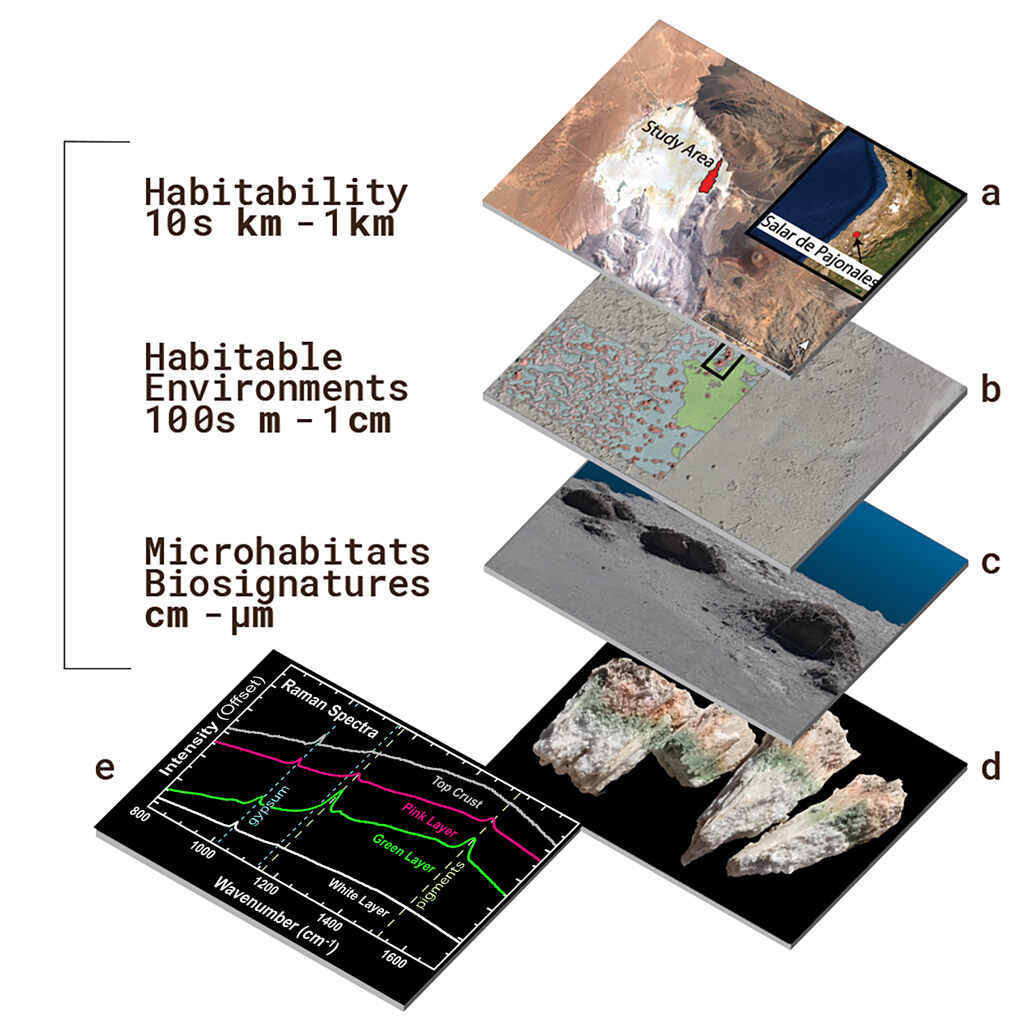
Orbit-to-Ground study of biosignatures in the terrestrial Mars analog study site Salar de Pajonales, Chile. (b) drone view of the site with macroscale geologic features (domes, aeolian cover, ridge networks and patterned ground) in false color. (c) 3-D rendering of dome macrohabitats from drone imagery. (d) Orange and green bands of pigments of the photosynthetic microbial communities living in Ca-sulfate micro-habitats. These biosignatures are a feature of NASA’s Ladder of Life Detection and are detectable by eye and by instruments such as Raman (e) and Visible Short-Wave Infrared spectroscopy. Image credit: N. Cabrol, M. Phillips, K. Warren-Rhodes, J. Bishop and D. Wettergreen.
Tyler O'Neal, Staff Editor ACADEMIA March 8, 2023, 7:00 am

SETI Institute’s NAI team paves the way for machine learning to assist scientists in the search for biosignatures in the Universe

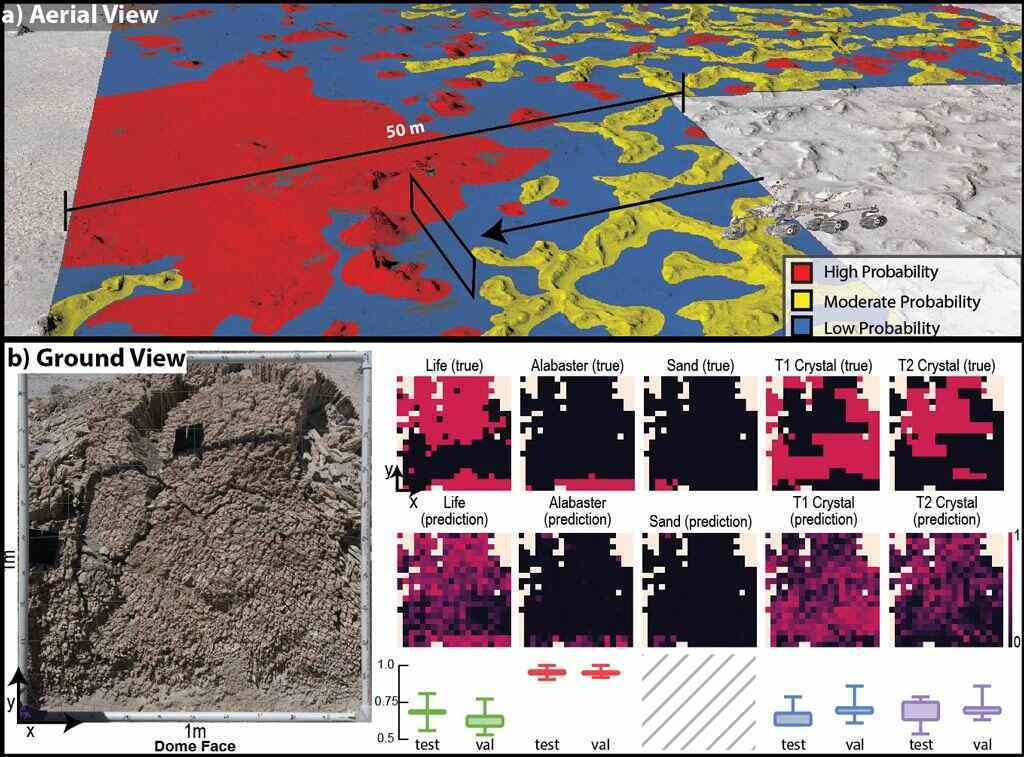
Wouldn’t finding life on other worlds be easier if we knew exactly where to look? Researchers have limited opportunities to collect samples on Mars or elsewhere or access remote sensing instruments when hunting for life beyond Earth. An interdisciplinary study led by SETI Institute Senior Research Scientist Kim Warren-Rhodes mapped the sparse life hidden away in salt domes, rocks, and crystals at Salar de Pajonales at the boundary of the Chilean Atacama Desert and Altiplano. Warren-Rhodes then worked with co-investigators Michael Phillips (Johns Hopkins Applied Physics Lab) and Freddie Kalaitzis (University of Oxford) to train a machine learning model to recognize the patterns and rules associated with their distributions so it could learn to predict and find those same distributions in data on which it was not trained. In this case, by combining statistical ecology with AI/ML, the scientists could locate and detect biosignatures up to 87.5% of the time (versus ≤10% by random search) and decrease the area needed for search by up to 97%. Biosignature probability maps from CNN models and statistical ecology data. The colors in a) indicate the probability of biosignature detection. In b) a visible image of a gypsum dome geologic feature (left) with biosignature probability maps for various microhabitats (e.g., sand versus alabaster) within it. Figure credit: M. Phillips, F. Kalaitzis, K. Warren- Rhodes.
“Our framework allows us to combine the power of statistical ecology with machine learning to discover and predict the patterns and rules by which nature survives and distributes itself in the harshest landscapes on Earth.,” said Rhodes. “We hope other astrobiology teams adapt our approach to mapping other habitable environments and biosignatures. With these models, we can design tailor-made roadmaps and algorithms to guide rovers to places with the highest probability of harboring past or present life—no matter how hidden or rare.”

Ultimately, similar algorithms and machine learning models for many different types of habitable environments and biosignatures could be automated onboard planetary robots to efficiently guide mission planners to areas at any scale with the highest probability of containing life.

Rhodes and the SETI Institute NASA Astrobiology Institute (NAI) team used the Salar de Pajonales, as a Mars analog. Pajonales is a high altitude (3,541 m), high U/V, hyperarid, dry salt lakebed, considered inhospitable to many life forms but still habitable. 

{media id=300,layout=solo}

During the NAI project’s field campaigns, the team collected over 7,765 images and 1,154 samples and tested instruments to detect photosynthetic microbes living within the salt domes, rocks, and alabaster crystals. These microbes exude pigments that represent one possible biosignature on NASA’s Ladder of Life Detection.

At Pajonales, drone flight imagery connected simulated orbital (HiRISE) data to ground sampling and 3D topographical mapping to extract spatial patterns. The study’s findings confirm (statistically) that microbial life at the Pajonales terrestrial analog site is not distributed randomly but concentrated in patchy biological hotspots strongly linked to water availability at km to cm scales.

Next, the team trained convolutional neural networks (CNNs) to recognize and predict macro-scale geologic features at Pajonales—some of which, like the patterned ground or polygonal networks, are also found on Mars—and micro-scale substrates (or ‘micro-habitats’) most likely to contain biosignatures.

Like the Perseverance team on Mars, the researchers tested how to effectively integrate a UAV/drone with ground-based rovers, drills, and instruments (e.g., VISIR on ‘MastCam-Z’ and Raman on ‘SuperCam’ on the Mars 2020 Perseverance rover).

The team’s next research objective at Pajonales is to test the CNNs' ability to predict the location and distribution of ancient stromatolite fossils and halite microbiomes with the same machine learning programs to learn whether similar rules and models apply to other similar yet slightly different natural systems. From there, entirely new ecosystems, such as hot springs, permafrost soils, and rocks in the Dry Valleys, will be explored and mapped. As more evidence accrues, hypotheses about the convergence of life’s means of surviving in extreme environments will be iteratively tested, and biosignature probability blueprints for Earth’s key analog ecosystems and biomes will be inventoried.

“While the high rate of biosignature detection is a central result of this study, no less important is that it successfully integrated datasets at vastly different resolutions from orbit to the ground, and finally tied regional orbital data with microbial habitats,” said Nathalie A. Cabrol, the PI of the SETI Institute NAI team. “With it, our team demonstrated a pathway that enables the transition from the scales and resolutions required to characterize habitability to those that can help us find life. In that strategy, drones were essential, but so was the implementation of microbial ecology field investigations that require extended periods (up to weeks) of in situ (and in place) mapping in small areas, a strategy that was critical to characterize local environmental patterns favorable to life niches.”

This study led by the SETI Institute’s NAI team has paved the way for machine learning to assist scientists in the search for biosignatures in the universe. Their paper “Orbit-to-Ground Framework to Decode and Predict Biosignature Patterns in Terrestrial Analogues” is the culmination of five years of the NASA-funded NAI project, and a cooperative astrobiology research effort with over 50 team members from 17 institutions. In addition to Johns Hopkins Applied Physics Lab and the University of Oxford, the Universidad Católica del Norte, Antofagasta, Chile supported this research.

The SETI NAI team project entitled “Changing Planetary Environments and the Fingerprints of Life” was funded by the NASA Astrobiology Program (Mary Voytek, Director) under grant No. NNA15BB01A.
Can AI help find life on Mars or Icy Worlds?

Tyler O'Neal, Staff Editor ACADEMIA March 8, 2023, 5:59 am
Video showing the major concepts of integrating datasets from orbit to the ground. The first frames zoom in from a global view to an orbital image of Salar de Pajonales. The salar is then overlain with an interpretation of its compositional variability derived from ASTER multispectral data. The next sequence of frames transitions to drone-derived images of the field site within Salar de Pajonales....

Read more https://www.supercomputingonline.com/gallery/category/news/can-ai-help-find-life-on-mars-or-icy-worlds

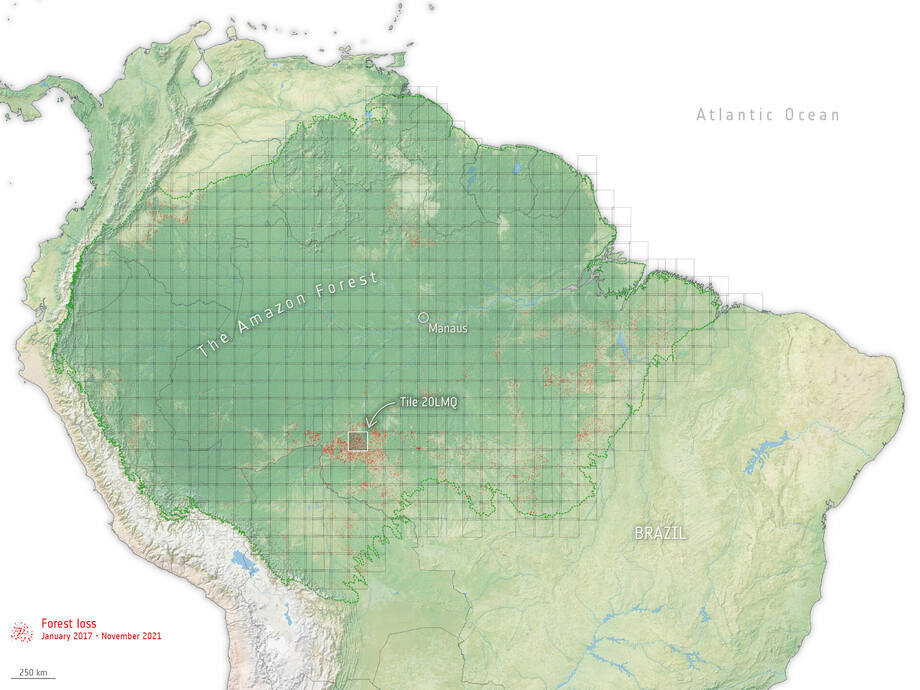
Forest loss across the Amazon

ESA deploys a data cube to monitor forest loss in the Amazon

Tyler O'Neal, Staff Editor ACADEMIA March 7, 2023, 1:00 pm

Forests hold a vast amount of Earth’s terrestrial carbon and play an important role in offsetting anthropogenic emissions of fossil fuels. Since 2015, the world’s tropical forests can be observed regularly at unprecedented 6 to 12-day intervals thanks to the Copernicus Sentinel-1 mission.

Millions of gigabytes of synthetic aperture radar (SAR) data are acquired both day and night, regardless of cloud cover, haze, smoke, or aerosols, allowing deforestation and forest degradation to be monitored at least biweekly.

The challenge, however, lies in finding adequate methods to extract meaningful indicators of forest loss from the vast amounts of incoming radar data, such that anomalies in the time series can be regularly and consistently detected across tropical forests.

Such forest-monitoring methods should be transparent and easily understandable to the wider public, enabling confidence in their use across various public and private sectors.

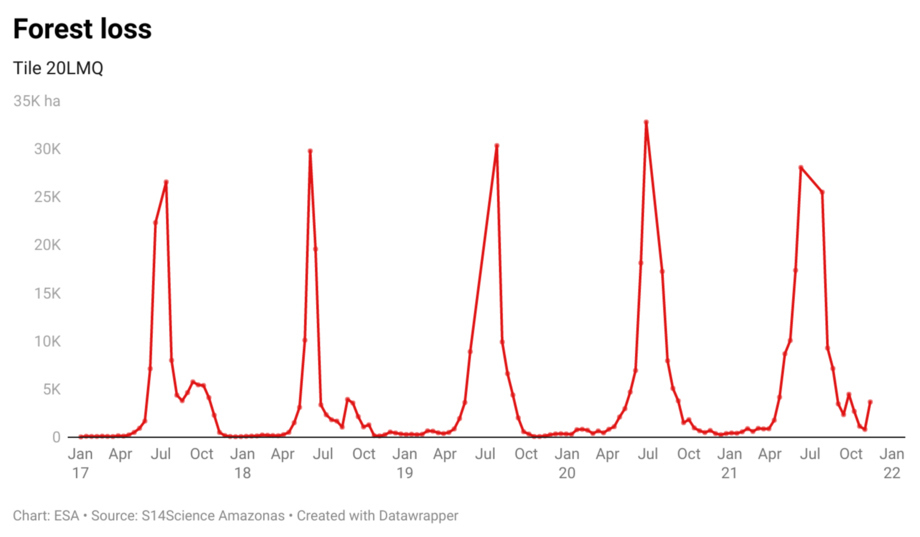
The Sentinel-1 for Science: Amazonas project presents a simple and transparent approach to using Sentinel-1 satellite radar imagery to estimate forest loss. The project uses a space-time data cube design (also known as StatCubes), where statistical information relevant to identify deforestation is extracted at each point in the radar time series. Forest loss of 'Tile 20LMQ'

With this approach, the project demonstrates the use of Sentinel-1 data to create a dynamic deforestation analysis over the Amazon basin. The team was able to detect forest loss of over 5.2 million hectares from 2017 to 2021, which is roughly the size of Costa Rica.

Neha Hunka, Remote Sensing Expert at Gisat, commented, “What we are seeing from space is over a million hectares of tropical moist forests disappearing each year in the Amazon basin, with the worst year being 2021 in Brazil. We can track these losses and report on them transparently and consistently every 12 days henceforth.”

Billions of pixels from the Sentinel-1 satellites from early-2015 to December 2021, each representing a 20 x 20 m of the forest, are harmonized under the StatCubes design, and a simple thresholding approach to detect forest loss is demonstrated in the first version of the results.

The largest challenge in the project was the vast amount of data handling and processing. The team used several user-friendly software tools to access the data efficiently – processing over 450 TB of data to create the forest loss maps.

Anca Anghelea, Open Science Platform Engineer at ESA, added, “By providing open access data and code through ESA’s Open Science Data Catalogue, and openEO Platform, we aim to enable researchers around the world to collaborate and contribute to the advancement of knowledge about our global forests and the carbon cycle.

"Thus, in the last phase of the project, a key focus will be on Open Science, reproducibility, long-term maintenance, and evolution of the results achieved in the Sentinel-1 for Science: Amazonas Project.”    

Following on from the project, the next goal is to achieve a product of carbon loss from land cover changes, working together with ESA’s Climate Change Initiative team – a goal that will contribute to ESA’s Carbon Science Cluster.

The current results of the project are now available by clicking here. Sentinel-1 for Science Amazonas is implemented by a consortium of four partners - Gisat, Agresta, the Norwegian University of Life Sciences, and the Finnish Geospatial Research Institute. The team uniquely combines complementary and strong backgrounds in forestry and carbon assessments, multi-temporal SAR analysis and data fusion, and large-data processing capabilities.

  1. Dutch prof creates complex oxides that can be used beyond CMOS; shows the way toward novel supercomputing architectures
  2. Madria’s millions: S&T cybersecurity expert wins large federal research grants

Page 43 of 123

  • 38
  • 39
  • 40
  • 41
  • 42
  • 43
  • 44
  • 45
  • 46
  • 47
POPULAR RIGHT NOW
  • Supercomputers uncover a new class of cosmic explosions hidden in plain sight
    Supercomputers uncover a new class of cosmic explosions hidden in plain sight
  • AI supercharges the hunt for stronger magnets: Iowa State researchers launch a new era of intelligent materials discovery
    AI supercharges the hunt for stronger magnets: Iowa State researchers launch a new era of intelligent materials discovery
  • IBM's Historic stock collapse raises questions for the future of enterprise supercomputing
    IBM's Historic stock collapse raises questions for the future of enterprise supercomputing
  • Could a novel dark matter theory simultaneously resolve multiple cosmic enigmas? Supercomputer simulations provide a compelling, albeit currently unverified, potential solution
    Could a novel dark matter theory simultaneously resolve multiple cosmic enigmas? Supercomputer simulations provide a compelling, albeit currently unverified, potential solution
  • Melting icebergs may be reshaping Earth’s greatest ocean current
    Melting icebergs may be reshaping Earth’s greatest ocean current
  • Supercomputers replace ‘bathtub’ flood maps with physics-based digital twins of Britain’s coastline
    Supercomputers replace ‘bathtub’ flood maps with physics-based digital twins of Britain’s coastline
  • Supercomputers push neural quantum simulation beyond previous limits
    Supercomputers push neural quantum simulation beyond previous limits
  • Intel’s AI supercomputing revival: Q2 financial surge signals new era for CPU-powered HPC infrastructure
    Intel’s AI supercomputing revival: Q2 financial surge signals new era for CPU-powered HPC infrastructure
  • AI infrastructure financing fears shake semiconductor sector
    AI infrastructure financing fears shake semiconductor sector
  • AWS supercomputing investment reaches historic scale as Amazon’s AI strategy powers record financial results
    AWS supercomputing investment reaches historic scale as Amazon’s AI strategy powers record financial results
THIS YEAR'S MOST READ
  • Wall Street wants to trade supercomputing power like oil
    Wall Street wants to trade supercomputing power like oil
  • Cosmic ambition at scale: UK’s supercomputer unlocks a 2.5 petabytes universe
    Cosmic ambition at scale: UK’s supercomputer unlocks a 2.5 petabytes universe
  • Hidden order, revealed at scale: Supercomputing, electron ptychography uncover the inner workings of relaxor ferroelectrics
    Hidden order, revealed at scale: Supercomputing, electron ptychography uncover the inner workings of relaxor ferroelectrics
  • Beamforming the future: BeammWave's 6G push signals the rise of orbital-terrestrial wireless networks
    Joakim Axmon
    Joakim Axmon
  • Intel's Q1 results signal supercomputing surge driving Xeon momentum
    Intel's Q1 results signal supercomputing surge driving Xeon momentum
  • When stars fall apart: Supercomputing reveals the hidden physics of black holes
    When stars fall apart: Supercomputing reveals the hidden physics of black holes
  • Multi-layer simulations reveal the hidden supply chain of solar prominences
    Multi-layer simulations reveal the hidden supply chain of solar prominences
  • Japanese scientists decode dolphin speed with supercomputing: Turbulence, vortices, and the hidden physics of propulsion
    Japanese scientists decode dolphin speed with supercomputing: Turbulence, vortices, and the hidden physics of propulsion
  • Cosmic feedback at scale: Supercomputing reveals how quasars regulate the early Universe
    Cosmic feedback at scale: Supercomputing reveals how quasars regulate the early Universe
  • Modeling life at the microscopic scale: A computational breakthrough in oxygen transport
    Modeling life at the microscopic scale: A computational breakthrough in oxygen transport
MOST READ OF ALL-TIME
  • Largest Computational Biology Simulation Mimics The Ribosome
    Details
    112108
    The amino acid (green) slithers into the chemical reaction center, moving through an evolutionarily ancient corridor of the ribosome (purple). The amino acid is delivered to the reaction core by the transfer RNA molecule (yellow).
    The amino acid (green) slithers into the chemical reaction center, moving through an evolutionarily ancient corridor of the ribosome (purple). The amino acid is delivered to the reaction core by the transfer RNA molecule (yellow).
  • Silicon 'neurons' may add a new dimension to chips
    Details
    80995
    Silicon 'neurons' may add a new dimension to chips
  • Linux Networx Accelerators Expected to Drive up to 4x Price/Performance
    Details
    75538
  • Complex Concepts That Really Add Up
    Details
    73639
    Complex Concepts That Really Add Up
  • Blue Sky Studios Donates Animation SuperComputer to Wesleyan
    Details
    68141
    Each rack holds 52 Angstrom Microsystem-brand “blades,” with a memory footprint of 12 or 24 gigabytes each. (Photos by Olivia Bartlett Drake)
    Each rack holds 52 Angstrom Microsystem-brand “blades,” with a memory footprint of 12 or 24 gigabytes each. (Photos by Olivia Bartlett Drake)
  • Humanities, HPC connect at NERSC
    Details
    57948
  • TeraGrid ’09 'Call for Participation'
    Details
    54952
  • Turbulence responsible for black holes' balancing act
    Details
    52313
  • Cray Wins $52 Million SuperComputer Contract
    Details
    50140
  • SDSC Researchers Accurately Predict Protein Docking
    Details
    46082
  • FRONTPAGE
  • LATEST
  • POPULAR
  • REGISTER
  • SOCIAL
  • VIDEO
  • SUBSCRIPTION
  • RSS
  • GUIDELINES
  • PRIVACY
  • TOS
  • ABOUT
  • +1 (816) 799-4488
  • editorial@supercomputingonline.com
© 2001 - 2026 SuperComputingOnline.com, LLC. All rights reserved. This material may not be published, broadcast, rewritten or redistributed without permission.
Sign In
  • FRONT PAGE
  • LATEST
    • MEDIA KIT
    • MOST READ
    • RSS FEED
    • ACADEMIA
    • AEROSPACE
    • APPLICATIONS
    • ASTRONOMY
    • AUTOMOTIVE
    • BIG DATA
    • BIOLOGY
    • CHEMISTRY
    • CLIENTS
    • CLOUD
    • DEFENSE
    • DEVELOPER TOOLS
    • EARTH SCIENCES
    • ECONOMICS
    • ENGINEERING
    • ENTERTAINMENT
    • HEALTH
    • INDUSTRY
    • INTERCONNECTS
    • GAMING
    • GOVERNMENT
    • MANUFACTURING
    • MIDDLEWARE
    • MOVIES
    • NETWORKS
    • OIL & GAS
    • PHYSICS
    • PROCESSORS
    • RETAIL
    • SCIENCE
    • STORAGE
    • SYSTEMS
    • VISUALIZATION
  • VIDEOS
    • ADD YOUR VIDEOS
    • MANAGE VIDEOS
  • COMMUNITY
    • TRADE SHOWS
    • SOCIAL NETWORK VIDEOS
    • SURVEYS
    • APPLICATIONS BROWSER
    • CONVERSATION INBOX
    • SOCIAL ADVERTISER
    • GROUPS
    • MARKETPLACE LISTINGS
    • PAGES
    • LEADERBOARD
    • POINTS LISTING
      • BADGES
    • PRIVACY CONFIRM REQUEST
    • PRIVACY CREATE REQUEST

Hey there! We noticed you’re using an ad blocker.